
Our Happy Valley air may be chilly and our ground may be soggy, yet local kids know that baseball is in the on-deck circle.
But will the 2026 baseball season yield fun for the kids? Will their skills improve? Will their lives be enhanced? Or will they experience fear and frustration?
The answers to those questions will result primarily from the attitudes of their coaches and parents. And that’s why I recently reached out to John Edman, a well-known coach, for tips on how adults can maximize the baseball experience of kids.
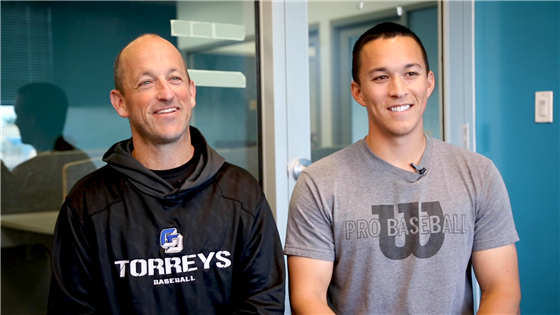
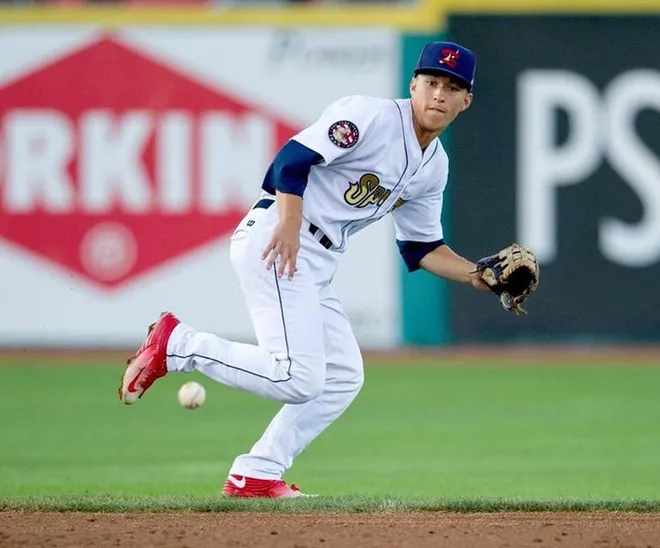
John is not a local guy, but he is familiar with State College and its baseball subculture. His son, Tommy Edman, is a two-time World Series champion with the Dodgers who began his professional career with the State College Spikes in 2016.
The younger Edman credits much of his success to his dad, and that’s saying a lot. Tommy is a switch-hitter who can play every outfield or infield position; despite nagging injuries he’s captured a Gold Glove Award and MVP honors from the 2024 National League Championship Series. According to Tommy, his father has “a great baseball mind.”
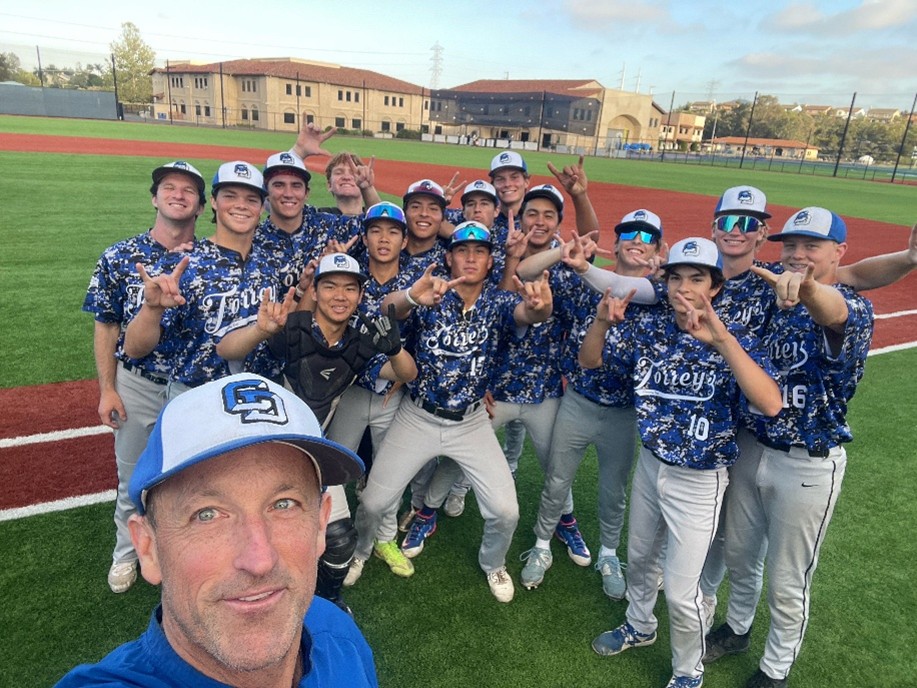
And that’s the brain I wanted to pick, the one that’s guided a son to the big leagues, successfully led youth travel teams and won championships as a high school coach. (Now beginning his 26th year as head coach at La Jolla Country Day School, a San Diego-area high school, John boasts a career record of 407-316-3).
Here, then, are the edited highlights of my recent conversation with Coach Edman. I believe his input will offer a big preseason boost to local coaches and parents.
Let’s start with your State College connection. I know you visited Happy Valley three or four times during Tommy’s season with the Spikes. And I know those trips gave you chances to visit the Maurers—your sister, Jody, and her husband, Keith. What do you remember about State College?
Edman: There was a really nice host family (Jeremy and Kelli Snyder and their kids), and they had three or four players from the Spikes living in their basement. They had a great time with that. And it was really neat that he had family in town, and I got to spend time with Jody and Keith when I was there. The environment of baseball in State College brought lots of support, lots of enthusiasm. I thought it was a really good start to his pro career. And ending up in a town with family for your first year in the minor leagues…that was pretty unique.
How did you first get your kids excited about baseball, all three of your kids?
Edman: We moved to La Jolla when our oldest child, Johnny, was just about to turn 6, and Tommy had just turned 4. So we started playing a ton of wiffle ball every evening when I would get home from football practice or baseball practice or whatever. We would pretty much spend the evening playing wiffle ball in our alley, so we called it “Alley Ball.” They definitely learned skills, but they learned the fun of the game more than anything.
What made “Alley Ball” so much fun?
Edman: We kept score of the games and it was me against the two of them. I had special rules about what I was allowed to do, so it was definitely competitive. We would find joy in celebrating what any one of the three of us had done—making some great play or crushing a ball or whatever. And it was family time.
How about your daughter, Elise?
Edman: She was only 1 at the time, but she definitely joined us later. She played tee ball which was co-ed, and she had a nice time with that. And then she played a little bit of softball. But she fell in love with volleyball and ended up playing volleyball pretty much year round. (Elise became a four-year starter for Davidson College, a Division 1 women’s program.)
I’d like your opinion on getting kids started in baseball. Maybe a certain age is too young or maybe there is a particular approach to avoid?
Edman: That’s a good question. But I think the real issue is that whoever they’re playing with needs to make practices really fun—not just a bunch of drills. While baseball games can at times go slowly, you can make baseball practices really upbeat, fast-paced and fun. You want them excited to be there.
Do you have a favorite drill that makes your practices fun?
Edman: Well, to do base running we’ll make it into races of some sort, like relay races or team races. We have a competition going. And then when we play catch, we’ll practice for a little bit but then we’ll have competition with it, whether it’s how many catches you can make in three minutes or how many catches you can make in a row without the ball dropping. Or we might field ground balls and then have a tee with a ball on it at first base to see if the fielder can knock the ball off the tee with his throw to first. Or we do another one called “the hat drill” where one kid puts his hat down 10 feet in front of him and the challenge is for his partner to hit the hat.
So we’ll teach a skill, but after they’ve worked on the skill we’ll play a game with the skill. With the hat drill, they’re trying to throw it in a way so that it’s going to be an easy bounce for the person who’s catching it, like when you’re trying to throw a runner out at home plate.
And then when they’re advanced enough for a batting practice game—and this is when they’re a little older—we play a game called “Code Red.” The reason we call it Code Red was that I first did it with kids way back when soda wasn’t considered unhealthy, and the winning players would each get a Code Red Mountain Dew. Usually we have a base runner at first and a batter and then a full defense, and the batter gets five swings. And in those five swings, he’s got to try to score that runner. And so ideally that runner moves to second, moves to third and then scores, however it is. And usually we play everything live with the runner on base, but the batter is not running it out—he’s just staying up there for his five swings. But on the fifth swing he runs it out. So the batter gets lots of swings, the fielders have high-intent defense going on and the base runners are getting to run the bases.
Code Red is not a slow-paced scrimmage because as soon as a play gets made or not made, we move on to the next pitch. Some of the time we’ll do it without a base runner so anything that would’ve gotten you on base counts as a point. It could be an error, it could be a hit, it could be anything. But we don’t bother chasing after balls. If the ball lands in the outfield and we don’t make a play, then the fielder just leaves the ball and we throw another pitch. We pick up all the balls at the end of the round. Everything is a game; competition is the point.
Let me transition into how you overcome fear in young players. First, how do you help them deal with getting hit by the ball?
Edman: Gosh, it really comes down to more time, getting to the point where you realize “I very rarely get hit and when I do get hit, it doesn’t hurt that bad and I recover just fine.” But when young kids get hit, they’re definitely going to be scared for a bit and they’ve just got to hang in there. I haven’t really done anything to train them out of that other than just give them time.
How about the other common fear? The fear of striking out with everybody watching…
Edman: That’s a very good question, too. Almost every kid when they’re young sheds a few tears after striking out. But again, they just eventually grow out of that. I think a big part of it is having a team where there is no judgment by the coach. And as for parents, we have a parent meeting at the beginning of the season where I remind them, “Your kid knows what he did wrong. The last thing he needs is to have a parent ride home with him and go over all the things he did wrong.”
So I think it’s important to have very supportive parents where the only thing that matters is the kid’s effort and attitude. And the same thing with coaches—zero judgment on performance and everything is based on effort and attitude. As for players treating each other, there aren’t many things that I’m hard on kids for, but one of them is mistreating another kid. So we have a lot of grace and a lot of mercy as we coach, and mainly we’re about the attitude, the effort and how we treat each other.
What are some negatives that you try to avoid in your coaching?
Edman: I guess in the heat of the moment, letting something come out of my mouth or reacting immediately to something that happens in the middle of a game. At the high school level, we do have some intense ball games, and I try to catch myself with what my brain is telling me to say rather than letting my emotions take over. And then I think another thing is giving them all the same attention—from the best player on the team to the weakest player on the team. That’s really important because I think your instinct as a coach is to work with the kids that are going to help you win.
I know that you won the 2025 “Jerry Kindall Award,” a national honor from the Fellowship of Christian Athletes for demonstrating Christian character as a coach. So which came first, the chicken or the egg? Did you have a solid Christian faith when you entered into coaching? Or did the pressures of coaching cause you to “get religion”?
Edman: I grew up in a Christian household and it was just a matter of making the faith my own. I’m a Christian by choice—I’m following Jesus—but it took a while in my younger years to figure out what that meant. I didn’t have a ton of high school classmates who were believers, but I made a very purposeful decision to pursue my faith more seriously in college. Every year that goes by, I think I grow closer to Jesus and that definitely informs how I coach.
Is it tricky for your faith to be foundational to your coaching while respecting the fact that your players come from various religious or non-religious backgrounds?
Edman: I think all the kids know what my faith is. We have a Fellowship of Christian Athletes group on campus. The kids are in charge of it, but I’m the advisor. I think by virtue of my being the advisor, they kind of know what my faith background is. And every now and then a kid will ask me a little bit about my faith, and I get a chance to talk about it. But it’s not like we’re at practice and I start preaching or anything like that. I think the line we walk as coaches is that we treat the kids in a godly manner, and we treat each other in a godly manner. But the kids are going to come from all walks of life.

I read an article that mentioned the time when Tommy was a little guy and hit a shot off your head. Apparently, you had a wiffle ball imprint on your forehead for a day or two and that gave you an early hint about his talent. What would you say to parents who dream their kid will make the major leagues?
Edman: To be honest, we never thought that way. We weren’t thinking professional baseball. We were just thinking, “Have a lot of fun playing a game that we love and whatever happens, happens.” But as he got a little older, we thought he had a chance to play in college if he wanted to. Then as he got into high school, it became more than just a Division 3 kind of thing…it was possible for him to play Division 1. And then in college he played well, so he just kind of took it step by step. We just wanted to have fun as long as it lasted. And it’s lasted way longer than we thought it would, which is pretty neat.
But I think having any kind of expectation is not terribly healthy because you don’t want to find your identity in your sport. Tommy has said as much in some of his interviews. He’s said that one thing that’s freeing to him is that he’s a Jesus follower who plays baseball. He loves to play baseball, but that’s not his identity. So I think the key for parents is just to have fun with them and encourage them and if they have certain aspirations, then help them figure out how to pursue them. But mainly, just have fun with them.
What advice do you have for a coach whose own kid plays on his team? Even though that’s very common, it can get tricky.
Edman: Yeah, that’s a tough one. Fortunately, I had some really good assistant coaches, so when Tommy was playing for us (in high school), I said, “Don’t feel bad if you need to say what we should do with Tommy.” There was a time when I asked, “Should we play so-and-so at shortstop?” And they were like, “John, you’re crazy. Tommy is by far our best option, not even close.” So having assistant coaches who I gave license to be decision makers made a big difference. Then if anybody ever asked about a decision, it wasn’t just my decision.
There actually was a time during Tommy’s freshman year when we had three really good ninth graders, and they helped transform our team. But there were some older kids who ended up being moved to different positions or different spots in the batting order because of those three. And they were a little upset about that. So we ended up having a meeting with the athletic director. Eventually, after listening to complaints from a couple of the other kids, one of the seniors said, “I don’t know what you guys are watching, but the only reason we’re winning ball games right now is because of those three.” So it took one of the seniors on the baseball team to say that. And the three freshmen boys that I’m referring to all ended up playing Division 1 college baseball. So there wasn’t any real question about their ability.

Here’s my last question. Can you recommend any videos or books for coaches?
Edman: I’m not a huge fan of social media, but I get a lot of good stuff from other coaches through Twitter and Instagram. I think it’s just faster than a coach writing a book or making a formal video. The other source is the American Baseball Coaches Association, and they host a giant conference every January. If you’re a member of the association—you don’t even have to go to the conference—you get access to tons of videos. If you want something for base running, there’ll be a little short clinic, like a 45-minute video on base running. So the quick things are on Twitter and Instagram, and for the bigger videos with more content, I would say go to abca.org. Anybody can join that if you’re a Little League coach or whatever. You’ll have access to years and years of clinic sessions.



