There is a time for everything,
and a season for every activity under the heavens:
a time to be born and a time to die,
a time to plant and a time to uproot,
a time to kill and a time to heal,
a time to tear down and a time to build,…
-Ecclesiastes 3
After more than a century, SCI Rockview has permanently vacated its inmates. Its silence begs the age old question, if these walls could talk? Secrets only its former prisoners, corrections officers, and wardens could know. The rest of us can only try to imagine life at Rockview using scenes from movies like “The Green Mile,” “The Shawshank Redemption,” and “On the Yard” (which was actually filmed at Rockview in 1978). But the nostalgia of the movies can only scratch the surface of the real stories that once filled the now silent halls and lonely fields at Rockview. As the community comes to terms with the impacts of its closure and the uncertain future of its vast prison landscape, some may find meaning in reflecting upon its early days as a penitentiary.
With overcrowding, unsanitary conditions, and other problems facing the city-locked Western State Penitentiary in Pittsburgh, the New Western State Penitentiary at Rockview was established in 1911 “for the erection of a new penitentiary on a large tract of land in a rural district, which would provide useful and healthful employment for the inmates.” The state acquired over 5,000 acres of local farmland for about $50 per acre. Rockview’s first warden, John Francies, also served as the superintendent of its construction. According to the Democratic Watchman in 1914, Warden Francies believed Rockview would be the “model prison of the world” where convicts could “work out their prison sentences in God’s glorious sunshine.”
The old “Rock” farms that became Rockview were some of the best farms in Pennsylvania. This area within Benner Township was already being called “Rock View” back in the 1890s, over a decade before the prison board selected the site. In addition, the superintendent of the tenant farms belonging to Colonel Reynolds lived in a cottage-style home, built in 1896, specifically called “Rock View.” According to the late historian Hugh Manchester, Francies and his family even moved into the famous “Rock View” home. Thus, Rockview got its name from the pre-existing “Rock View” hamlet, home, and farms whose toponyms came from their proximity and historic connection to Philip Benner’s Rock Iron Works.
In 1912, Francies personally conveyed the first prisoner from Pittsburgh to Rockview. This man, who was only identified as a “colored man,” was the first to start cleaning out the old Ishler farmhouse for the prisoners to sleep in. Soon, many more prisoners would follow, often by railroad during those early days. More than 1,300 prisoners helped build various Rockview buildings and facilities between 1912 and 1915. Francies noted that “the prisoners at the new prison site have worked untiringly, and not unmindful of the fact that they were building for themselves and future generations of derelicts, a humane abode.”
After the construction of the “Electrocution Building,” Pennsylvania’s first execution “through the agency of electricity” took place at Rockview on Feb. 23, 1915. Within a month, they also established a new cemetery on the grounds for the corpses of prisoners who were unclaimed by families. Prior to Rockview, executions were conducted by county authorities until they were outlawed (the last official hanging in Centre County was held in Bellefonte in 1911). Then, Pennsylvania’s capital punishment statute was amended to give the Commonwealth sole administration of the death penalty, selecting electrocution as its official method in 1913. Between 1915 and 1962, 350 people, including two women, were executed by electric chair at Rockview. Lethal injection replaced the electric chair in 1990; between then and 1999, three more men were executed.
By 1915, the success of Rockview Penitentiary led to the belief that it could be expanded to entirely replace both the Western and Eastern State Penitentiaries, but this did not come to pass. In the 1920s, Rockview found its niche as a branch prison. Governor Pinchot, known for being a forester and conservationist, visited the prison in 1923, setting it on a new course. Instead of continuing to expand it into a maximum-security “Bastille” that could hold all Pennsylvania inmates, all three institutions would remain, so that Rockview could become a model prison farm instead, rewarding prisoners from the other two penitentiaries who could behave themselves. Over time, “promotional transfers” made their way to Rockview from both Western and Eastern penitentiaries (but mostly Pittsburgh).
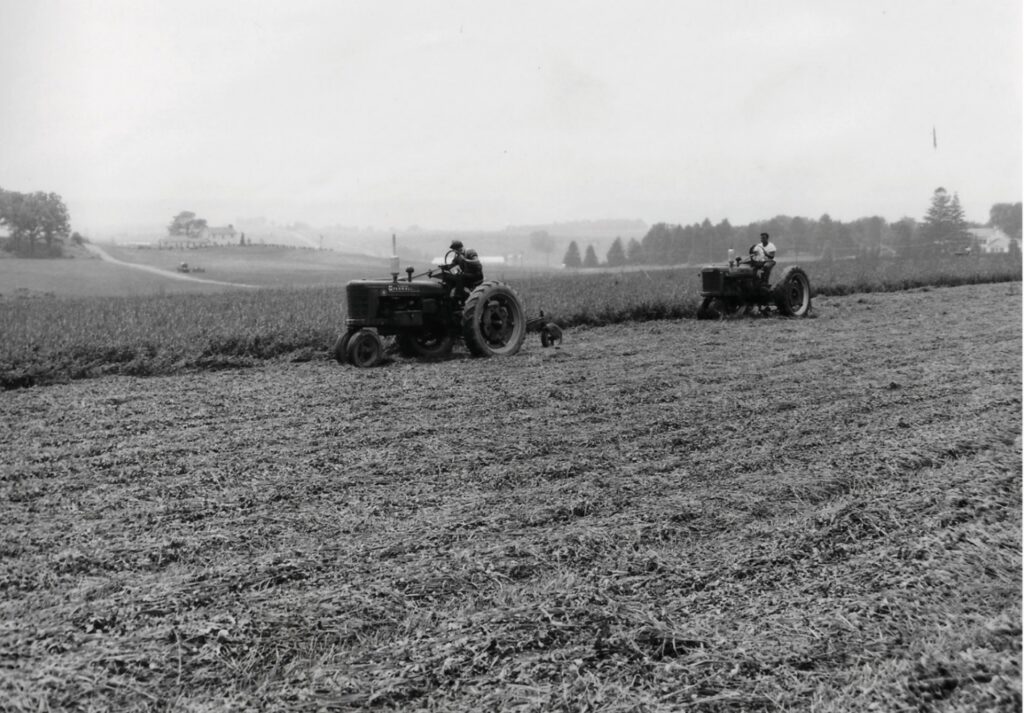
As penal system views and practices changed, Rockview served an eclectic mix of minimum to maximum security needs. Its inmates ranged from those with the relative freedom to work thousands of acres, to those condemned to die in Pennsylvania’s “death house.” Qualified prisoners were called “trustees,” and would follow an honor system to work the farms, forests, and pastures outside the main complex fences. Trustee prisoners could live out the purposes of the Rockview “honor farm” as it expanded to over 7,000 acres.
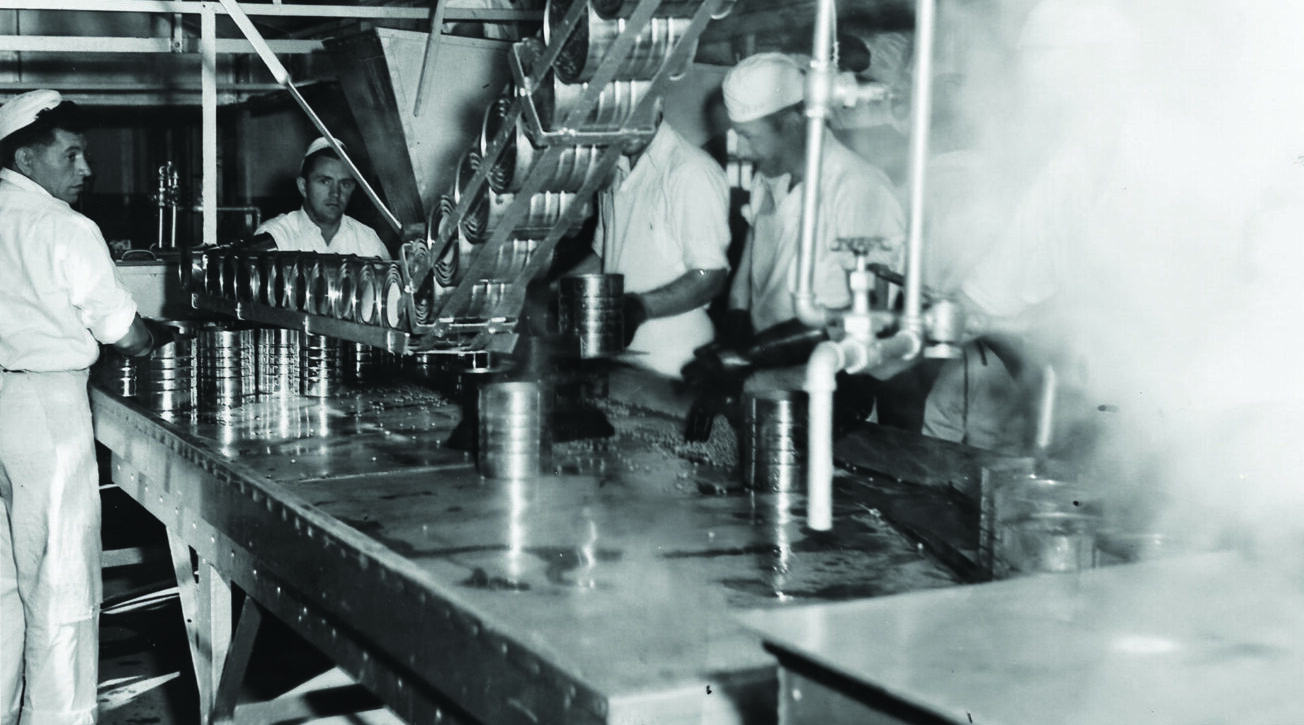
Prisoners plowed and planted fields, worked with teams of horses and mules, or drove tractors. They worked in stables, built barns, tended to orchards, worked in road gangs, and participated in forestry operations. They raised livestock like hogs and cattle. They harvested hay, oats, corn, straw, wheat, and other crops. Trustees labored in potato patches and picked tomatoes to make into “catsup.” They drove trucks, farm equipment, operated construction machinery, worked in mills, greenhouses, and, of course, the cannery to finish off all the various “Rockview Products.” In a good year, like 1954, Rockview produced enough to feed most prisoners at Rockview and in Pittsburgh. They produced 400,000 one-gallon cans of fruits and vegetables to help feed other prisons, schools, and state-supported institutions as well. At this time, Prison Industries, a nonprofit organization, was operated by the DOJ (PA) to provide useful employment for the prisoners.
While working beyond the security fences, on “the outside,” the temptations to “walk away,” or go “over the hill,” for some prisoners proved too much. In 1964, the Centre Daily Times reported that the 530th convict was reported to have escaped. Escapes per year varied, but have generally declined over time. In 1967 (there were 40 escapes), 1968 (zero), 1976 (23), and in the mid-1990s, about 12 a year. This means that more prisoners escaped (temporarily, at least) over the years than were executed. However, an overwhelming percentage were captured and put back behind bars within a few days. Especially with the help of a steam-powered siren whistle that folks could hear about seven miles away.
Rockview kept bloodhounds on hand as well to track down fugitives or to help find missing children in the surrounding mountains on occasion. Most trustees knew better; attempting to escape only added time to their sentences. Some inmates even escaped during baseball games. Rockview inmates were always pretty good athletes and especially enjoyed America’s favorite pastime in the evenings after a hard day’s work. In 1926, the Rockview baseball team was reported to have won 22 out of 27 games. “Outside” teams from the surrounding region would play Rockview baseball and football teams regularly. Obviously, Rockview would play and host home games only.
Farming, forestry, and other inmate programs have always been essential to Rockview’s history. However, the prison population at Rockview increased toward its approximate capacity of 2,000 inmates into the 1980s. Rockview faced the need to secure and feed more inmates, while at the same time having less qualified prisoners to work outside the fence. The prison farm’s golden years of agricultural prowess and self-sufficiency were long gone even before it closed.
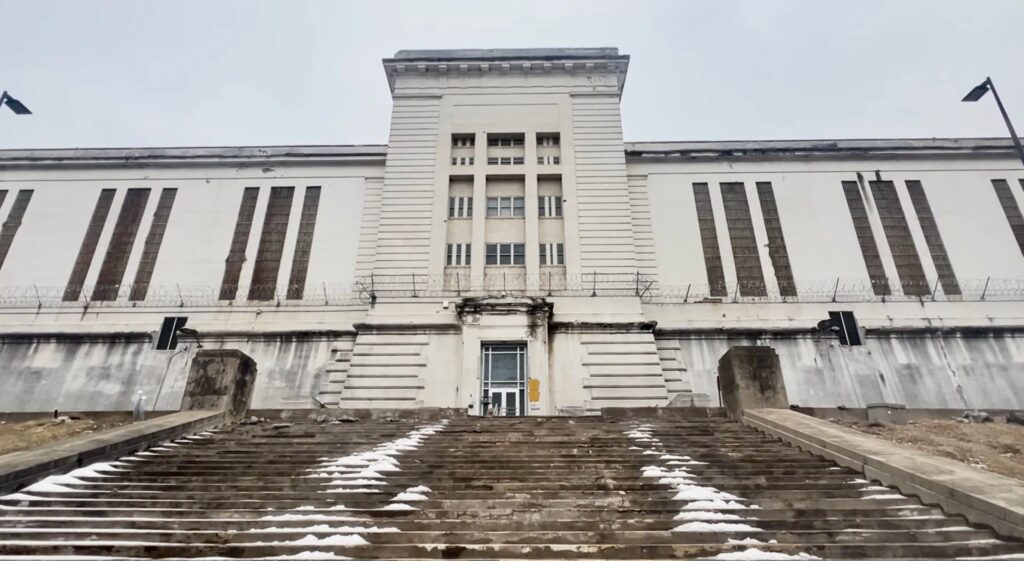
Rockview Penitentiary was officially renamed SCI Rockview in 1959. After significant prison riots in Pittsburgh and Rockview in 1953, the practice of branch institutions was abolished (Rockview was operated as a branch of the Western State Penitentiary in Pittsburgh), and the Bureau of Correction was established. In addition, there was also a shift in penal philosophies away from the religious roots of penitentiaries (where prisoners were believed to be reformed via strict solitary “penitence”) to a modern emphasis on corrections and rehabilitation.
On Feb. 13, 2026, the last of the SCI Rockview inmates were transferred out of Rockview to other State Correctional Institutions across Pennsylvania. Like the first prisoner to arrive at Rockview in 1912, the name of its last inmate to walk off Rockview grounds in 2026 will likely remain unknown. As we reflect on its closure, one last local anecdote comes to us from historian Hugh Manchester about Rockview’s first warden, John Francies. Warden Francies was known to personally bid inmates farewell as their terms ended, always with the same expression: “Goodbye Jack, and God Bless you.” T&G
Local Historia is a passion for local history, community, and preservation. Its mission is to connect you with local history through engaging content and walking tours. Local Historia is owned by public historians Matt Maris and Dustin Elder, who co-author this column. For more, visit localhistoria.com.