
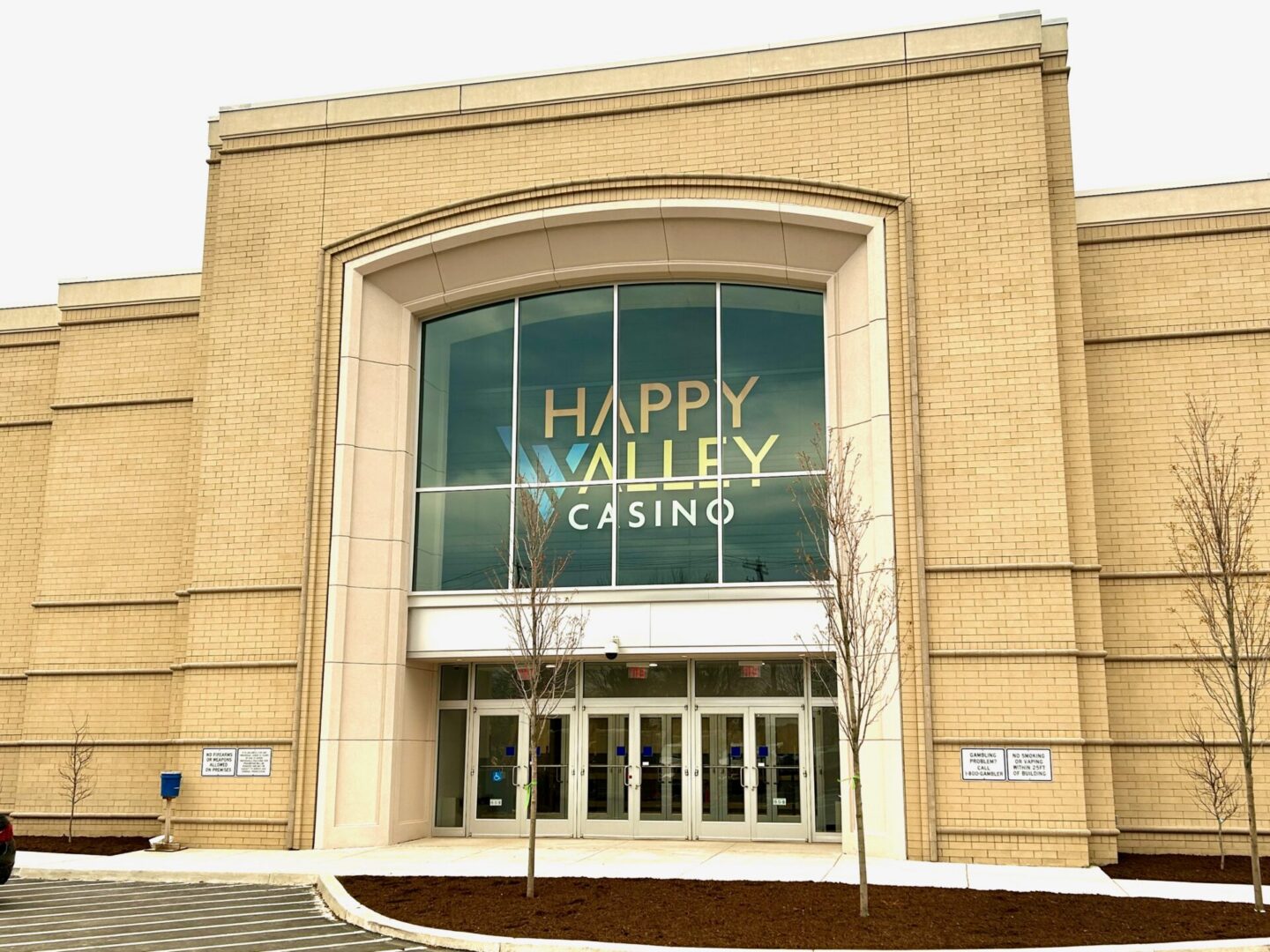
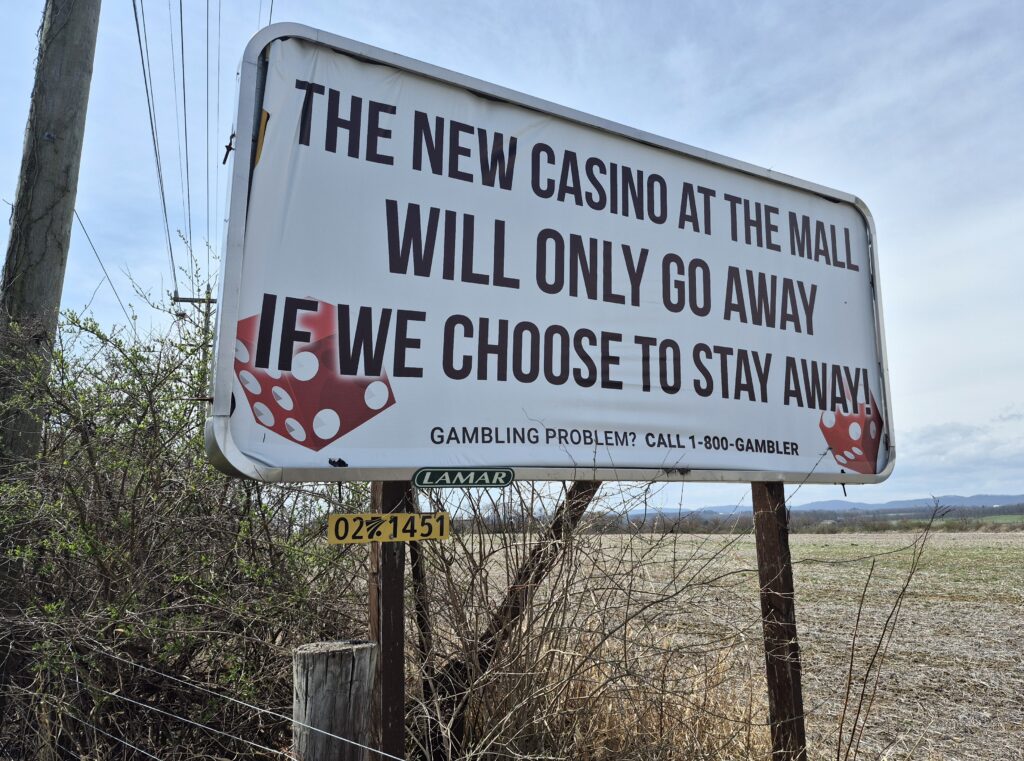
So here we are. The new gambling casino at the Nittany Mall will hold its test days on April 24 and 25. If things go according to plan, the facility’s official opening will follow shortly thereafter—much to the delight of some and the dismay of others.
There’s one thing I’m certain about: the inappropriateness of the casino’s name. I grew up here in the ‘50s and ‘60s when “Happy Valley” emerged as our area’s nickname, so I can tell you it was based on natural beauty and peacefulness.
Now this label that’s nationally known as a term of endearment for State College and Penn State has been co-opted by a gambling casino. To me, that’s a juxtaposition as jarring as putting a garbage dump in the middle of the Arboretum. So I’ll just be referring to it as “the local casino.”
Of course, the casino’s birth will present many challenges of greater magnitude than the name. What impact will the gambling venue have upon the 50,000-or-so Penn State students who reside within a few miles of its location? How many of the facility’s customers will struggle with “compulsive gambling,” a fancy term for addiction? And what about various negative outcomes that could surface in its shadows? Might there be an uptick in theft, drunk driving or child neglect after the casino is operational? Only time will tell, but such things have happened elsewhere.
Many of us hope that the casino will help to revitalize the Nittany Mall. And we think it might deliver some steady jobs for local folks. But whether or not we ever see those positive outcomes, we’d best be ready to protect our loved ones from the threats. That’s why I’m revisiting the narrative of one heroic mother and then sharing red flags that pertain to gambling addiction.
A GEM WHO LOST HER JEWELRY
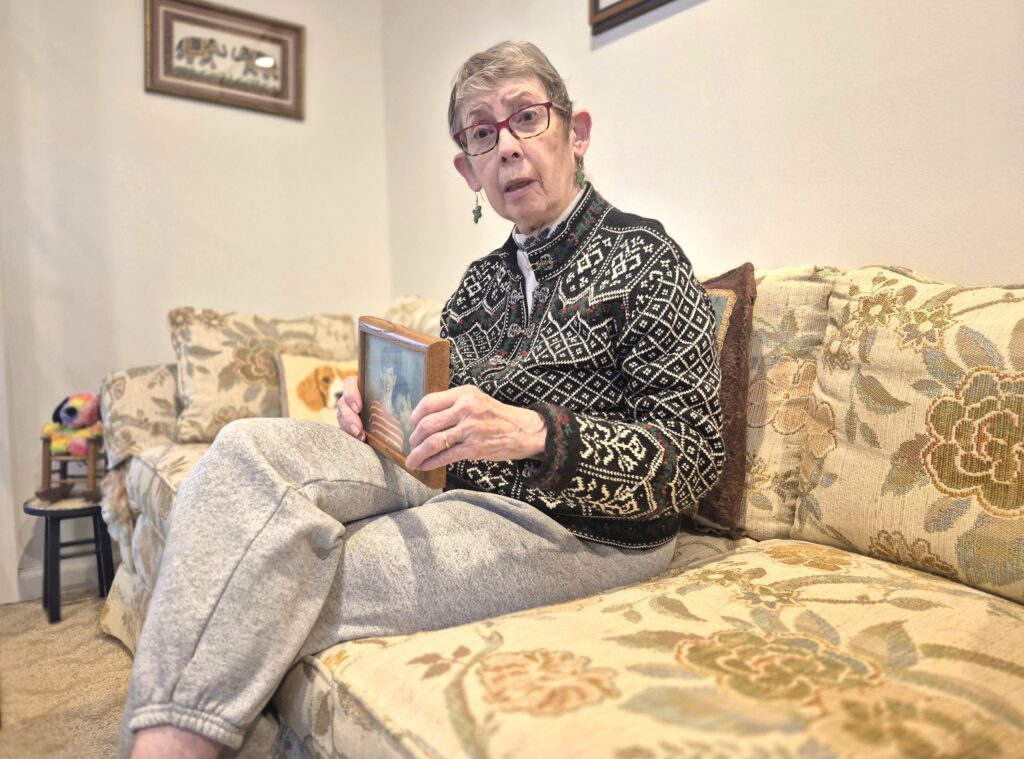
I first wrote about Joan Bouchard and her son in a column that was published in September of 2022. A State College-area resident since 2017, Bouchard has consistently raised her voice in opposition to the casino. And when you know her son’s story, you’ll understand why.
Way back in 1995, Joan’s son, then 16 years old, got a job at a grocery store and persuaded an 18-year-old coworker to buy him lottery tickets. After a while, his lottery-based excitement plateaued, so the underage boy found a way to sneak into two local casinos. That’s when he discovered the thrill of slot machines.
Joan, meanwhile, was in the dark about the degree of the young man’s attachment to gambling. By the time he reached his 20s, she was serving as a language teacher in Honduras and his gambling problem was a secret.
“I found out he was an addict when I came back for his wedding,” she told me. “The night after he and his gambling-addicted fiancee were married, they not only took all their wedding gifts and gambled them away at the casino, but they also took their 18-year-old cousin and managed to sneak her in with them. That’s how gambling addiction begins!”
That was the situation for Joan and her son as of 2022, and I didn’t talk to her again until a couple weeks ago. Then, when the publicity for the casino’s opening brought her to mind, I gave her a call. I was hoping for good news since she had once considered her son to be “recovered.” But I got a four-word answer when I asked, “How are things going for your son?”
“From bad to worse,” said Joan.
And then she elaborated. “Back at the end of this past year, he owed so much in back rent that he was going to get kicked out of the place he’d finally gotten, a safe place to live. A casino is right across the state line in Oklahoma from his home in Texas, and he took clients up there.
“I never know how much he’s gambling, but I do know I had to take all of my jewelry that was worth something and sell it to Miska Jewelers downtown (in State College). He needed more than a thousand dollars or he was going to be kicked out of his place.”
Soon I learned that this wasn’t the first time Joan had lost jewelry because of her son’s gambling. An earlier incident happened during her time in Honduras. She had left her sapphire and diamond jewelry in her home safe, never thinking her own son would steal it. But he did, and he pawned it to fund his gambling. When the young man was unable to redeem the jewelry on time, the pawn shop sold it. Joan would never again see that jewelry, and it was a prized gift from her late husband.
Joan understands the danger of enabling her son’s habit, so she struggles on a case-by-case basis over when to help and when to decline help. But clearly, she is a gem of a mother who willingly sold jewelry to help a son who had previously lifted jewelry from her. That, my friends, is unconditional love, as big and beautiful as it gets. Yet that hasn’t spared her from pain.
“These years are supposed to be the golden years of life,” says the 83-year-old. “Not the nightmare years of life. But this is probably typical of how things happen in a family when there’s a problem gambler.”
CRICKETS FROM OLD MAIN
After getting that update on her son, I asked Joan another important question: “What concerns you most about the local casino that’s about to open?”
Immediately, she mentioned Penn State, wondering why the university has never taken a stance on the casino and its potential impact. (See statecollege.com, September 26, 2022, “Penn State Trustees Won’t Take a Position on Nittany Mall Casino.”)
Although three-and-a-half years have elapsed since the gambling venue was first discussed, the retired teacher still hopes Penn State will offer some helpful words. “If we could get the university to take a stand on the harm that can be done to students, maybe that would convince them that this is not something they want to mess around with.”
As for my view, I can be somewhat sympathetic to my alma mater, noting that its leaders have been embroiled in many recent controversies: the dismissal of Board of Trustee member Barry Fenchak; the requirement for board members to take transparency training; the firing of head football coach James Franklin; the decision to close seven branch campuses.
But somehow I think Penn State’s leaders should have offered—and still could—some wise counsel to students about the need for caution with a casino being established just four or five miles from campus. Especially since exposures to gambling can lead to gambling addiction.
ADDICTION…REALLY?
Some may scoff at the very notion that gambling addiction is a medical reality. But no less an authority than the Mayo Clinic says this on its website: “Compulsive gambling, also called gambling disorder, is the uncontrollable urge to keep gambling despite the toll it takes on your life….If you have a problem with compulsive gambling, you may continually chase bets that lead to losses, use up savings and create debt. You may hide your behavior and even turn to theft or fraud to support your addiction. Compulsive gambling is a serious condition that can destroy lives….”
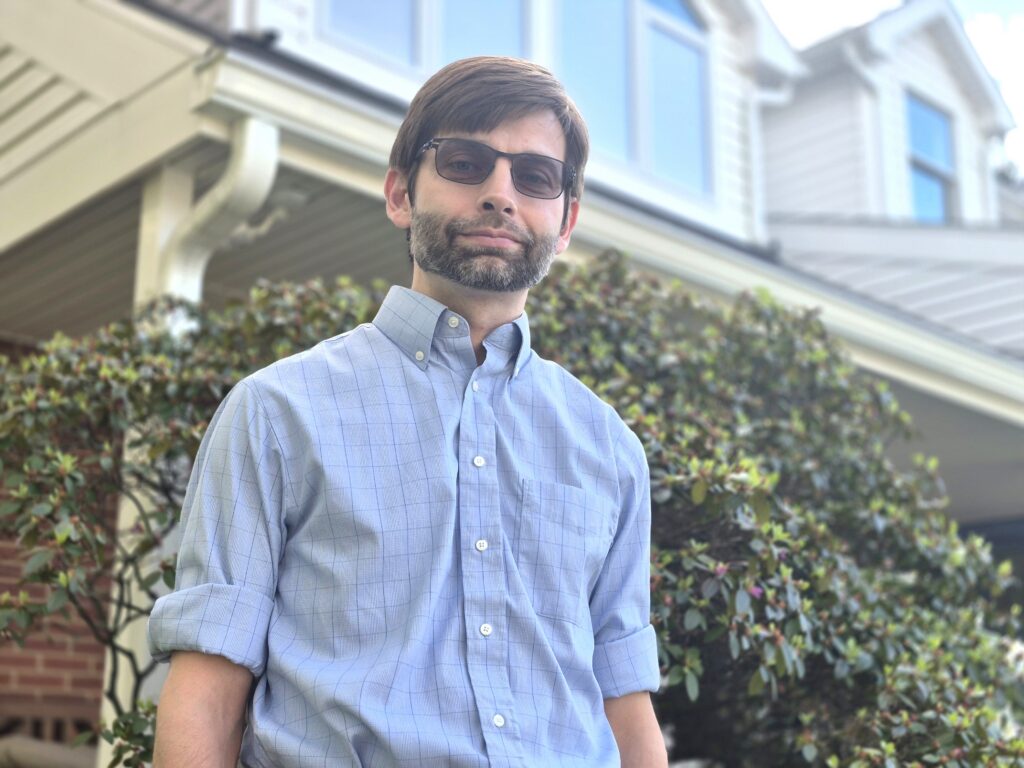
“Gambling products are designed to be addictive,” says Andrew Shaffer, a national board member of the non-profit organization Stop Predatory Gambling. “They work by causing the release of dopamine, the brain’s pleasure chemical. It’s a basic physiological process in how our brains work. The more you play, the greater the risk.”
The Nittany Mall casino will start off with 600 slot machines—not to mention 30 table games—and Shaffer suggests the slots are especially dangerous for addiction. Not the crude “one-armed bandits” of the past, today’s machines contain sophisticated programming.
“The goal in slot machine design,” he says, “is to get the player to play to ‘extinction,’ to spend every last cent they have before leaving. Obviously, if you win, that’s exciting and there’s an enormous dopamine release. But the games nowadays have been refined to provide a stimulus even if you lose. There are ‘near misses’ where maybe you spun a dollar bet and played multiple lines on the machine. Some of them paid off but others did not. So you won 70 cents. Actually, you lost 30 cents overall, but the slot machine is going to light up and make sounds like bells and whistles.
“It’s a stimulus response cycle with the same feedback for a loss as for a win, and your brain is going to process it that way. And it’s very addictive if you play the slot machine and you’re hitting the button over and over again.”
HOW ABOUT COLLEGE STUDENTS?
Proponents of the Nittany Mall casino have presented reasons to suggest that Penn State students are relatively safe from potential harm. For example, they correctly stress that individuals below age 21 will be legally prohibited from entering the facility.
In answer to that, however, Joan Bouchard says, “For all the time I’ve been alive, kids have managed to get fake IDs. So there’s no reason why they won’t figure out how to do it now.” Meanwhile, Shaffer notes that a large majority of Penn State students will turn 21 before leaving our area, and thus they may be exposed to the casino experience.
Proponents of the casino also correctly state that most college students prefer online gambling to land-based gambling. Nonetheless, a study provided to College Township last year by Convergence Strategy Group projected roughly 26,000 visits by students to the Nittany Valley facility each year, generating a total casino revenue of $2.6 million.
To Shaffer, that amount of spending represents a hazard because it comes from individuals with “precarious” financial situations. “Not every student, but most, are here on student loans,” he points out. “They don’t have a lot of assets, and one night of gambling in the casino could be enough to force them to drop out of school.”
The double graduate of Penn State (bachelor’s in computer science; master’s in computer science and engineering) is also concerned that students face a higher likelihood of addiction than older individuals. “My main concern for Penn State students,” he says, “is that the human brain is not fully mature at the age when students are in college. We know from scientific research that college students are about six times more susceptible to gambling addiction than adults over the age of 25.”
Shaffer adds still another reason for concern—the casino’s geographical proximity to campus. According to a June 28, 2005 report of research by the University at Buffalo’s Research Institute on Addictions, a casino within 10 miles of home is associated with a 90% increase in the odds of being a problem gambler. The likely reason for this increase, according to John W. Welte, Ph.D., is that the availability of an attractive gambling opportunity can lead to gambling pathology in some people who would not otherwise develop it.
“So,” asserts Shaffer, “if you’re under age 25, you’re at increased risk. If you live within 10 miles of a casino, you are at almost double the risk of becoming a gambling addict. If you combine those factors, that makes a perfect storm.”
SIGNS OF ADDICTION
In time, concerned individuals may begin to wonder if their friend or loved one is truly addicted. According to the American Psychiatric Association, a diagnosis of gambling disorder requires at least four of the following signs to be displayed during the past year:
- Frequent thoughts about gambling (such as reliving past gambling or planning future gambling).
- Need to gamble with increasing amounts to achieve the desired excitement.
- Repeated unsuccessful efforts to control, cut back on or stop gambling.
- Restlessness or irritability when trying to cut down or stop gambling.
- Gambling when trying to escape from problems or negative mood or stress.
- After losing an item of value by gambling, feeling the need to continue to get even. (This is referred to as “chasing” one’s losses.)
- Often gambling when feeling distressed.
- After losing money gambling, often returning to get even. (This is referred to as “chasing” one’s losses.)
- Lying to hide the extent of gambling involvement.
- Losing important opportunities such as a job or school achievements or close relationships due to gambling.
- Relying on others to help with money problems caused by gambling
CALL TO CAUTION
Andrew Shaffer, what’s your bottom line regarding the new casino? “There is no safe way to go about gambling. If you go into the casino and you play the games there, you are putting yourself at risk of addiction.”
Joan Bouchard, you deserve the last word. What do you have to say? “The past 30 years of my life would have been really different if my son hadn’t started gambling. I can’t think of anything that I would be more proud of than to help prevent other families from being affected. My concern is that anyone can become an addict. Addiction begins with the first spin.”
More Opinion
View all Opinion
Paterno: Keep the Faith and Stand Your Ground, Penn State Fans
One of the great leadership lessons from Lincoln was the lesson of the letter. When he was angry, he would write a letter to the person who’d angered him. He’d […]

Subu Vedam: It’s Now One Year in ICE Custody
What is there to say about the case of Subramanyam Vedam at this point? Only this: Subu was released because, after 43 years in prison, a Centre County judge agreed […]
Hook: The Protect College Sports Act Is a ‘Get Out of Jail Free’ Card for NCAA and Its Members
President Ronald Reagan was fond of saying that the nine most terrifying words in the English language are: “I’m from the government, and I’m here to help.” Which is a […]


