“Green fingers are the extension of a verdant heart.” – Russell Page
It is not easy to have a green thumb, but many fall gardeners certainly qualify. This time of year they are extremely busy because fall is a time when there is much to do.
Among other things, they have to winterize their extensive gardens, take cuttings as well as divide favorite plants to make new ones, dry herbs, can and freeze vegetable and fruit crops, plant spring bulbs and maintain a variety of houseplants, all while providing advice and support to others with similar interests.
I’m the first to admit that I am a relative newcomer to much of this, but I am attempting to add new gardening skills each year.
As the weather grows colder and things begin to move inside, maintenance of my small collection of houseplants seems like an area ripe for me to enhance. It’s also an area in which I’ve been doing some reading lately.
Keeping houseplants not only improves the beauty and livability of a home, but the plants provide another advantage as well.
I was surprised to learn that certain houseplants can help with absorbing the indoor air pollutants like formaldehyde, benzene and trichloroethylene that are caused by everyday living.
These pollutants come from such things as cigarette smoke, dry cleaned items, new carpeting, fresh paint, synthetic fibers and plastics, paper products, furniture and household cleaners. With little fresh air entering the home in winter, there can be a pollution buildup.
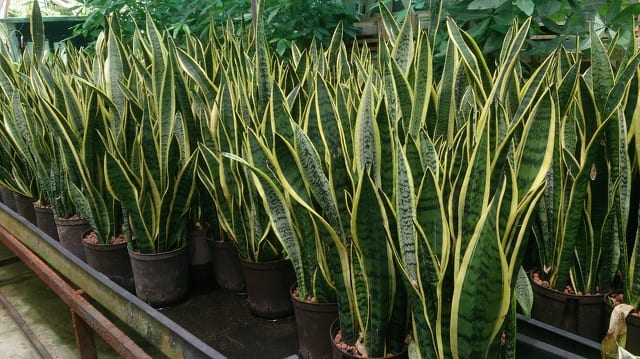
Research done by NASA, according to Penn State Extension, found that some types of plants can remove the largest percentage of home air pollutants. These plants include spider plants, philodendron, peace lily, golden pothos and snake plants. Others that also do the job are English ivy, bamboo palm, ribbon plant, chrysanthemum and types of dracaena.
Indoor plants have certain requirements in order to flourish. They all need proper light, temperature, water, humidity, ventilation, fertilization and soil. And most of all, they must be able to thrive in the specific conditions of their location in a home.
Light is a very important consideration, with varying plants needing high, medium or low light.
The direction in which a window of the house faces affects the light intensity a plant will get.
If the window faces south (known as its exposure), it will provide the most intense light (and be the warmest); an eastern or western exposure receives 40 percent less than the southern exposure; the northern exposure receives only 20 percent of the light of a southern exposure (and is the coolest).
Other things that affect the light are the plant’s distance from the window, types of window treatments, shade from outside trees or buildings, weather, light or dark coloring in the room and even the cleanliness of the glass.
If a plant gets spindly, it may be getting too little direct light. If its leaves are becoming pale or sunburned, it may be getting too much direct light.
Water is also critical to houseplant health, and over- or under-watering is responsible for lots of discarded plants. The truth is that some plants require more water than others, so it’s a good idea to make that a determination before purchasing any plant. How often will it need to be watered?
Also, houseplants in a home do not necessarily have to be watered at the same time.
To test a plant to see if it needs to be watered, a rule of thumb is to stick an index finger about 2 inches into the soil; if it is barely moist, the plant needs water. A second test is to check its weight, since dry potting soil will weigh less.
Water the soil until the water runs out the hole in the bottom of the pot to be sure the roots are watered, but do not let the pot sit in the water. Empty the tray to prevent mineral build-up.
Most foliage houseplants do well with temperatures from 70 to 80 degrees during the day and 60 to 68 degrees at night. Interestingly, flowering houseplants prefer a cooler nighttime temperature of 50 to 60 degrees. If temperatures are too high or low plants may stop growing, become spindly and drop leaves. Plants, in general, need at least six hours of daytime temperatures.
Just as our skins become dry during the winter months, so can plants react adversely to low humidity. Ways to combat this are to add a humidifier to the house heating system or group plants together. Misting the leaves may not really be effective. Ventilation also can affect an indoor plant, so it is wise to keep plants away from drafts and heat registers.
Fertilization is easier in the winter months. It will not usually be needed till March since there is reduced growth.
Finally, the soil or potting medium should be considered. Indoor plants are generally grown in potting mix which is artificial, meaning that it does not contain mineral soil. The reasons for that are so that the soil is consistent from batch to batch, lacking in pests and diseases and lighter in weight. This type of soil lets the roots breathe, but still holds some water and nutrients. It is the bagged potting soil with which we are all familiar.
It is recommended to repot an existing houseplant in the spring. This allows its roots opportunity to grow into the newly added potting mix. However, I have also done this in the fall with no apparent ill effects.
Here are some additional conditions and guidelines:
■ Dead or shabby leaves
Pinch off and discard; they could lead to fungal disease
■ Smooth leaves with dust
Wipe the tops and undersides with a soft cloth. Leaf shine products are not recommended to be put on both sides of leaves because they can clog the stomata (pores).
■ Growing toward a window
Give the plant a quarter turn every time it is watered.
■ Pests such as white fuzz (mealybugs), tiny brown raised areas on stems (scale) or webs and red dots (spider mites)
First segregate the plant from others, then dab away mealybugs with a cotton swab soaked in rubbing alcohol, cut off any stems with scale and give a cold shower to plants with spider mites.
■ Decline in appearance
Plants that are indoors may not look robust by the end of the winter, but often bounce back once outside. It is prudent to wait.
Hopefully, this information on houseplant requirements will get me to a new level of success in my houseplant care. I feel my thumb getting a tiny bit greener already.