
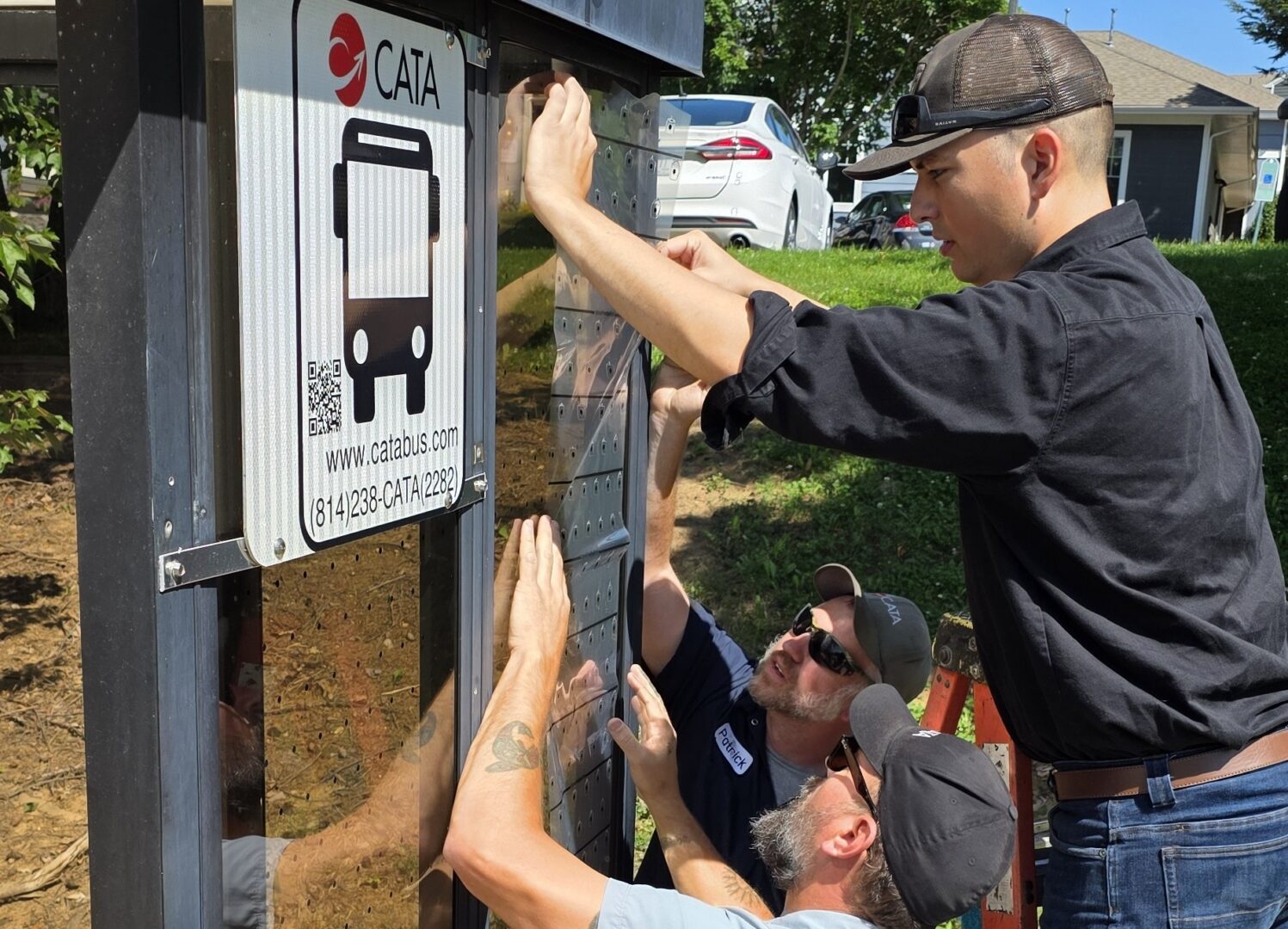
A Centre Area Transportation Authority bus stop is now serving as an example of how simple solutions can prevent bird collisions with glass.
The U.S. Fish and Wildlife Service partnered with CATA on Thursday to install bird-safe window film at bus stop 511, located at 501 Vairo Boulevard, according to a CATA news release. The project is part of an effort to reduce preventable avian collisions and demonstrate low-cost ways to make a difference.
It’s estimated that nearly one billion birds are killed in the United States each year after colliding with glass, and most collisions occur in low-rise structures like homes, offices and bus shelters. Those collisions occur because birds can’t distinguish transparency and reflections in glass from their natural surroundings —so reflected trees, sky or vegetation create the illusion of habitat, and clear sight lines through glass appear to be safe flight paths.
Window film like that installed at the CATA bus shelter features a visible pattern that shows birds that a barrier exists and reduces the likelihood of a collision.
“Making glass safer for birds is something that everyone can participate in using methods that are low-cost and effective,” Richard A. Novak, fish and wildlife biologist with the U.S. Fish and Wildlife Service, said in a statement. “By doing so, we directly protect and save birds at the windows we treat, but we also spread awareness of this issue and inspire others to take similar action for years to come.”
Novak was joined by volunteers from Bird Town Pennsylvania and Bird Safe Penn State to demonstrate how simple and accessible bird‑friendly window treatments can be. Materials were donated by the Fish and Wildlife Service, and installation was completed at no cost to CATA.
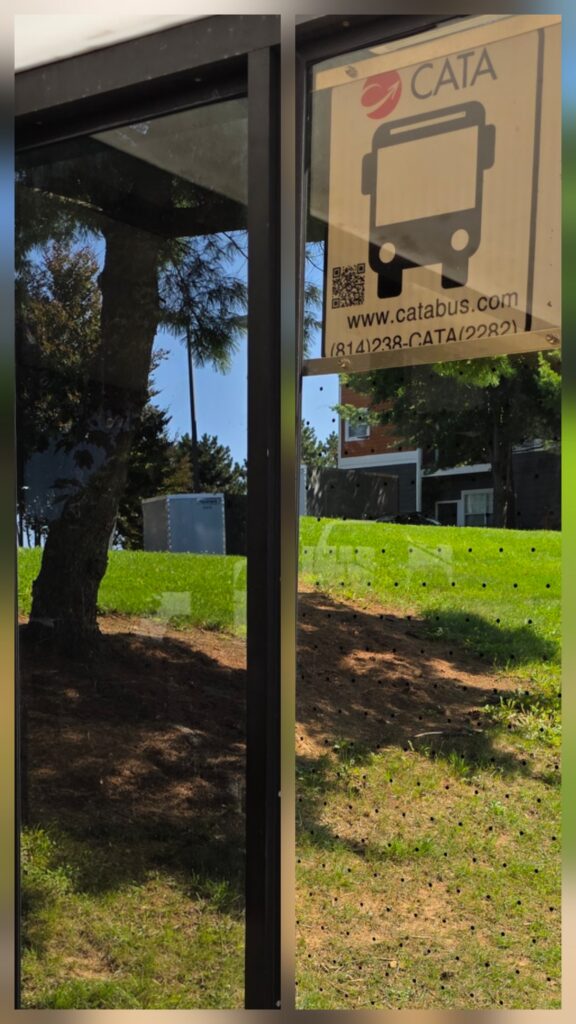
A study in Stillwater, Oklahoma found that bus shelters with bird-friendly film had significantly fewer bird collisions than those with untreated glass. Treating half of the city’s bus shelters resulted in a 64% reduction in total annual bird collisions.
Bird collisions affect a range of local species, including hummingbirds, hawks and wood thrush. Particularly vulnerable are species already on the federal consideration list, such as the golden-winged warbler, which nests in the Scotia Barrens, according to the Fish and Wildlife Service. Protecting common birds now helps keep their populations healthy and reduces the likelihood that they may need federal protection in the future.
“Environmental responsibility is a core part of CATA’s mission, so we happily agreed to partner with the U.S. Fish and Wildlife Service when they approached us about this project,” CATA CEO Todd Horsley said in a statement. “Doing so on this installation allows us to support local conservation while improving the shelter environment for the riders we serve.”
The Fish and Wildlife Service and CATA encouraged residents to explore easy and inexpensive ways to protect birds at home using common household items by visiting https://www.fws.gov/library/collections/bird-friendly-home-toolkit.
More Community
View all Community
100 Years for State High’s Band: Time Flies When You’re Having Fun
Since its inauguration in October of 1937 as the State College High School football field, Memorial Field has produced some remarkable memories. It has showcased the shining talents of six […]
‘Seeds of Goodwill’: Brownie Bash to Honor Josh Brown With Local Musical Lineup
Jeff Brown had just moved to Centre County for a radio job when he discovered how much the locals care for one another. If a house burned, they called the […]
Pumpkin Fest Will Bring Fall Fun to the Arboretum at Penn State
The Arboretum at Penn State will bring its annual Pumpkin Fest back to University Park this month with two days of jack-o’-lantern displays, live music, food vendors, children’s activities and […]


