
This story originally appeared in the November 2026 issue of Town&Gown magazine.
A room packed with the young and young at heart, all gathered for a story. Instead of solely relying on words, the narrator guides audience members through a series of sounds. A bird flies through the fluttering of a flute. A duck waddles and swims through the oboe, while a cat playfully struts through a clarinet. The audience is cautious as a wolf growls through a French horn.
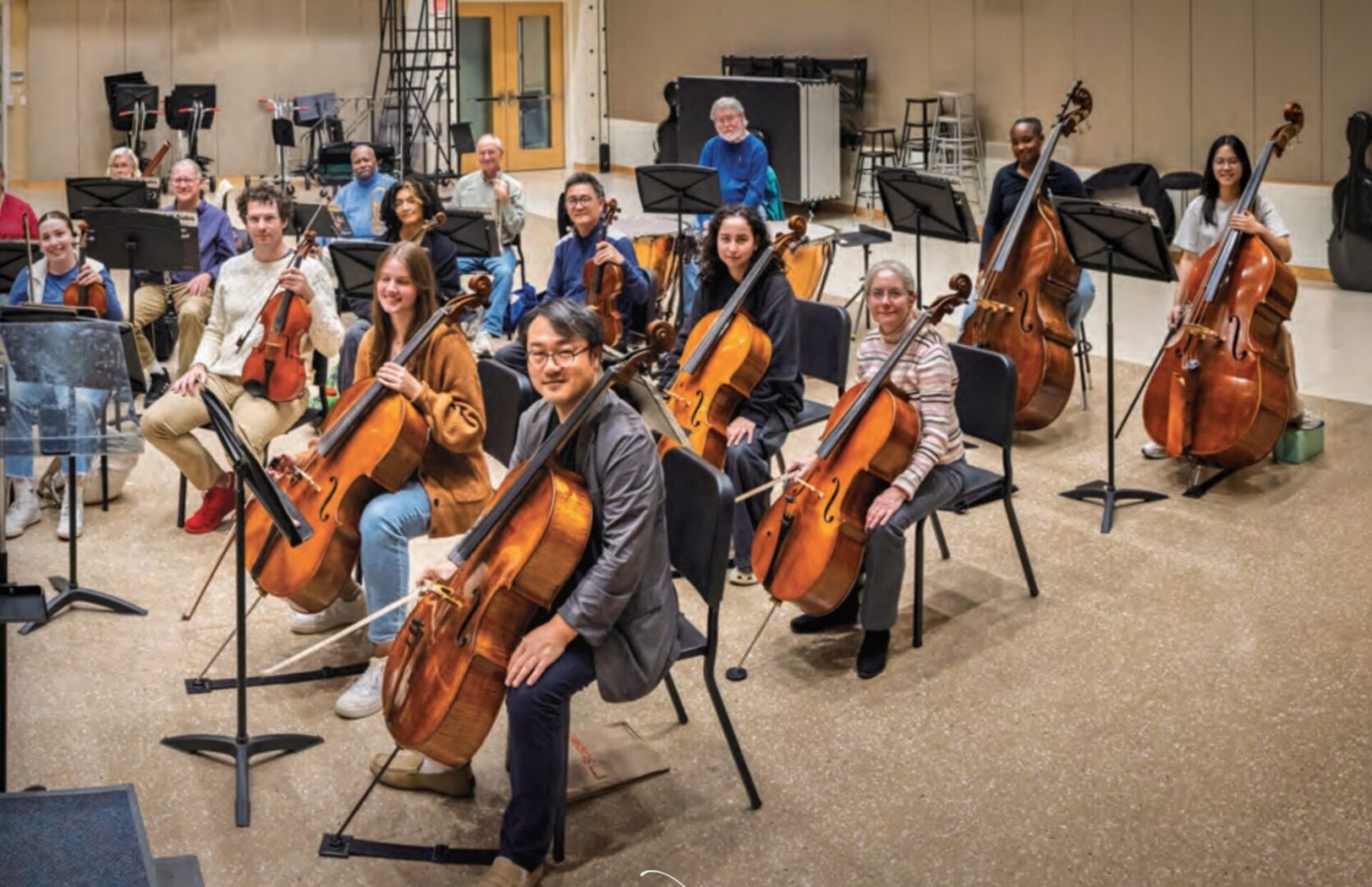
The Pennsylvania Chamber Orchestra’s performance of “Peter and the Wolf” is one of five concerts the group plays each year, executive director Brooke Greybush says.
“Their mission is to bring communities together around music,” she says.
The Pennsylvania Chamber Orchestra has around 35 professional musicians who play in four sections: strings, woodwinds, brass, and percussion.
Founded in 1990 by Dr. Douglas Meyer, Daryl Durran, and Lois Durran, the orchestra is the first all-professional chamber orchestra in central Pennsylvania. It’s a nonprofit that has stood the test of time thanks to the community.
“We have such a strong base of supporters,” says Brooke Greybush, the orchestra’s executive director. “It’s a group of volunteers, board members, donors, sponsors, and the community.”
The Pennsylvania Chamber Orchestra holds auditions each fall and draws professionals from around the world to join.
“We are fortunate to have a world-class orchestra right here in Centre County,” she says. “We’ve had musicians who have been performing with us for decades and that is what is so beautiful about us. I think it paints a tapestry of our community.”
The musicians come together to share their passion for music. Below are four of the people who help make the Pennsylvania Chamber Orchestra a success.
Gerardo Edelstein, conductor
Gerardo Edelstein’s journey to conducting began in Buenos Aires, Argentina. He trained as a pianist and vocalist, citing great teachers for helping to develop his musical passions.
While he enjoyed the piano, he wanted to work with other musicians.
“I needed to be around people and share my love for music with others,” he says.
He credits one performance for sparking his desire to become a conductor. Edelstein sang in a choir at Teatro Colón, one of the world’s best opera theaters.
“I was mesmerized,” he says. Edelstein recalls thinking he wanted to be “on the other side,” conducting instead of singing.
Edelstein has been on the other side for more than 35 years, serving as an educator and conductor with groups around the world and in central Pennsylvania.

As conductor, Edelstein curates the orchestra’s concerts and organizes guest soloists. He’ll spend hours reading scores, and then the musicians will individually practice before coming together for dress rehearsals.
Edelstein says the concert performances are a testament to the talent of the orchestra’s musicians – something he says is unique to humans playing music.
“We have to have people with feelings and a real understanding of the meaning of music playing,” he says, noting the increase in artificial intelligence in the arts. Edelstein says the human interpretation of music will always be important. “You shape musical phrases like we are shaping our voices when we talk.”
He encourages all to attend a concert. They don’t need to have a background in music or even know who Beethoven is. He says the holiday and family concerts are great entryways into the orchestra. If someone is worried about the length, they can always leave during intermission.
“They can come and experience it for half the concert and then hopefully return for a full concert,” he says.
Edelstein tries to showcase local and international musicians through solo and select group performances. The Pennsylvania Chamber Orchestra recently hosted Ukrainian violinist Solomiya Ivakhiv at its September concert.
The maestro has taught at Penn State since 2000 and took over as the Pennsylvania Chamber Orchestra’s music director and conductor in 2023.
“We live in a very incredible place that is hungry for culture, good music, and to keep the arts alive,” he says.
Dr. Langston Fitzgerald III, principal trumpet
A lifelong love of playing the trumpet for Dr. Langston Fitzgerald III began with a curious discovery while playing with his sister. They grew up in a small home in Prince George’s County, Maryland, and opened a closet to see what they could find to do.
There was a black box with a trumpet inside of it. Fitzgerald asked his parents about the instrument and found out it was his father’s.
“I never knew he played the trumpet,” Fitzgerald says. “He was a postman. He was delivering mail. He wasn’t playing at the time.”
Fitzgerald’s mother played the organ and piano, encouraging him and his sister to take lessons. But the allure of the trumpet had Fitzgerald hooked. The instrument became the catalyst for Fitzgerald’s life through orchestra, education, and the military.
Throughout his youth, Fitzgerald played with multiple groups. Although at times facing adversity due to racial tensions, he continued practicing and learning from anyone who would teach him. He was committed to the craft, taking multiple buses for trumpet lessons in and around Washington, D.C.
“A trumpet lesson was an all-day affair,” he says.
Fitzgerald started training with collegiate and community programs while still in high school. He attended a pre-college theory class on Saturdays at Catholic University.
“That was a very critical, monumental thing for me as far as my musical development at a very young age. That was incredible for me and set a tone and a connection for me at Catholic University.”
He’d go on to earn multiple music degrees, including a master’s and a doctoral degree, and teach at Catholic University. Fitzgerald spent 22 years as a trumpet professor, including time at Penn State. He played in the Baltimore Symphony Orchestra for more than 30 years, as well as taught and performed around the world, including with the U.S. Navy Band during the Vietnam era.
Today, Fitzgerald’s office is filled with the trumpets that have been the tune of his life. He continues to play in community groups, including the Pennsylvania Chamber Orchestra.
As a chamber orchestra, the group typically features pieces designed for smaller ensembles, while a full symphonic performance is often much larger, involving many more musicians.
Fitzgerald says the size of the orchestra is a challenge for the musicians to really work through the music.
“It reconnects me with an orchestral flavor,” he says of playing chamber music. “It’s a challenge because it’s not a big orchestra. It’s musically rewarding.”
James Lyon, concertmaster
James Lyon began playing with the Pennsylvania Chamber Orchestra in 1991. He serves as concertmaster, the first-chair violinist and the orchestra’s musical second-in-command.
“It’s my job to try to translate what the conductor wants to the string sections,” Lyon explains. From the violins and violas to the larger cellos and basses, Lyon is responsible for making sure every string player is moving together.
Lyon has taught violin at Penn State for more than 35 years and has played the instrument since elementary school. He encourages anyone of any age who has a passion for learning an instrument to try.
“People who are older shouldn’t feel like they can’t do it,” he says.
Learning is one of the reasons Lyon enjoys playing in the Pennsylvania Chamber Orchestra. Lyon says he loves that international students studying at Penn State bring their musical traditions to the orchestra and take some of the orchestra’s traditions with them.
“We call it the international language,” Lyon says of music. “It’s great because I enjoy having this intersection of generations, musical traditions, and backgrounds. I think it is kind of typical of our American melting pot culture. It’s something wonderful to embrace.”
Lyon acknowledges that digital music streaming options are great for accessibility but stresses that live music is different.
“I think the magic of live performance is there’s going to be something new and spontaneous that happens that day on stage,” he says. “Hopefully, it’s mostly a really good thing, but you know anything happens.”
He says a good performance is like reading a good book or watching a good movie. … One loses track of time.
“It’s always the whole intention to provide this area with the highest quality orchestra playing we can,” Lyon says.
Dr. Sarah Schouten, principal horn
Dr. Sarah Schouten says music has allowed her to see the world around her.
“Music has been a really great vehicle to go explore, learn, create, and do a whole bunch of different things,” she says.
As a child in the southwest suburbs of Chicago, Schouten attended many concerts with her parents and older brother.
“My brother started playing piano,” she says. “Of course, I wanted to do what he did.”
While it may have started as just an effort to be like her older brother, Schouten’s piano lessons opened a door. She joined her school’s band, initially playing the flute.
“I loved band, but I hated the flute,” she says. “They switched me to horn, and I’ve never looked back.”
Now Schouten holds multiple degrees in music and teaches horn at Penn State. During her master’s coursework at Penn State, she learned about the Pennsylvania Chamber Orchestra through her teacher, Lisa Bontrager. Bontrager stepped down from her position in the orchestra and suggested Schouten audition for the spot.
Schouten has played with the orchestra for about five years and has served on the board as a musicians’ representative, a position that excites her for the future.
Her role as principal horn is to help communicate between the conductor and the horn section.
“It’s my job to keep my ears both on my section and out in the orchestra so everything is seamless,” she says.
Schouten stresses that the instrumentalists are doing much more than just playing the right notes. There’s articulation and style, while maintaining the maestro’s rhythm and vision for the piece. She likens the process to a graphic design team creating a flyer. Everyone sees the finished product, but they don’t see the creative work behind it.
“It’s like moving something a centimeter over, changing the font and the color,” she says.
Everyone has something different to offer, and Schouten is always learning from her peers and guests who play with the orchestra.
She encourages everyone to check out one of the group’s concerts.
“Be open to new possibilities,” she says.
Schouten acknowledges many may feel a barrier because of the classical music selections.
“It wasn’t always classical; it was the music of the time. Come as you are and see what you might like. Music is for everybody.” T&G
Hannah Pollock is a freelance writer based in central Pennsylvania who enjoys writing about food, music, and her community.
More Community
View all Community
Halloween Weekend in Happy Valley: Things to Do
Halloween lands on a Saturday this year, and Happy Valley is celebrating all weekend with trunk-or-treats, a haunted corn maze, a big-name concert at the Bryce Jordan Center and late-night […]
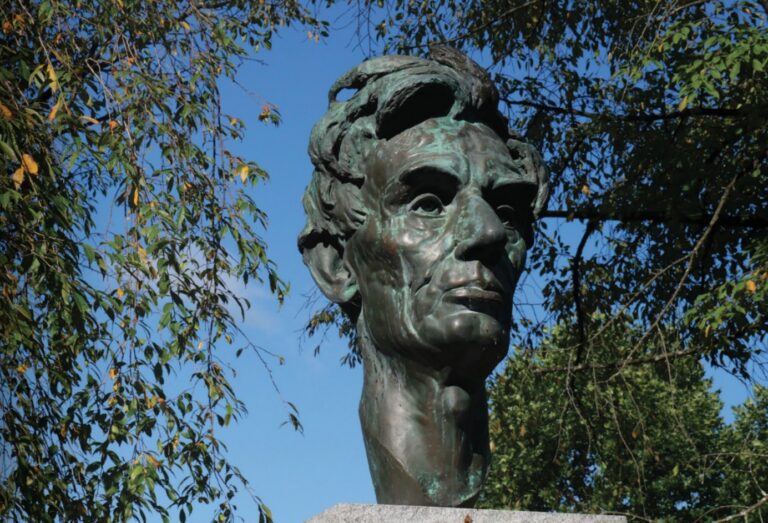
Local Historia: A Lincoln Like No Other
How Bellefonte-born sculptor George Grey Barnard’s unconventional vision of Abraham Lincoln sparked an international debate
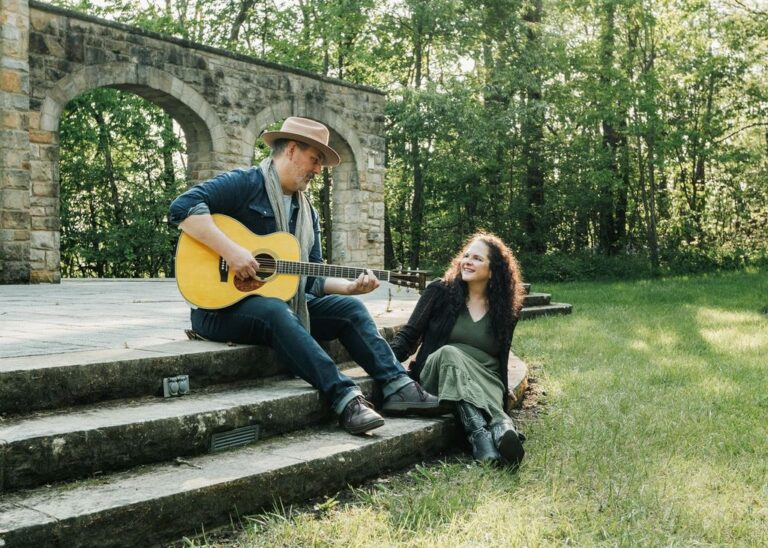
After Years of Playing Covers Locally, State College Couple Turns Their Stories Into Debut Album
After decades of playing other artists’ music, local residents Steve and Kristi Jean Branstetter are telling their own stories. The State College couple recently released the self-titled debut album from […]


