
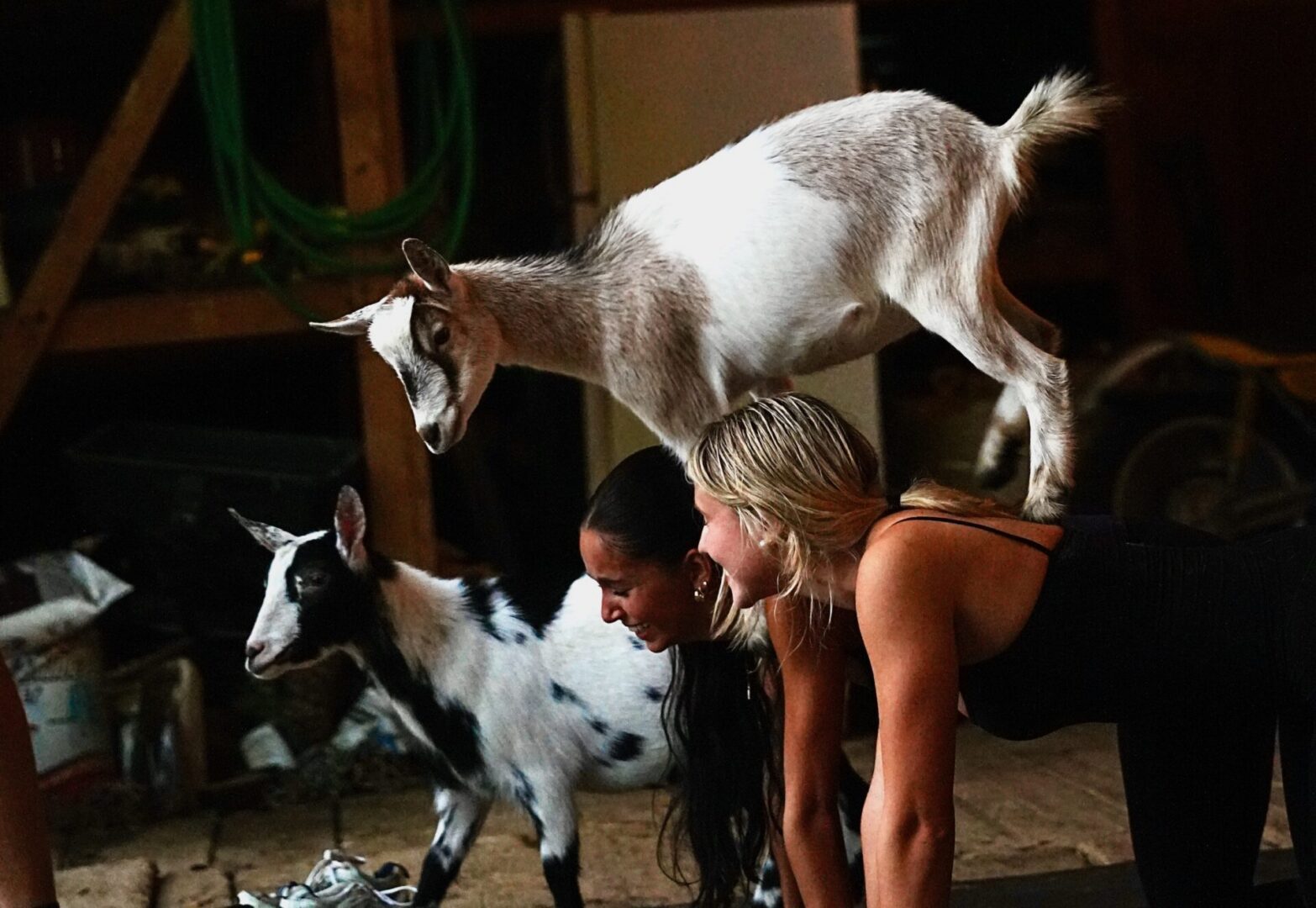
Holding a yoga pose is already difficult. Now try it with a goat climbing onto your back. Then add rain.
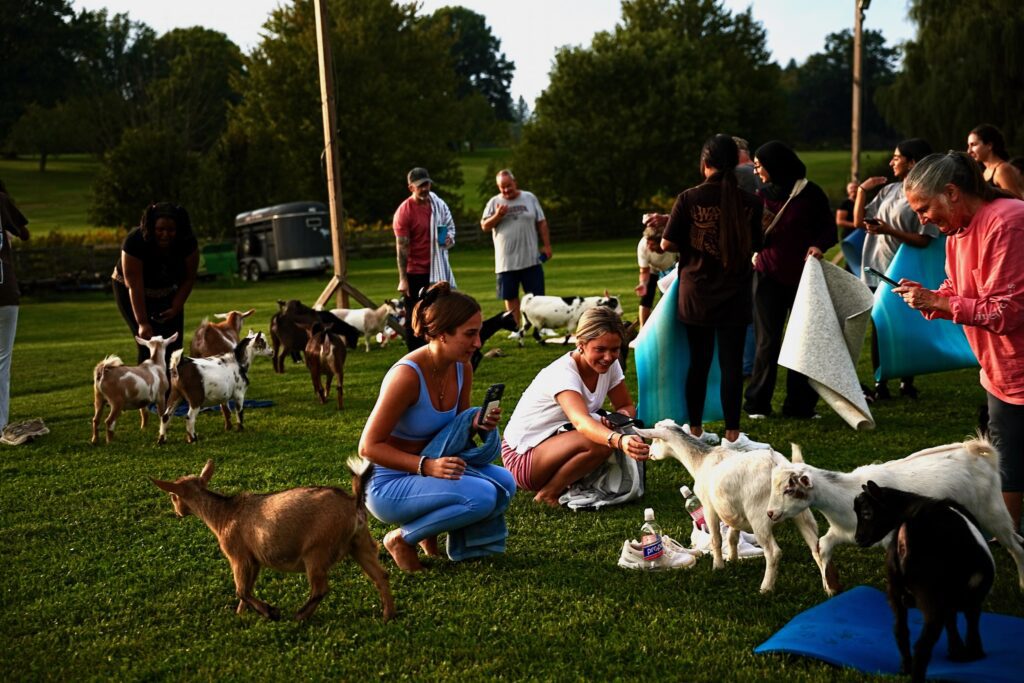
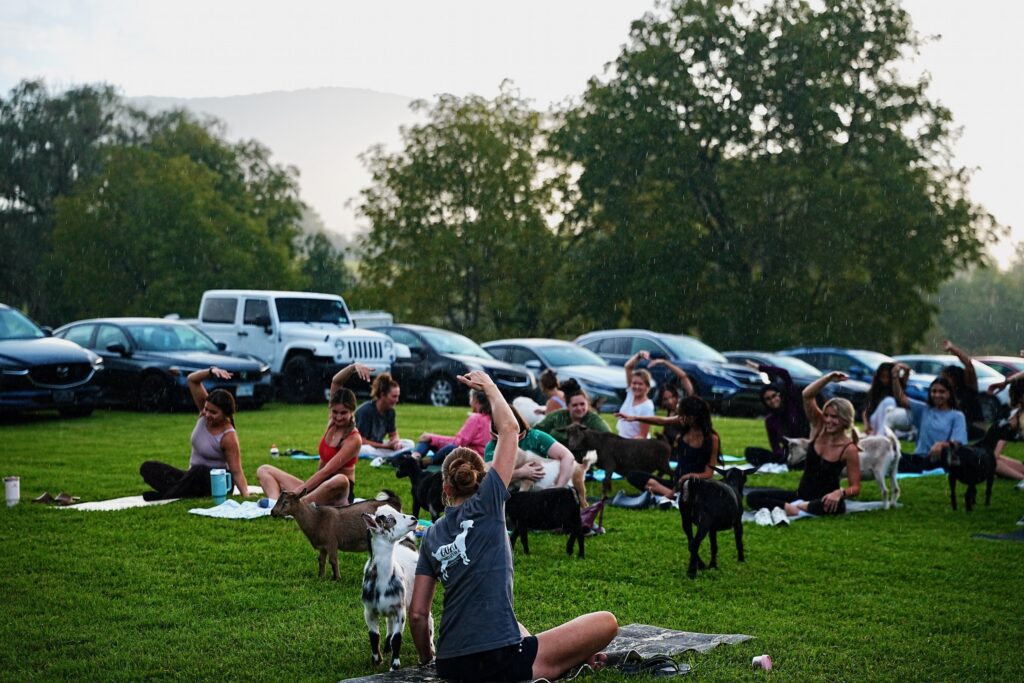
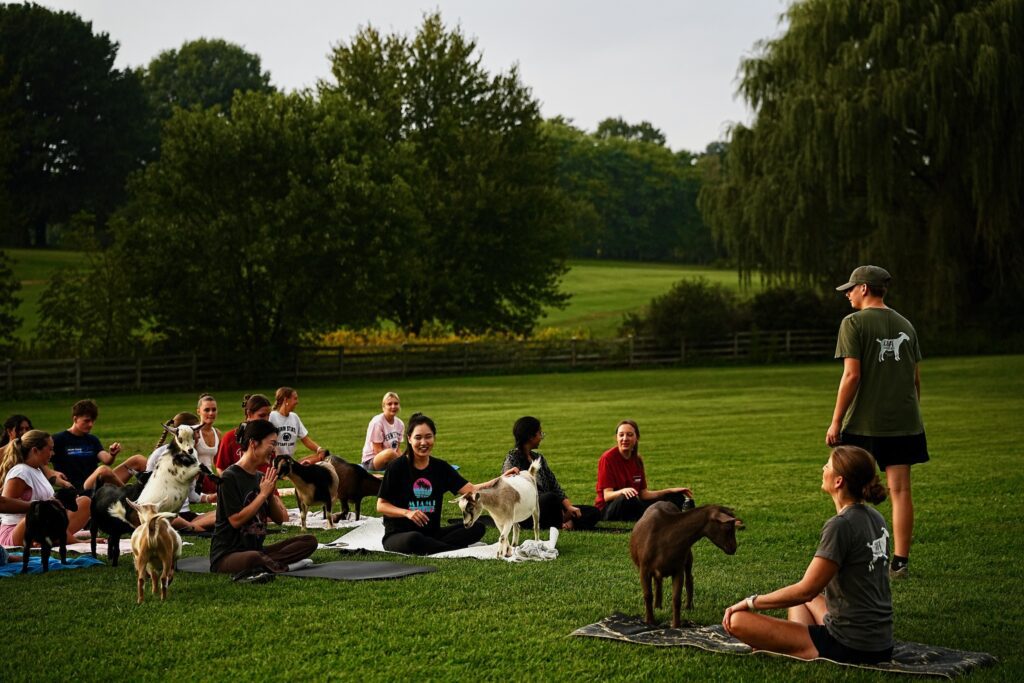
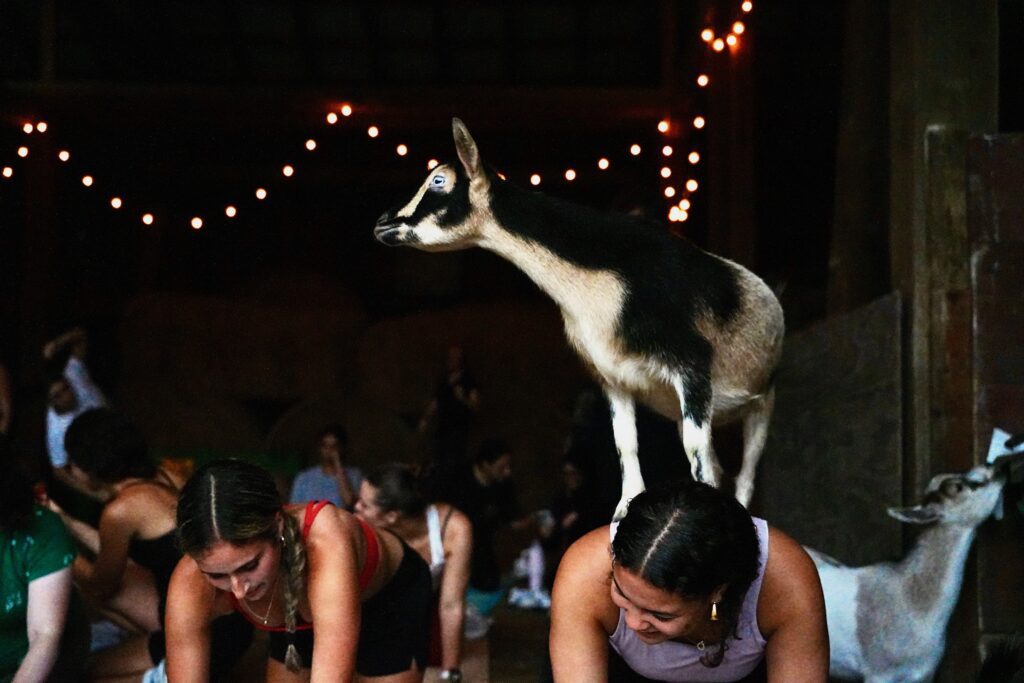
Despite sporadic showers Thursday evening, participants gathered at Nittany Meadow Farm in Boalsburg for a goat yoga class, sharing their mats with the farm’s Nigerian Dwarf goats.
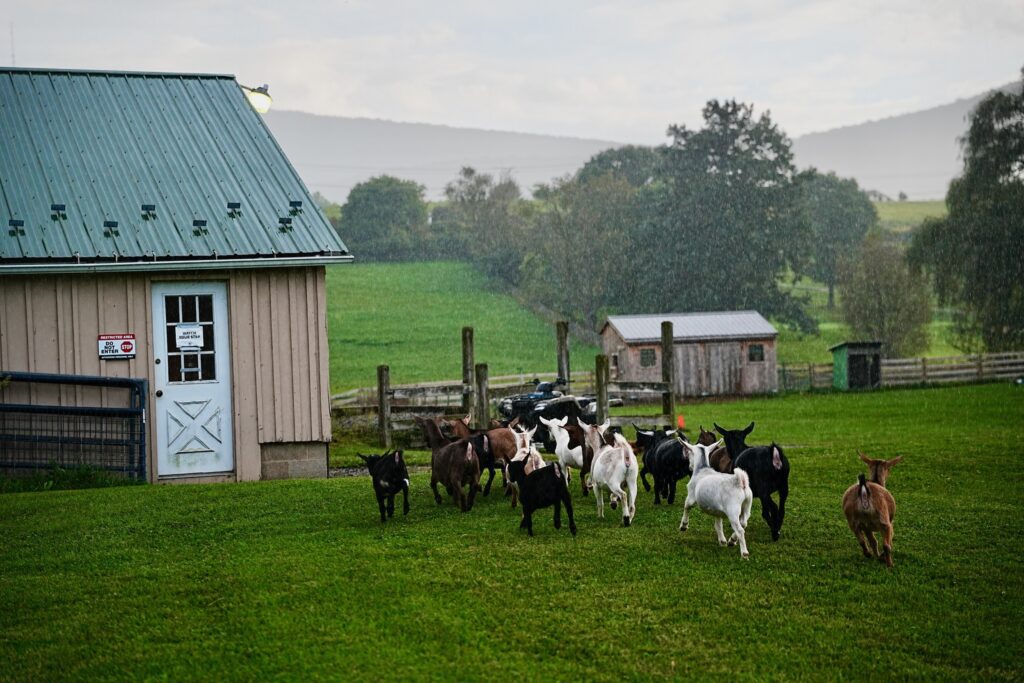
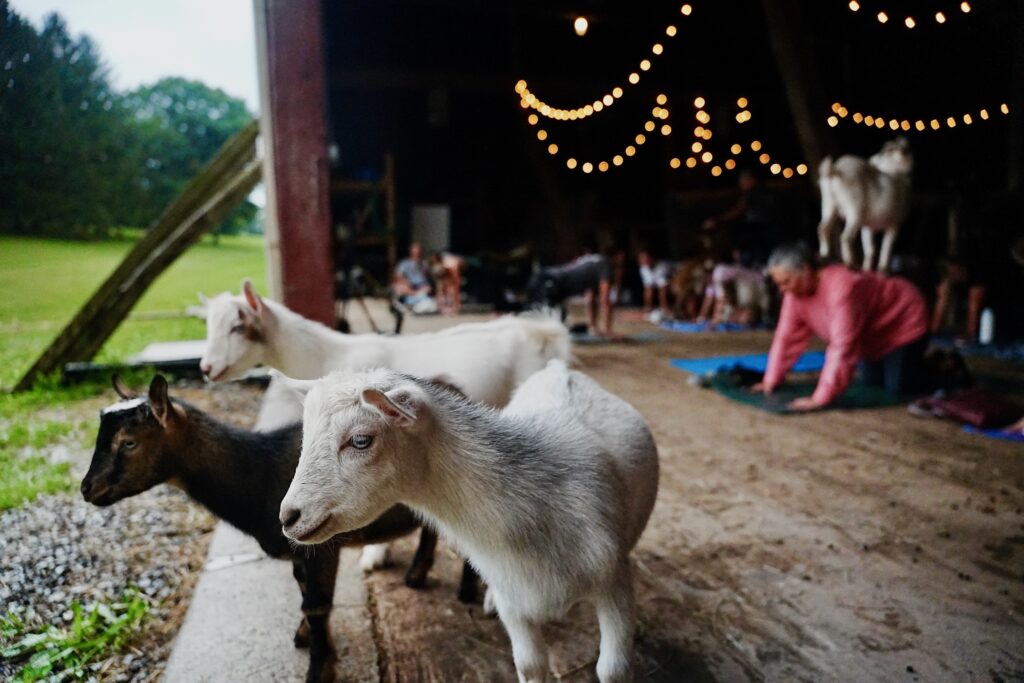
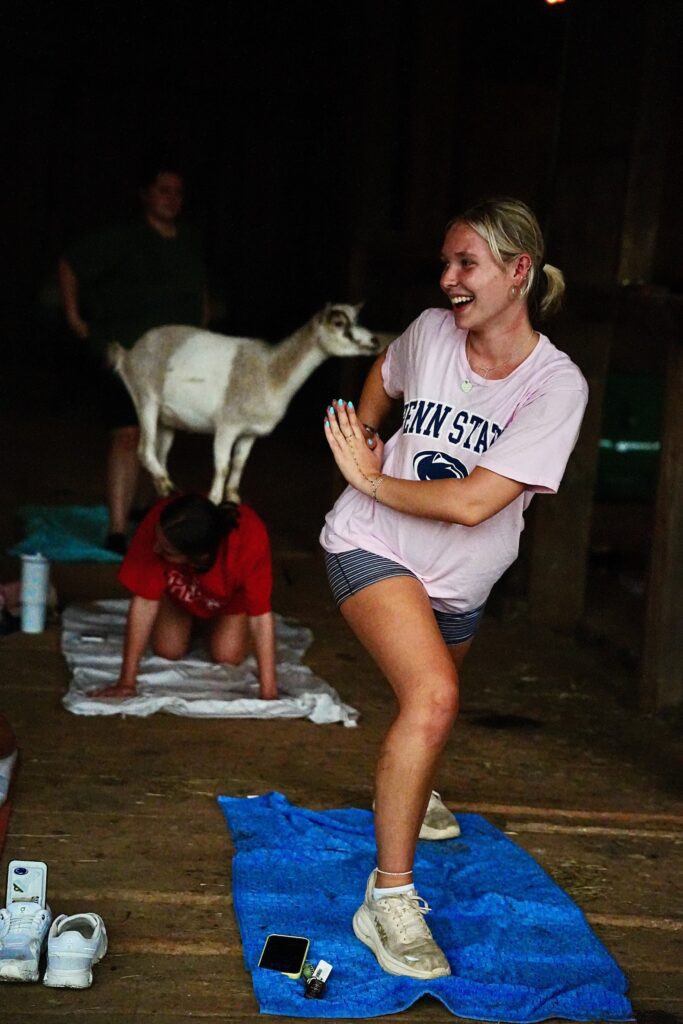
The class began outside at 6 p.m., with goats running between the mats and eagerly approaching participants. But when the rain began pouring down, most of the goats suddenly ran back toward the barn.
Co-owner Tara Immel said it was the first time rain had interrupted one of the farm’s classes after it began.
“They hate rain,” Immel said. “They’ll take a little sprinkle, but when it starts raining, they’ve had enough.”
Participants gathered their mats and followed the goats into the farm’s historic barn, which was built in 1843. Immel said the barn has served several purposes over generations, including as part of a dairy farm, an equestrian facility and a place to raise beef cattle. It is now home to the farm’s goats.
“It’s just a different experience being up there than it is outside,” Immel said. “We got a little bit of both.”
Despite the sudden change, Immel said the class gave participants a glimpse of farm life.
“It’s unpredictable, and as much as we try to plan for things, there’s always things that we can’t control,” Immel said. “We roll with it, and we try to do our best to make everybody have a good experience.”
Rachel Rolston, a Penn State senior majoring in Asian studies with a minor in Japanese, said the Immels offered refunds to participants who did not want to continue after the class moved inside. Rolston chose to stay.
“They can’t control the weather, and yet they still obviously seemed really apologetic,” Rolston said. “They’ve just been super understanding of what it’s like for people to come here.”
Moving inside ultimately made the evening more memorable for her.
“I decided to stay because I felt like this experience was almost more authentic,” Rolston said.
Penn State seniors Mikala Battles and Brynn Forge, both kinesiology majors, also said the move did not diminish the experience.
“It was amazing,” Battles said. “It was more than I could have ever expected.”
Battles had known about the farm’s goat yoga classes since her freshman year but said they often sold out before she could register. With graduation approaching, she and Forge planned around the latest registration opening.
“This is our only chance,” Forge said. “We were planning on the drop this time, and we got it.”
Penn State sophomores Isabella Reark and Kayla Lesisko, who are both on a pre-physician assistant track, had also spent the previous school year looking for an opportunity to try goat yoga.
The pair said moving into the barn allowed them to spend even more time with the goats. They both named Carlos as their favorite and said they planned to register for another class, hopefully experiencing it outside next time.
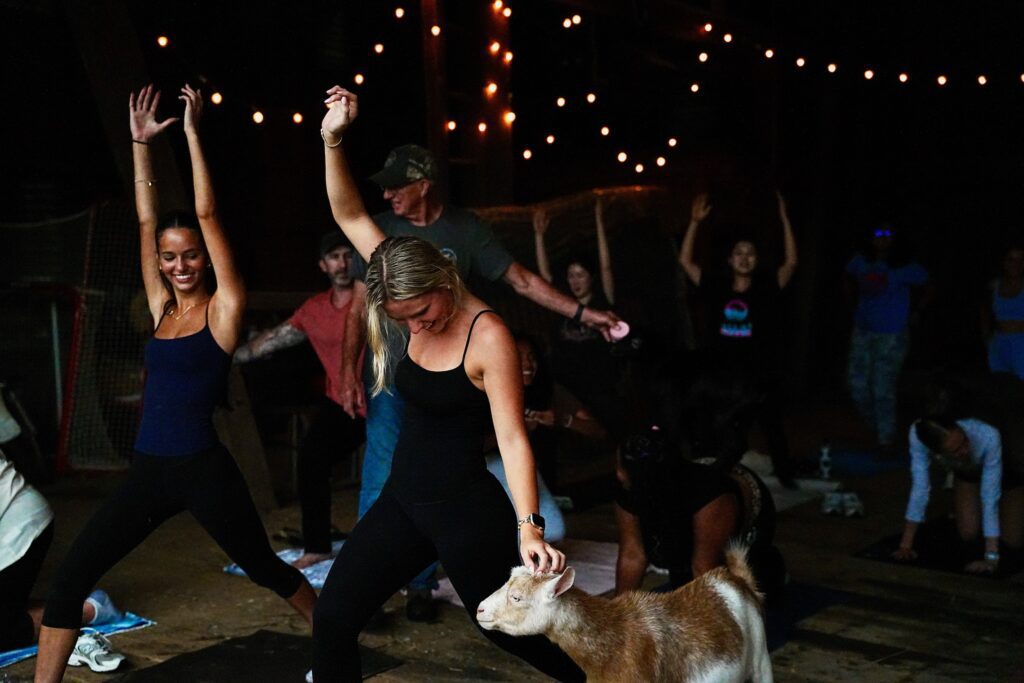
A typical class includes 20 to 30 minutes of beginner-friendly yoga, with poses such as downward-facing dog, tabletop, warrior, butterfly, bridge and side plank.
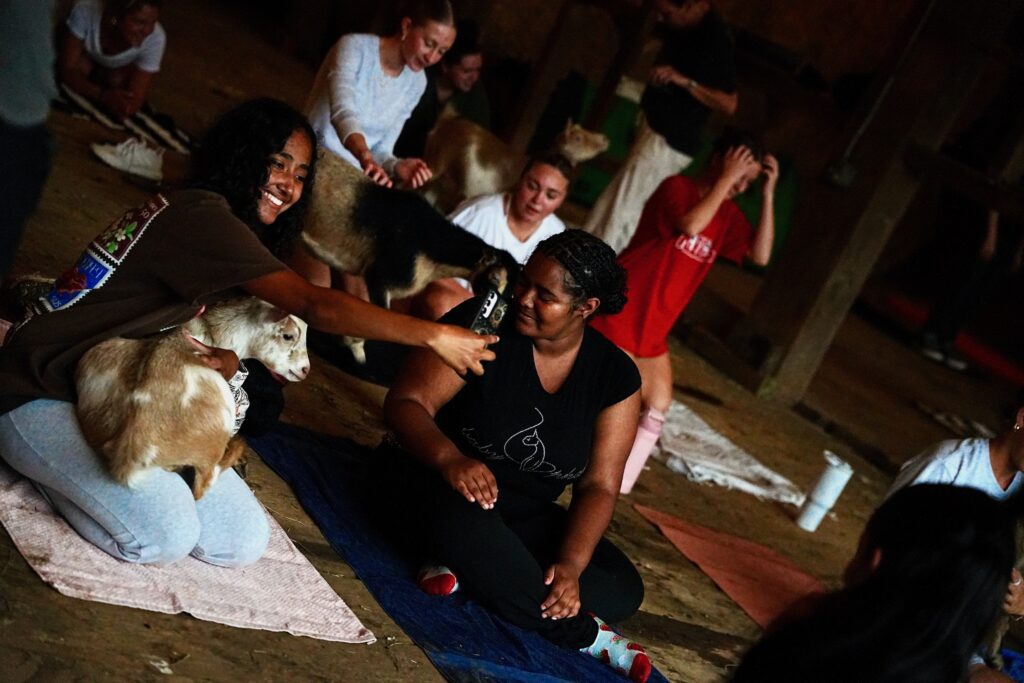
Following along, however, is optional. Some participants complete every pose, while others spend the class sitting on their mats and playing with the goats.
“A lot of our classes turn out that some people never even start,” Immel said. “Their plan is, ‘I’m going to sit here and play with goats,’ and it’s fine.”
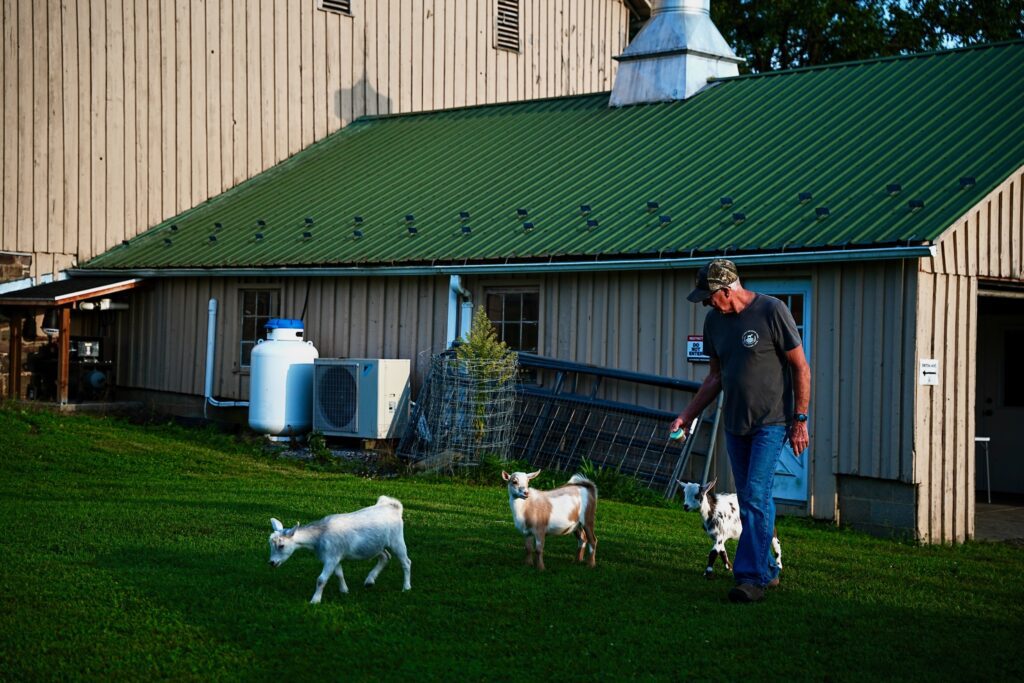
Before Thursday’s class began, Mike Immel introduced himself and the couple’s son, Grayson, as the evening’s “goat whisperers.” While Tara led the yoga, Mike and Grayson walked among the mats with containers of food, encouraging the goats to interact with participants and jump onto their backs.
Mike told the class that the youngest goats, about 3.5 to 4 months old, were participating in only their third or fourth yoga session. The older goats, he said, were already “pros.”
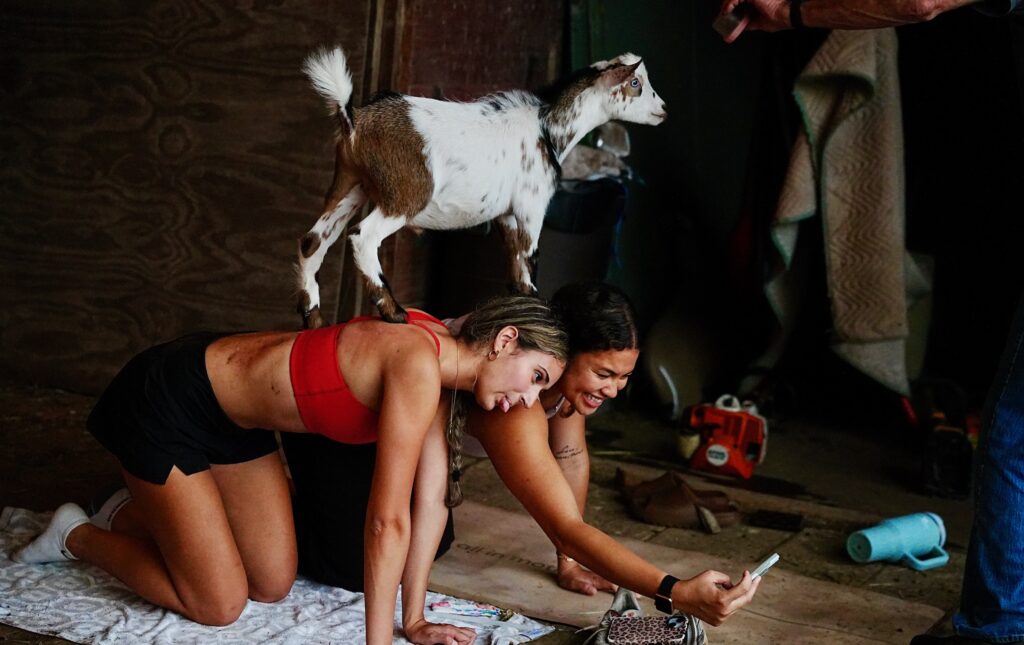
Battles’ favorite pose was tabletop, when seven or eight goats climbed onto her at once.
“When I got stampeded by all of the goats, it was honestly a funny experience, just to feel all of their legs and all of their bodies on top of me at once,” Battles said. “I did feel like I was going to collapse at one point.”
Forge said she was surprised by how comfortable the young goats were around participants.
“They’re so silly, and they’re so cuddly,” Forge said.
Tara Immel was already practicing yoga when the farm began offering classes, but she initially relied on other instructors to teach them. As the program grew and the farm began holding classes as often as four nights a week, coordinating instructors became increasingly difficult.
“We had one yoga teacher who occasionally couldn’t make it, so then we had a backup,” Immel said. “And then you have to have a backup for your backup.”
Immel eventually completed a 200-hour yoga teacher certification so the classes could be built around the family’s schedule. She has taught at the farm for nearly two years while continuing to work a full-time job away from it.
“It just makes our lives easier and my life easier,” Immel said. “I don’t have to coordinate multiple people’s schedules.”
During larger classes, Immel sometimes stops teaching to help Mike and Grayson move the goats between participants. She said the first tabletop pose usually lasts longer so everyone has an opportunity to experience a goat jumping onto their back.
The relaxed format is intentional because many participants have never tried yoga before. The class is less about getting in a serious workout and more about taking a break, interacting with the goats and having fun.
“You’re not coming here for a serious practice,” Immel said. “It’s about having fun with the goats and snuggling and joy.”
For Immel, goat yoga is also more than an opportunity to take pictures with baby goats.
“It’s a real mental health break,” she said. “You can come here for an hour and just get away from whatever bad happened that day or whatever was getting you down that day.”
Immel described the classes as an escape from the pressures of everyday life and an opportunity for participants to temporarily set aside whatever else they may be carrying.
“You can get all of that out of your head and just have some real joy,” Immel said. “I think a lot of people now don’t have a lot of opportunity to just have that happiness.”
That part of the experience resonated with Rolston, who found the class on TikTok while searching for activities involving animals after recently losing a pet.
“It shouldn’t be the only thing if you’re in a bad spot, but I would say, for someone who just wants to spend time with animals and relax with animals, this was a really positive experience,” Rolston said.
She said she had previously visited petting zoos but was surprised by the goats’ willingness to approach participants and show their individual personalities.
“You could see personality in the animals, so I felt a lot better about putting my money toward it,” Rolston said. “I feel like it’s a good place for the animals, at least from what I can tell. Their behavior seems happy.”
Rolston said the way the Immels handled the weather and interacted with the animals showed how much they cared about the work.
“I can at least tell that they definitely love what they do,” she said.
The idea for goat yoga began as an experiment shortly after Tara and Mike Immel purchased the farm in April 2021.
Mike Immel, a former Penn State engineering professor, had previously kept beef cattle, pigs and chickens on a farm in Julian. After selling that property in 2010, the Immels purchased Bellefonte’s Valentine mansion and spent the next decade restoring the fire-damaged property. During that time, however, they realized they missed having land and did not enjoy living in town.
They began looking for another farm but did not immediately find one that felt right. When they first saw the Boalsburg property during the winter, Immel said they did not believe they could afford it. They decided to speak with the owner and make an offer, which was accepted.
The couple purchased the farm in April 2021 and brought home their first five goats days later — three Nigerian Dwarfs and two Mini Nubians.
Later that year, Immel posted in a local Facebook group looking for a yoga instructor willing to teach at the farm. About 10 friends and acquaintances attended the first trial class, sitting outside as the goats wandered among them.
The early setup was simple, with snacks for the goats kept in red Solo cups.
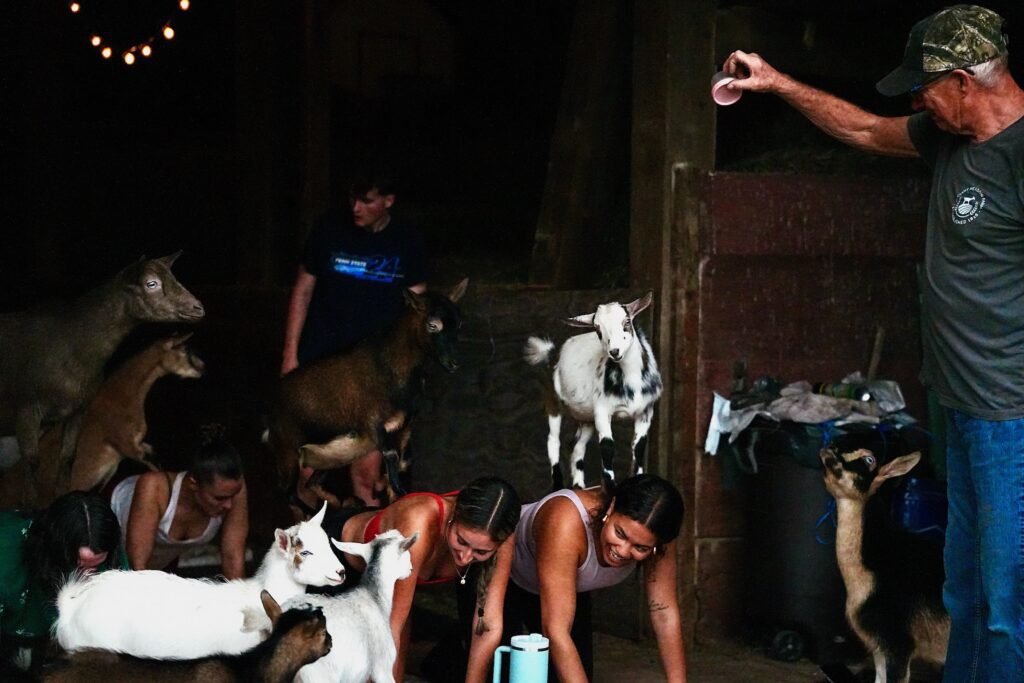
“We’ve evolved since then,” Immel said.
What mattered was how the goats responded to the visitors.
“The goats just loved the interaction with the people,” Immel said. “They got attention from us, but they liked being around other people.”
The farm opened its classes to the public in September 2021. After people began posting pictures from the first few classes online, interest quickly grew.
“One morning I woke up and there were 500 people on the wait list,” Immel said.
The family began offering as many classes as it could to meet the demand, sometimes holding morning and afternoon sessions on Sundays in addition to evening classes.
Immel initially thought interest might fade after the first year, when goat yoga was still new to the area. Instead, the program continued to grow, with the farm offering more classes during its second and third years.
“We never expected that it would continue the trajectory that it has,” Immel said.
Since 2021, Nittany Meadow Farm has held about 300 classes and welcomed approximately 11,000 people for goat yoga.
Today, the farm hosts public classes throughout the spring, summer and fall. Thursday’s class was sold out, as is the next public class scheduled for 6 p.m. Sept. 30. Registration for another class at 6 p.m. Oct. 12 is expected to open soon.
Public goat yoga sessions cost $15 per person and last about an hour, including 20 to 30 minutes of yoga followed by time for petting, snuggling and taking pictures with the goats.
The farm also offers private classes for Penn State organizations and athletic teams, sororities, local businesses, birthday parties and other groups. Its largest class included 92 participants.
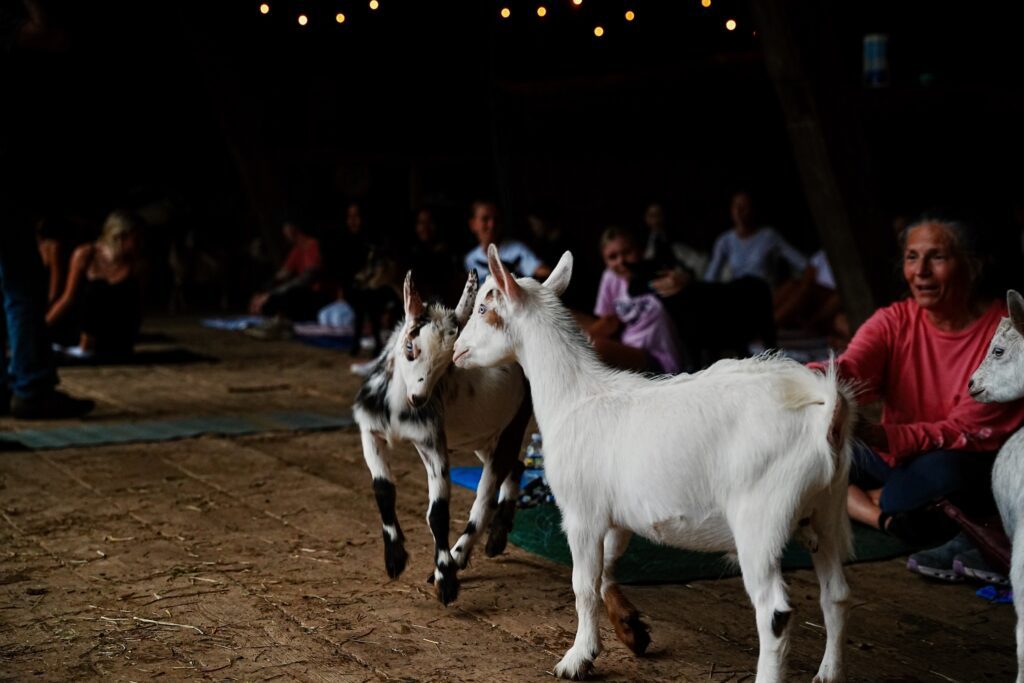
But not every goat at the farm is interested in joining the class.
Nittany Meadow Farm currently has 111 goats, with another 12 to 36 babies expected during its mid-October kidding season. Only Nigerian Dwarfs that enjoy being around people are selected for yoga.
Before joining a class, the young goats take part in several socialization activities to see how comfortable they are interacting with people. Beginning when they are about 4 weeks old, the goats are held and cuddled during the farm’s baby goat snuggling events. They later begin learning to jump onto participants’ backs.
“We don’t force a goat that does not want to be social to participate, because it’s not fair to them,” Immel said.
The goats are trained with food and learn by watching the farm’s older yoga goats. They are taught to jump onto a participant’s back, turn until their head is above the person’s head and then jump down.
“They watch those older ones and learn by mimicking,” Immel said. “They also realize that when they jump, they get a snack.”
The socialization prepares the goats for life beyond yoga. As they grow older, some enter the farm’s dairy herd, where being accustomed to people, physical handling and loud equipment can help keep their stress levels low.
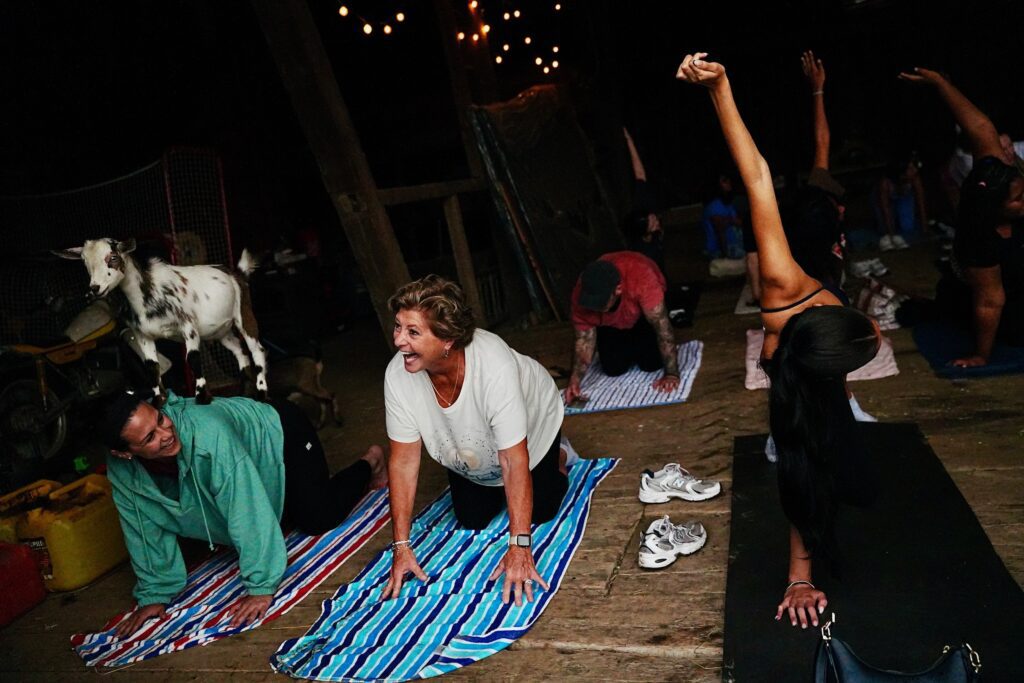
The dairy grew out of the need to find another role for the animals once they were too old for yoga.
“We have to have babies and small goats to do yoga, but then they need a job when they get older,” Immel said.
Nittany Meadow Farm became licensed by the state to produce and sell goat milk in March 2025.
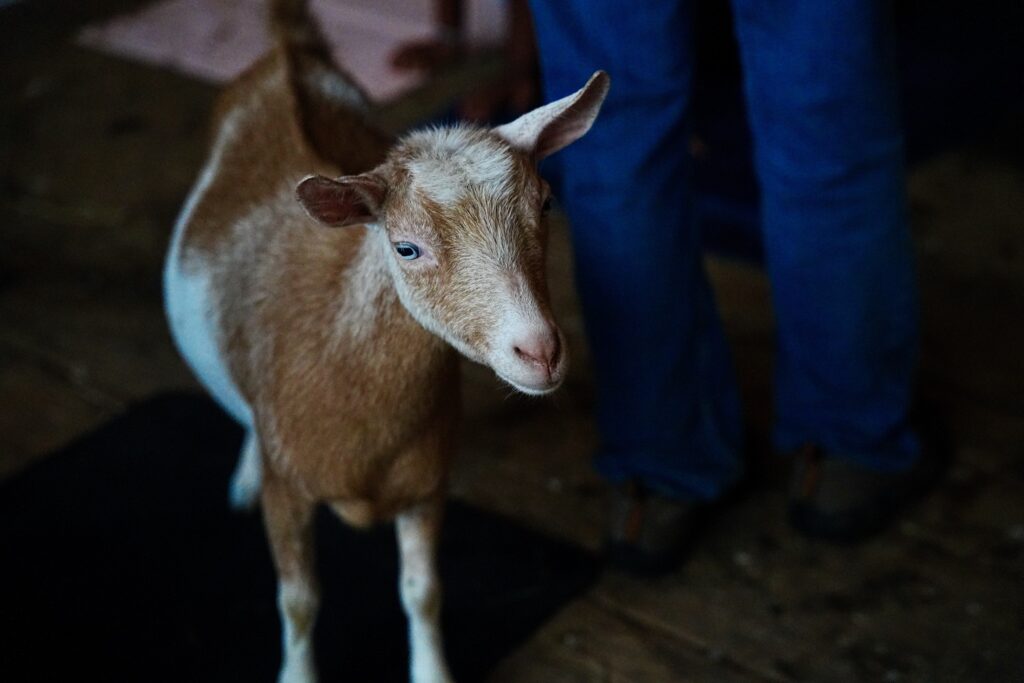
All 10 Nigerian Dwarf goats born at the farm in June were selected for yoga after showing that they enjoyed being around people. Thursday’s class also marked the yoga debut of a little goat named Carlos.
Carlos was the smallest of three kids born to a goat named Sage. Although he was not premature, Immel said he was so small that she was unsure whether he would survive his first night.
When Carlos struggled to nurse, Immel collected colostrum from his mother and fed it to him with a syringe. She and Mike considered bringing him into their house but decided to leave him beneath a heat lamp in the barn so he would not be separated from his mother.
“We typically don’t bring goats in the house unless there’s a dire need,” Immel said. “Once you take them in the house and separate them from their mom, they’re going to be a bottle baby, and we try to avoid that because we think it’s best for their moms to raise them.”
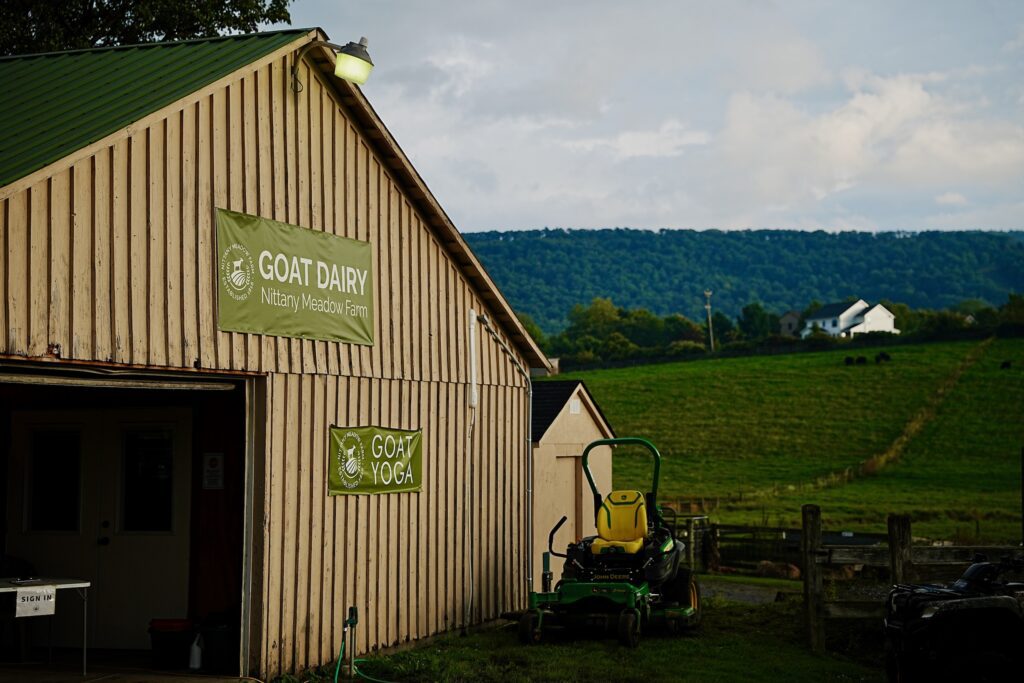
When Immel returned the following morning, she found Carlos lying alone against a wall and initially thought he had died.
“I opened the gate, and I just saw a little bit of movement,” Immel said. “I ran over to him and grabbed him, and he made it.”
Carlos eventually began nursing on his own but remained hesitant to jump onto anyone other than Immel. With help from Jennifer Rosson on Thursday, he began jumping onto participants’ backs.
“We don’t have favorites, but he became a favorite,” Immel said. “It’s nice to see the ones that, at the beginning, you’re not sure are going to make it gain that confidence and be able to do what all the other goats are doing.”
Carlos also won over participants. Forge, Reark and Lesisko all named him as their favorite goat of the night, while Battles initially chose another goat named Peach before agreeing that “Carlos was the favorite.”
Rosson first visited Nittany Meadow Farm about two years ago. She continued returning, became friends with the Immels and eventually began helping during classes.
Since then, Rosson has watched the program continue to attract new visitors while also seeing familiar faces return.
“It’s amazing,” Rosson said. “I think that it’s really cool to see just how people react to it.”
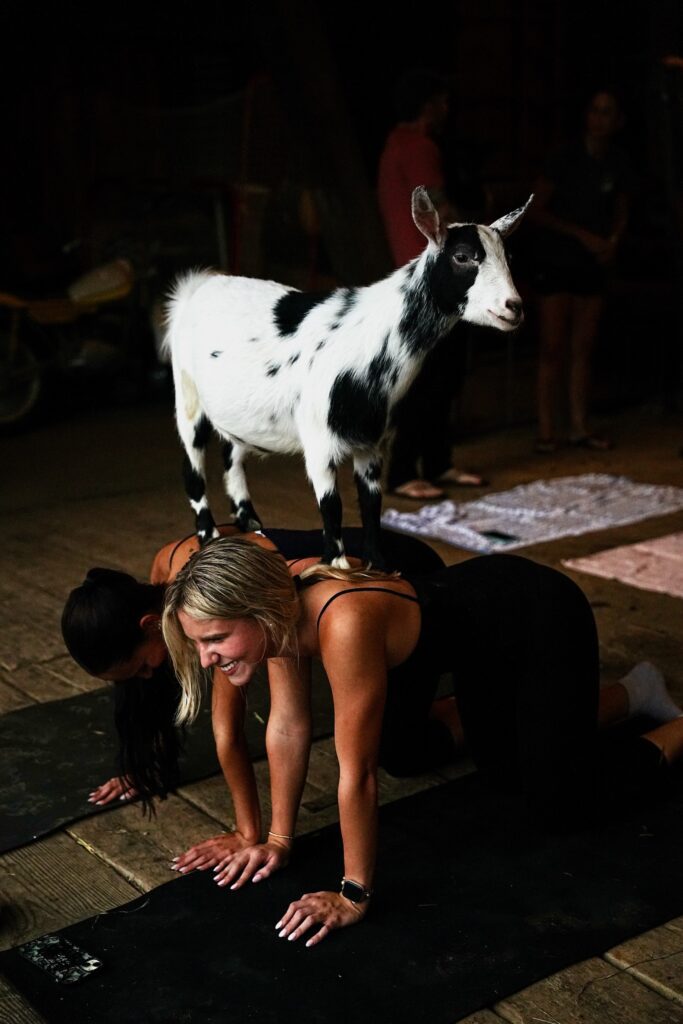
Many visitors have never interacted with a goat before, she said, and are surprised by how friendly and social they can be.
“I hear people say, ‘Oh my gosh, it’s just like a puppy. It’s just like a dog,’” Rosson said. “They don’t realize that they are social animals.”
Her favorite part comes before the yoga begins, as participants wait for the goats to run into the class.
“People are giddy,” Rosson said. “They can’t wait to see these baby goats come out. I think that it’s just so pure.”
Because the goats are livestock and can behave unpredictably, participants must sign a waiver before taking part. Goat yoga is limited to those 18 and older, and guests are instructed to keep their backs flat when a goat climbs onto them.
“We don’t want the goats falling off and getting hurt,” Immel said. “We don’t want you getting hurt.”
Participants are also encouraged to wash or sanitize their hands after interacting with the animals.
Being around livestock can come with messier moments. Participants who get pooped on receive a button reading “Shit Happens,” featuring the farm’s name and a small goat.
Mike told the class that only eight of the approximately 11,000 goat yoga participants have been peed on. Those unlucky few are allowed to choose a larger item from the farm’s merchandise case.
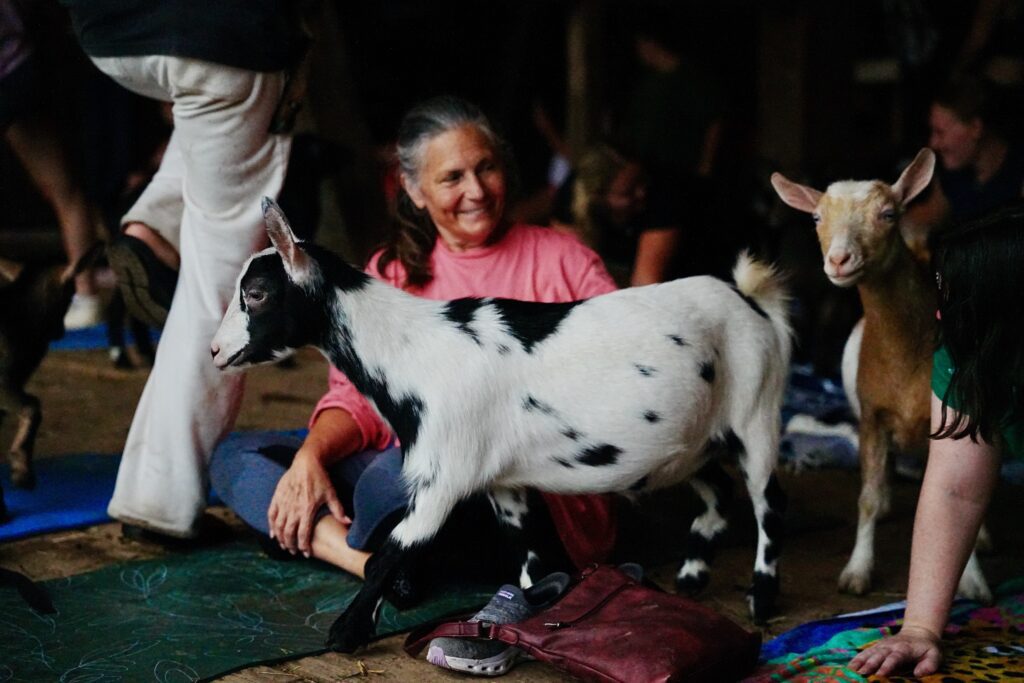
First-time participant Gwen Holderman experienced both during Thursday’s class, but neither fazed her.
“I was a nurse for 40 years and a nursing instructor for 30, so it didn’t bother me,” Holderman said.
Having a goat on her back felt “strange,” she said, but it was lighter than she expected. She said she would attend another class, naming snuggling with the goats as her favorite part of the experience.
Asked to describe the overall atmosphere, Holderman answered with one word: “Happiness.”
“It is what it is,” Immel said of the occasional accident. “It’s farming.”
As interest in goat yoga grew, the Immels began finding other ways to bring people and goats together.
One of those ideas was the Goat Bus, which began after parents asked whether the Immels could bring goats to birthday parties. Because the goats could not simply be placed in someone’s yard, the family needed another option.
They purchased a former Mifflin County bus that had been used to transport older adults to appointments. The family stripped its interior and converted it into a climate-controlled miniature barn.
During events, the goats remain inside the bus while visitors board in groups of about eight to hold and interact with them.
“People get on, we take the babies and let the babies out, and people get to snuggle and hold them,” Immel said.
Keeping the goats aboard protects them from the weather and eliminates the need to place livestock on the properties the bus visits.
Immel said she believes Nittany Meadow Farm has the only Goat Bus of its kind in the country.
The Goat Bus has visited Penn State student housing complexes, birthday parties, festivals, workplaces and even a wedding. The farm also takes it to employee mental wellness events and Penn State’s Welcome Week and finals week.
The farm has received requests to bring the bus to locations as far away as New Jersey, but its travel is generally limited to within 30 miles of State College. Immel said the limit prevents the trips from becoming too tiring for the young goats.
“It’s not always about what people want,” Immel said. “It’s about making sure we’re doing the best we can for our animals.”
The farm also offers goat walks, snuggling events, pajama parties, seasonal celebrations and art classes. During its “Goats and Art” events, participants take a watercolor class inside the barn while using the animals as inspiration. The farm has also hosted a class in which participants created stained-glass goats.
The farm sells whole goat milk, goat cheese, handmade goat-milk soap, pasture-raised beef and goat-themed merchandise. Immel also makes soy candles and designs the farm’s stickers. Visitors can stay overnight in one of two cottages on the property.
Many of the farm’s activities begin as spontaneous ideas. The evening goat walks, for example, began after Immel decided one Wednesday to add one to the calendar for the following week.
“I never know what I’m going to come up with next,” she said. “More fun goat stuff.”
Mike, a former Penn State engineering professor who retired early, now manages the farm full time, milks the goats and handles much of the outdoor work. Tara oversees scheduling, yoga instruction, private-group coordination, social media and the cottages while also working a full-time job away from the farm.
For Immel, seeing people leave happy and choose to return is what makes the work worth it.
“I don’t know that I’ve ever seen anybody leave here unhappy,” she said. “It’s just seeing that joy that the goats bring that really makes us happy.”
More Community
View all Community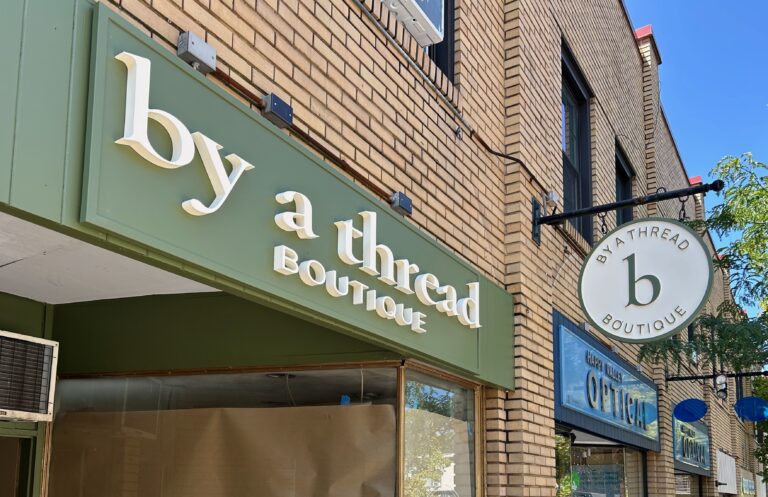
Women’s Clothing Boutique Opens New Location in Downtown State College
A locally owned women’s clothing and accessories boutique is now open at its new location in downtown State College. By A Thread opened its new store at 210 S. Allen […]
State College Soccer Celebrates 50th Anniversary of State Title Win
Players and coaches from State College's first state champion soccer team gathered to celebrate the 50th anniversary of that magical 1976 season.

Nittany Valley Symphony to Launch 2026-27 Season With ‘Dreams of the Forest’
The Nittany Valley Symphony will present its 2026–27 season opener, “Dreams of the Forest” at 3 p.m. Sunday, Sept. 20, at Bellefonte Area High School. Tickets are $33.85 including fees […]


