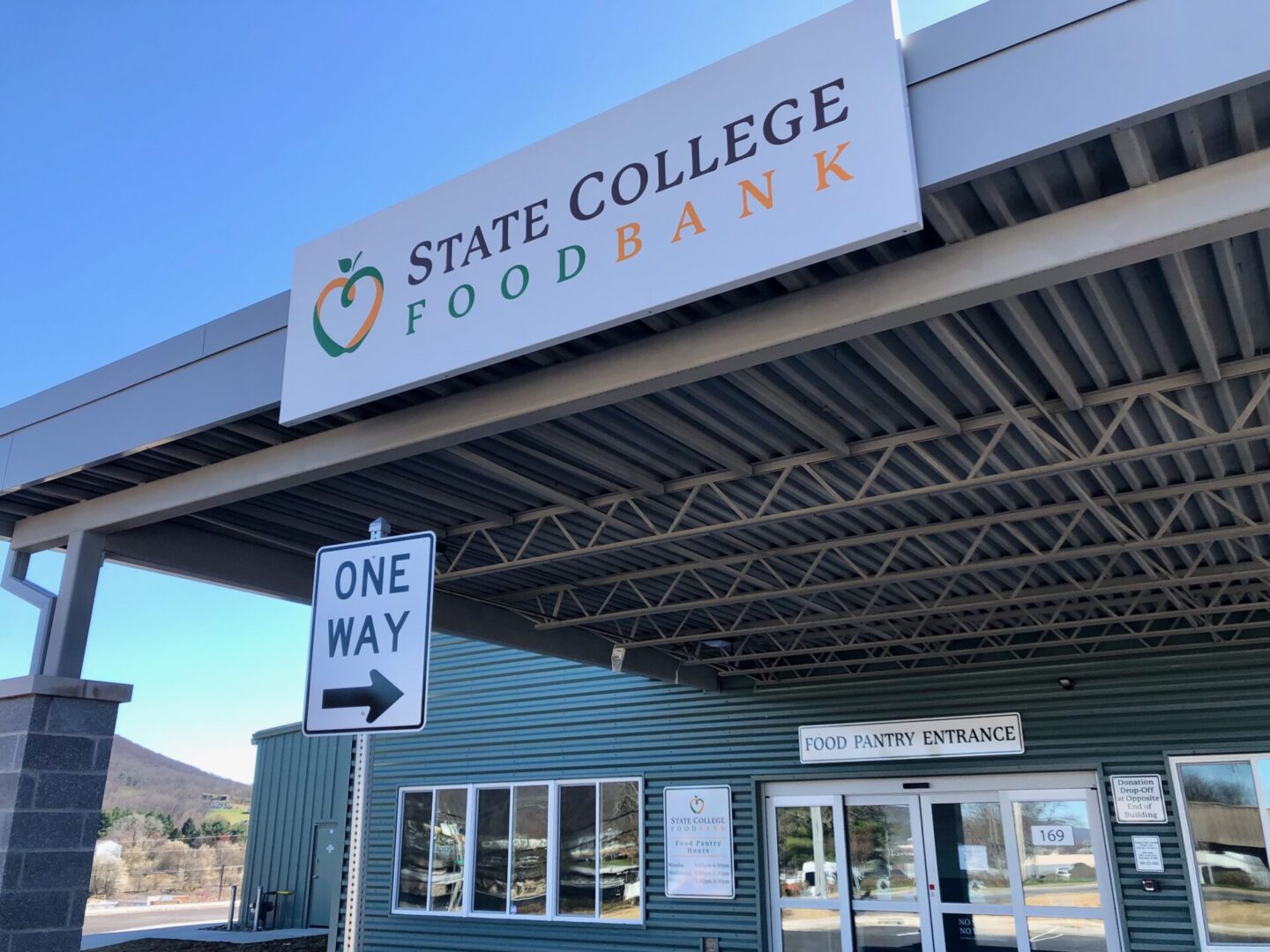
The State College Food Bank is taking a new step to further its sustainability efforts and save money that can go directly to combatting hunger in Centre County.
Solar panels being installed on the food bank’s building at 169 Gerald Street by local company Envinity are expected to be operational this week.
“We are incredibly grateful for the support that made this project possible,” Allayn Beck, executive director of the State College Food Bank, said. “Every dollar we save on utilities is a dollar we can put toward feeding our neighbors. This project strengthens our ability to serve our community while also reducing our environmental impact.”
The cost of the installation was covered by $750,000 in federal appropriations funding the food bank received in 2024 for capital improvements to its new building, which opened that spring, Beck said. The funding also supported improvements such as a recently completed retaining wall.
“We applied for the funds to help with the renovations on our new property,” Beck said. “So, we are now adding all the finishing touches.”
While exact electricity cost savings may vary from month to month, Beck expects the solar panels will eliminate a “good chunk” of energy expenses.
As food banks face rising costs for food each year, reducing escalating electricity expenditures means that more financial resources can be directed toward food purchasing and the organization’s essential programming.
It also builds on the food bank’s existing efforts to reduce its environmental impact. Beck said the organization works to minimize waste at every stage of its operations, including a partnership with State College Borough to compost fresh food that cannot be distributed, collaboration with the Centre County Recycling and Refuse Authority on recycling initiatives and a program with Wegmans to collect and recycle plastic grocery bags from community donations.
Combining renewable energy with its waste reduction and recycling efforts is a commitment to maximizing the impact of every dollar the food bank receives and model responsible environmental practices, Beck said.
“This initiative reflects the food bank’s commitment to sustainability while strengthening its operations and furthering its leadership as an environmental steward in the community,” Cam Willison, commercial solar development manager for Envinity, said.