
The word “weed” is part of some interesting expressions in our culture. I can “grow like a weed” (very quickly), be “deep in the weeds” (overwhelmed by problems), “weed something out” (remove an unwanted object), or even smoke “weed” (tobacco or marijuana). I can also wear “widow’s weeds” (mourning clothing), or say “weed of my crime could bear bitter fruit.”
I can also, alas, spend a part of a Saturday “weeding” my garden beds, which can be a chore as unpleasant as it sounds.
What are weeds, anyhow, and why are they so reviled?
In a very general sense, weeds are those plants whose negative qualities outweigh the positive. They could be chickweed or hairy bittercress, which are ugly and invasive, but they could also be lovely red monarda or fragrant mint. Choose any plant and think about whether it could possibly meet the following criteria:
■ It grows where it is not wanted, such as in a lawn when it should be in a bed.
■ There is too much of it.
■ It is too hardy, and no matter what steps are taken, it continues to proliferate.
■ Other plants are being interfered with by its habits. This can happen when it has blocked the sun or competed with surrounding plants for water.
■ It interferes with human activity, like growing across the walkway.
With these criteria met, couldn’t almost any thriving, spreading plant at some time be considered a weed?
Actually, no plant is a “weed” in its natural setting; it’s when we try to affect nature by growing crops, for instance, that nature becomes persistent. That’s because we are growing plants for a yield, whereas nature is growing them for survival.
Weeds are plants that become very competitive and thrive due to good conditions. They therefore end up dominating. Many survive because they may have lots of seeds, establish rapidly and thrive in sites where humans live.
It has been estimated that of the approximately 250,000 species of plants worldwide, there are about 8,000 species that act as weeds.
As much as we would like to coexist, the fact is that weeds not only reduce crop yields in farm settings due to competition for light, space, water and nutrients in the soil, but they can be hosts for diseases or overwintering insects and produce chemical substances that are toxic to plants, animals or humans. They also destroy natural habitats by threatening native plants and animals and choking rivers and forests.
And, their control has a major impact on the economy. According to the Penn State Extension’s weed management site, “In 1991, the estimated average annual monetary loss caused by weeds with current control strategies in the 46 crops grown in the United States was $4.1 billion.” Farmers are spending huge amounts on weed control, as are others in their communities.
Though they have a terrible reputation, not everything about weeds is bad. Some of their benefits can be stabilizing the soil, providing a habitat for wildlife and nectar for bees and adding organic matter when they break down. We forget that many were originally grown for their medicinal properties, and in recent times some, such as pussy willow, are used for phytoremediation, which is to clean up land contaminated by a variety of human-generated products like heavy metals.
The point is that the plants we label “weeds” can be controversial, but many do need to be controlled for society’s greater benefit.
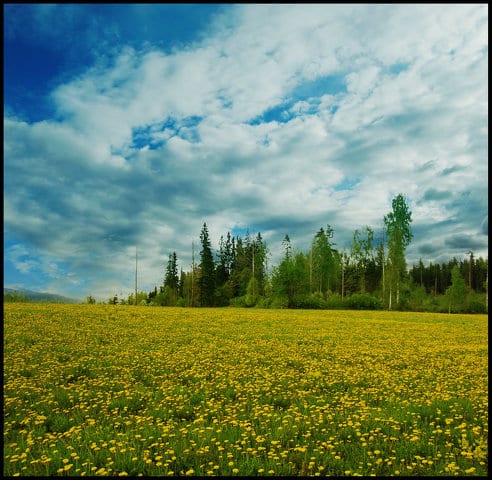
This control can take many forms. Let’s take the example of dandelions (nine out of 10 homeowners agree on the dandelion as a sinister weed, but public opinion is shifting)
The common dandelion (Taraxacum officinale) emerges in early spring. It’s a perennial and a member of the daisy family. It flowers in spring and fall when there is less than 12 hours of light or on a shady summer day. Even though bees like the delightful yellow flowers for a food source, they do not pollinate them; the seeds develop without being fertilized.
The flower bud develops for about a week. It opens early in the morning and closes the same evening. When the seeds finally mature, the flower reopens to the familiar puff ball of individual seeds, which can be carried away by the wind. Each dandelion plant has a strong taproot that can be as long as 6 feet.
If the taproot is broken, each piece can then send up from two to five new shoots.
The common dandelion can tolerate almost any climate and elevations from sea level up to 12,000 feet. This is one tough plant. Hence its common name, which comes from the French dent de lion, meaning “lion’s tooth,” for the jagged appearance of the leaves.
It is believed the plant originated in Eurasia and was introduced to America for both its nutritional and medicinal values. Its leaves have lots of vitamin A, as well as iron, calcium, phosphorous and potassium. The tender greens can be cooked or served raw in a salad, the blossoms made into wine and the roasted and ground roots into a coffee substitute.
All parts of the plant have also been used as a tonic for many digestive orders. (No sprayed plants should ever be used for any of this.)
With all this going for it, there are still a number of reasons why it’s controlled.
First, it spreads quickly and absorbs high amounts of iron, copper and nutrients, so it competes with other garden plants. Also, aesthetically, many prefer a weed-less green expansive of turf, and dandelions’ cheery display makes it a prime target. Lastly, it cannot easily be mowed over in lawns or overgrazed pastures because it grows low to the ground.
There are a number of types of controls for dandelions. Knowing these can be very helpful because they can be applicable to any number of other weeds.
One is to dig out very small plants by hand and trying to get the entire root. Mowing or removing flower heads helps with seed formation, so the plants will spread more slowly.
Organic methods also include maintaining a healthy lawn so weeds will not take root where the grass is thin, mowing to the right height, leaving grass clippings on and watering deeply. In flower beds, planting plants close together and mulching are helpful.
Chemical use, a last resort, should be kept to a minimum in home gardens, as overusing herbicides can affect the entire yard’s ecosystem. Be sure to follow all directions and restrictions closely, if it is necessary. Some swear by online “home remedies,” like using vinegar and clove sprays. These have shown some effectiveness.
For all their dastardly reputation, we can learn from weeds. They are resourceful, adaptive and able to persevere in extreme conditions.
More Community
View all Community
Retired Bellefonte Teacher Receives 2026 Madison Award
Edward “Fitz” Fitgerald III, who retired two years ago from his nearly 30-year career as a teacher at Bellefonte Area High School, received the award for his work creating opportunities for students to be poll workers during elections.
Centre County Park and Forest Projects Receive More Than $1.5M in State Grants
Projects to improve parks, develop forest trails and protect natural resources in Centre County received more than $1.56 million in state grants this week. State College Borough, Patton Township, College […]

CROP Walk Returns as Demand for Food Assistance Surges
More than 40 years in, the annual State College CROP Hunger Walk will step off Oct 18 amid soaring demand for help at the State College Food Bank, one of […]


