

The term “period” furniture is used to describe a certain distinct style popular for a length of time, usually around 30 years, or until the popularity had run its course.
These styles were initially created in Europe by master craftsmen and were named either for the creator of the style or for the regime in power. Given the time it took to travel to the Colonies and later the Republic, it wasn’t until 10 to 15 years after their heyday in Europe that the styles became established here. As the respective periods progressed, slight changes occurred as other cabinetmakers included their own interpretations into the crafting of a product.
In America, the periods and years of popularity were roughly as follows: William & Mary, 1680-1720; Queen Anne, 1720-1750; Chippendale, 1750-1780; Hepplewhite, 1780-1820; Sheraton, 1820-1835; and Empire, 1835-1850.
The Victorian period, beginning in the mid-1800s, ushered in factory-made furniture. With the advent of the industrial revolution in Lowell, Mass., machinery that led to mass production was invented which took, for the most part, the personal expertise out of the production process. While there were still some workshops and individual craftsmen such as Gustav Stickley producing fine, and often innovative, furniture, a discussion of period furniture is usually limited to the earlier, totally hand-crafted era of furniture-making.
Each style had distinctive features that were unique to that period. For example, William & Mary furniture used a trumpet-shaped leg, Chippendale employed a fluted quarter column and a ball and claw foot, and Hepplewhite had a square, tapering leg.
If you want to learn to recognize the different periods, use a reference book on American furniture, such as “Fine Points of Early American Furniture” by Israel Sack or “Know Your Antiques” by Ralph and Terry Kovel. A good way to remember each period’s significant characteristics is to study the pictures, then close the book and open it again at random to an illustration. Cover the description and try to identify the period and approximate date. It won’t take long before your mind will retain the key elements of a style’s features.
Period furniture was almost always crafted in large cities such as Philadelphia, Boston, New York, Baltimore and Charleston, S.C.. Newport, R.I., while not a big city, was also known for its period pieces because of a few brilliant craftsmen and an internal school of design which arose there. Each of the cities producing furniture had stylistic treatments that can be attributed to that city and even, sometimes, to a specific craftsman. In general, these period pieces are more expensive than their country counterparts because of their high-quality workmanship, rarity, choice of woods used and provenance, or history of ownership.
Characteristics of a period also influenced and had carry-over to other goods being fashioned in brass, silver, wrought iron and porcelain during the same time. The design or shape of these goods was an outgrowth of the genre and was intended to complement the furniture. A fiddleback silver teaspoon from the 1840s, for instance, was made to fit right in with Empire styles.
As one period’s style was waning in popularity and the successor style emerging, transitional pieces were produced. These contained some attributes of the adjacent periods. A bureau, for example, might have graduated drawers with oval brass pulls, which distinguishes Hepplewhite, but be coupled with a turned leg, which is typical Sheraton.
While most early period furniture is now found mainly in private collections or in museums, its lasting influence for our area of central Pennsylvania was in the country furniture produced by local carpenters and/or individuals for utilitarian purposes. In other words, a piece would include features to suggest a classic look or shape, but at the same time it would be strictly practical, such as a dry sink. Next month, we’ll delve further into the topic of American country furniture.
Reading about these styles is educational, but visiting with existing period pieces imparts an exciting and rewarding experience. There is nothing like being in the presence of 200-year-old furniture to stimulate the imagination. Who used this desk? Who sat on this chair? What were they wearing and where did they live? Antiques are the embodiment of history; they allow us a glimpse into the past.
More Community
View all Community
Nittany Ballet’s ‘The Nutcracker’ to Return to Eisenhower Auditorium for 30th Anniversary
A State College holiday tradition will return to Eisenhower Auditorium in December as Nittany Ballet marks 30 years of “The Nutcracker.” The annual production, presented by dancers from the Performing […]

Community Health Clinic to Offer Free Flu Shots, Affordable Pet Vaccines
Local residents can get free flu shots for themselves and low-cost vaccines and microchips for their pets at a community health clinic this weekend. State Rep. Paul Takac, D-College Township, […]
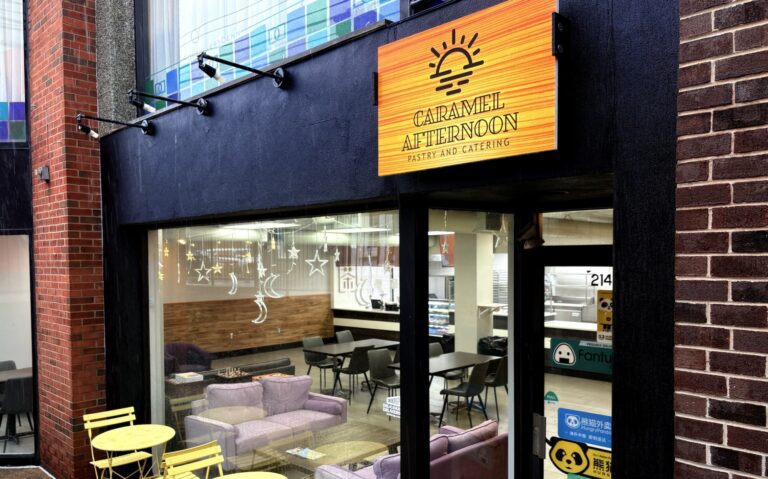
Downtown State College Bakery Set to Close
A downtown State College bakery is closing its shop after a little over a year in business. Caramel Afternoon Pastry and Catering’s last day of business at 214 E. Calder […]


