
This story originally appeared in The Centre County Gazette.
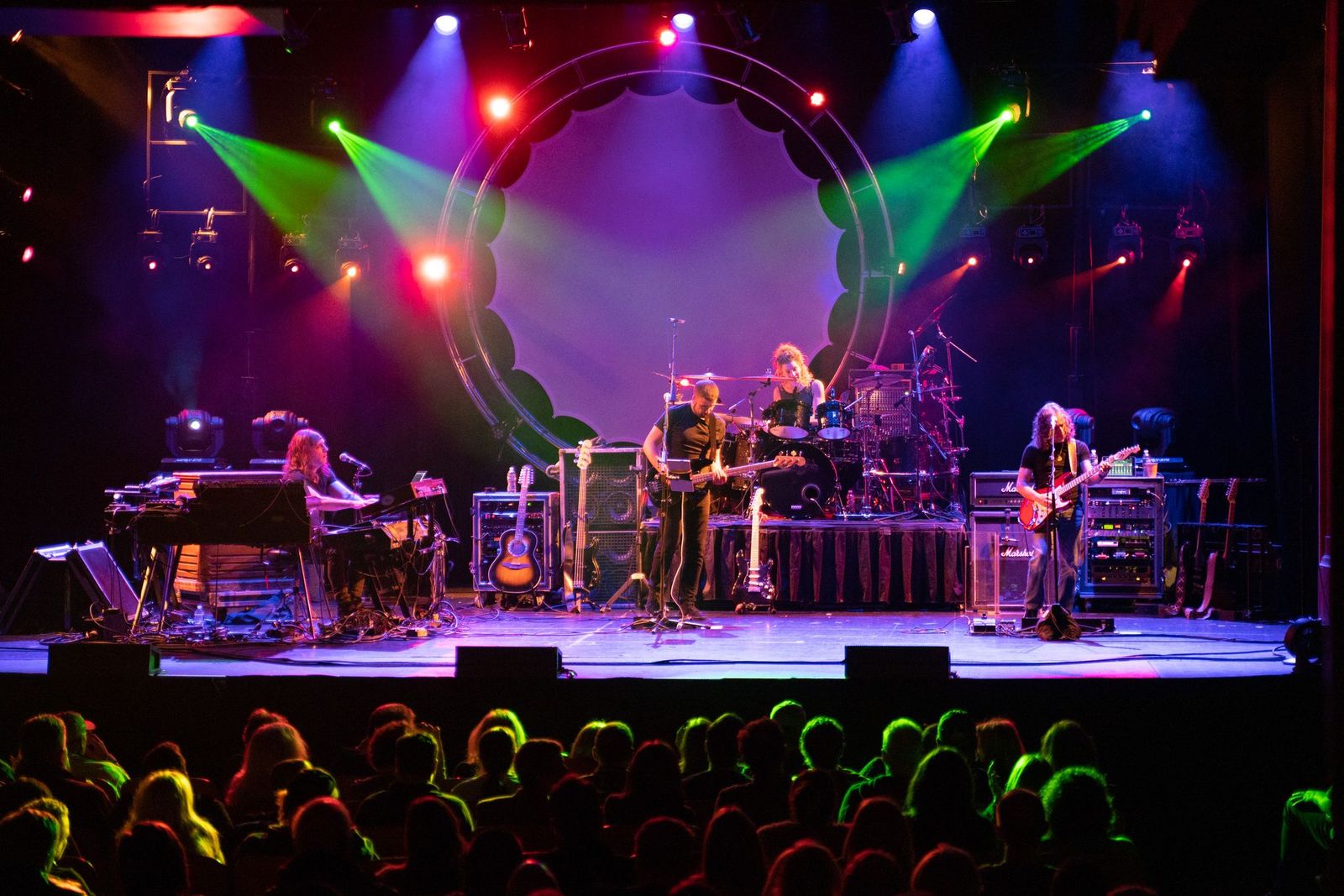
STATE COLLEGE — The room goes dark, the lights swell and suddenly time loosens its grip. For more than three decades, The Machine enters Pink Floyd’s world not to freeze it in time, but to keep it moving, breathing and alive.
On April 3 at 8 p.m., that long, strange and luminous journey returns to State College, where the band will take the stage at the State Theatre with a show built not just to recreate Pink Floyd’s music, but to inhabit it.
For drummer and founding member Tahrah Cohen, the relationship with Pink Floyd’s catalog isn’t nostalgic. It’s personal. The first single she ever bought was “Another Brick in the Wall”, a moment she remembers as an early emotional jolt that never really faded. While she didn’t consider herself a die-hard fan at first, everything shifted when she met guitarist Joe Pascarell at 16 and watched him bring Floyd’s music to life.
“As a 16-year-old watching somebody play the music the way he did, I became infatuated,” Cohen said.
What began as friends playing music for fun quickly took on a life of its own. By the late 1980s, The Machine was drawing crowds beyond its local roots. By 1990, the band had an agent, left day jobs behind and committed fully to the road.
“Everybody else left their jobs and it was a pretty exciting moment,” Cohen said. “Everything just kept growing and growing.”
That growth has since carried the band around the world, through orchestral collaborations in Europe, stripped-down acoustic shows and full-scale electric productions. Each format bends the Pink Floyd catalog in a slightly different direction. Acoustic performances might feature upright bass, accordion and a small drum kit. The electric performances, like the one planned for State College, bring the full force of lights, video and immersive sound.
Still, Cohen is quick to emphasize that the spectacle is an enhancement, not the point.
“We still keep the focus on our music,” she said. “The production is fun. It goes along with the aesthetic of Pink Floyd. But we’re musicians looking to deliver music as purely and honestly as we can.”
That philosophy also drives the band’s ever-changing setlists. Rather than repeating the same show night after night, The Machine builds each set with intention just days before taking the stage. The process balances fan favorites with deeper cuts and long-form pieces that leave room for improvisation.
“We want to hit the obscurities and the deep cuts,” Cohen said, “but we also want to give people the songs they really want to hear.”
Ask Cohen to name a favorite Pink Floyd album and she won’t. Not because she’s dodging the question, but because the catalog has become inseparable from her daily life. From early material like “See Emily Play” and “Set the Controls for the Heart of the Sun” to later staples such as “Comfortably Numb” and “Shine On You Crazy Diamond”, the music has become, as she puts it, “part of the fabric of my existence.” Some songs, she said, never lose their pull.
“I will never, ever get tired of playing ‘Shine On You Crazy Diamond.’”
Cohen’s presence behind the drum kit has also become part of The Machine’s identity. While female drummers were once a rarity on major stages, she sees that landscape shifting.
“Ultimately it becomes a genderless experience,” she said. “We’re everywhere now. There’s so many fantastic, powerful, musical female drummers and people notice, and ultimately it becomes a genderless experience for people.”
That same openness shapes her advice to younger musicians trying to find their footing. Her message is simple, but hard-earned.
“Never stop,” she said. “No matter what the feedback is, you just keep doing it because you love it. I’ve seen that pay off for so many bands.”
After years of club stages, theaters like the State Theatre now feel like a natural home for The Machine. Cohen remembers playing early State College shows at The Crowbar, slowly working their way up. Today, the theater setting better suits the band’s production and its audience.
“People prefer to be in a comfortable seat,” she said. “And a show that starts at 8 o’clock.”
For Cohen, the draw remains the same as it was decades ago: the shared electricity of live performance.
“When you’re playing great music and you’re playing it as passionately as possible, and at times spontaneously, those are the ingredients for a great night,” she said. “That’s what keeps us going, and that’s what keeps the audience coming back.”
When The Machine steps onto the State Theatre stage this April, it won’t be a museum piece or a greatest-hits jukebox. It will be something closer to a conversation across generations, carried by light, sound and songs that stood the test of time.
More Entertainment News
View all Entertainment News
Haunts, Hayrides & Hockey: What’s Happening in Happy Valley This Weekend
The last of the fall fest weekends, Penn State hockey and soccer, haunted mazes and a full slate of Halloween fun fill Happy Valley from Friday, Oct. 23 through Halloween […]
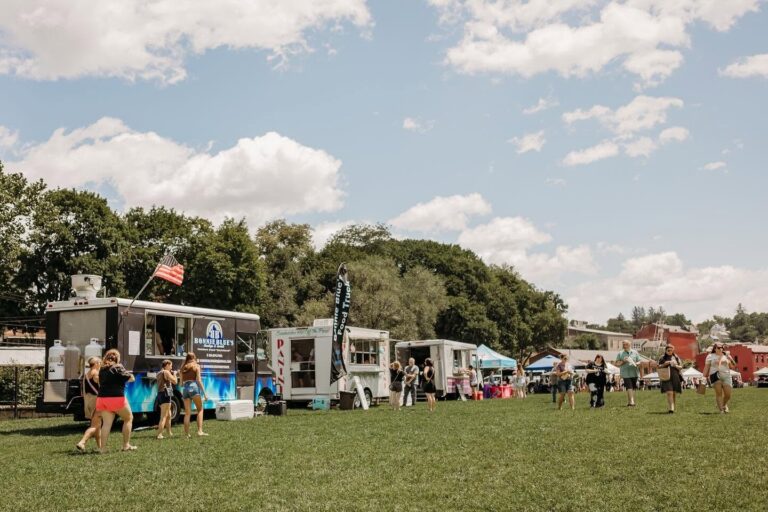
‘Bizarre Bazaar’ Halloween Market Returns With More Than 80 Local Makers
Now in its third year, the open-air market brings together more than 80 local makers and artists for a day of shopping live music, food and drink.
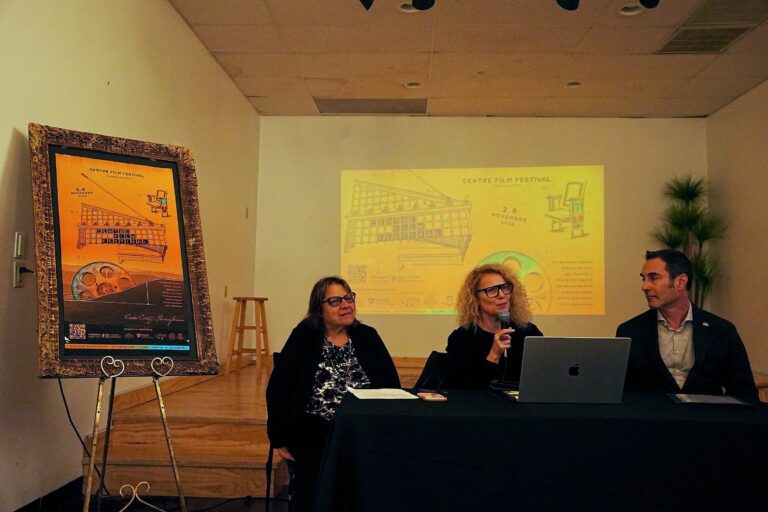
Centre Film Festival Unveils Lineup for 8th Annual Event
The Centre Film Festival will return Nov. 2-8 with films from around the world, Pennsylvania-made productions, special guests and screenings in State College and Philipsburg. Organizers announced the lineup for […]


