
This story was produced by the State College regional bureau of Spotlight PA, an independent, nonpartisan newsroom dedicated to investigative and public-service journalism for Pennsylvania. Sign up for Talk of the Town, a newsletter of local stories that dig deep, events, and more from north-central PA, at spotlightpa.org/newsletters/talkofthetown.
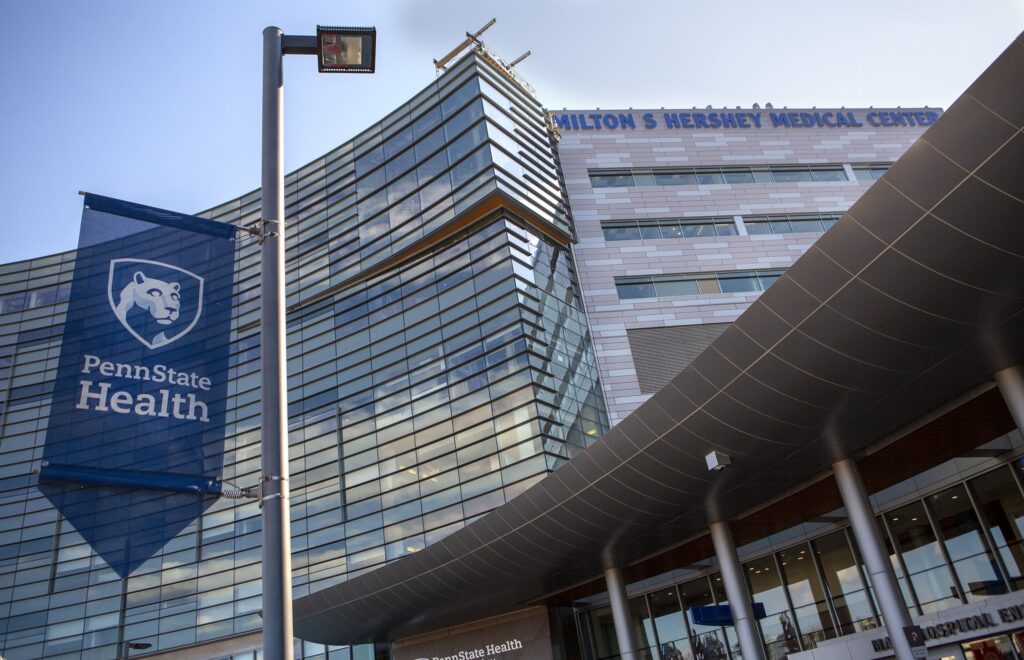
Penn State Health struggled to maintain a usable supply of sterile instruments for the thousands of surgeries it performed at the Milton S. Hershey Medical Center throughout 2025 and into this year, a Spotlight PA investigation found.
Unsterile instruments increase a patient’s risk of infection and death. Internal documents obtained by the newsroom found Penn State Health’s sterilization issues led to harrowing situations.
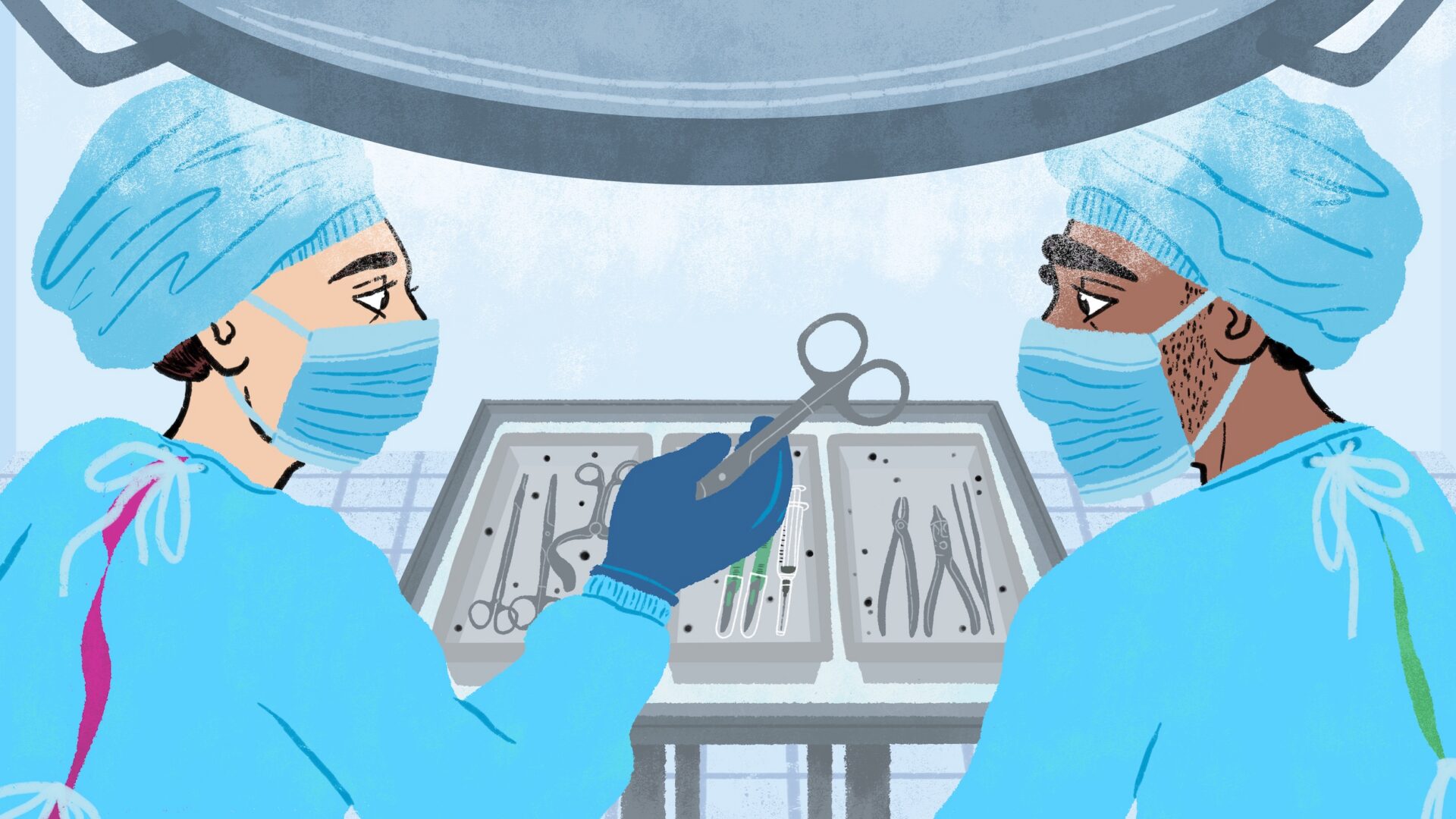
Persistent, mysterious black specks dotting trays of surgical instruments.
A lengthy, sometimes dayslong backlog for cleaning and sterilizing medical tools.
Operating room staff piecing together sets of sterile implements because usable ones weren’t readily available.
In one case, an emergency brain operation was done with “contaminated” surgical tools, internal records show.
And in January 2025, the hospital performed a heart surgery with what employees later recognized were unsterile tools, according to four people with knowledge of the situation. An internal review of the incident concluded that safety and error prevention was “not hard wired as standard work” in multiple units.
Contamination problems challenge hospitals across the country. Facilities in Colorado, Florida, and Texas have suspended surgeries over such issues in recent years. To date, Penn State Health has not paused procedures on a similar scale at Hershey Medical Center, the health system’s flagship hospital and the location of the sterilization problems. The most recent public data, from March 2025, show the hospital’s surgical site infection rate is near the national standard.
Scott Gilbert, a health system spokesperson, said in an emailed statement that Hershey Medical Center’s quality standards are working as intended: “all surgical instruments undergo rigorous sterilization processes prior to use,” he wrote. “In addition, any tray that does not adhere to our standards for safety is removed from use.” Penn State Health declined to make any officials available for interviews. (Read more from Penn State Health’s statement here.)
Hershey Medical Center’s issues inflamed disagreements between units and provoked fear among employees, according to internal records and people familiar with the situation. One Penn State Health employee with more than five years of experience told Spotlight PA, “When I see this, what’s happening, this is not us. This is not how it used to be when I was hired there.”
In recent months, Spotlight PA contacted more than 50 people connected to Hershey Medical Center’s operating rooms and sterilization department. Many did not respond to the emails, text messages, or phone calls, but seven did. Each of them asked not to be named due to fears of retaliation for speaking about the situation.
Operating room staff told administrators multiple times that they believed Penn State Health was prioritizing profits and patient volume over safety, according to a summary of a meeting late last year. During that gathering, a pregnant employee who expected to undergo a cesarean section this spring said, “I’m scared to death to come to my own place of work to get it done knowing what we do every day.”
One day in January 2025, Hershey operating room staff gathered surgical tools after completing a heart procedure. The employees placed the instruments in a metal cart, which was wheeled to a nearby elevator and taken down to the hospital’s sterilization unit. There, the surgical instruments would be cleaned and sterilized for another procedure. This process repeats itself tens of thousands of times a year at Hershey Medical Center without causing alarm.
And it would’ve that day too, if not for a strip of paper left among the tools.
A sterilization employee spotted the paper, which is called an indicator. Long before a surgery, the roughly inch-wide strip is placed with the clean tools when they are put in the hospital’s sterilization machines. Chemicals alter the indicator’s color when proper conditions are met in the machine, providing a simple visual confirmation to hospital employees that the tools are sterile and therefore safe to use. Yellow is the desired hue.
The employee saw red.
Medical facilities try to safeguard against errors like this by lining up layers of protection, such as strict processes or extra checks. Ideally, a problem that slips through any one layer is caught by another. Taken another way, when a patient is exposed to harm, multiple things have gone wrong.
Penn State Health performed a heart surgery with unclean tools, in part, because employees in the sterilization unit and operating room who handled them either failed to see the red indicator or did not speak up. (The description of the incident is based on information shared by four people with knowledge of the situation.)
After the finding was reported, the hospital conducted a “root cause analysis,” one of the most intensive forms of internal review. Operating room and sterilization employees, along with several managers, were interviewed. The final document identified more than a dozen systemic issues that contributed to the incident, including that operating room employees lacked a standard way of checking whether instruments were sterile prior to their use.
The February 2025 report, which Spotlight PA obtained, described the hospital’s sterilization unit as “congested” and said employees there rarely used Penn State Health’s internal reporting system to flag problems. Additionally, the hospital was not using software to track all surgical instruments.
The report, sent by Michele Szkolnicki, Hershey Medical Center’s senior vice president and chief nursing officer, said that in the hospital’s operating rooms and sterilization unit “SAFETY BEHAVIORS and ERROR PREVENTION skills are not hard wired as standard work.” The document was shared with people interviewed during the root cause analysis process and patient safety leaders such as Lilian Barker, the hospital’s vice president and chief quality officer.
It noted more than 20 changes that needed to be implemented, including an immediate review of all available or stored surgical equipment to confirm sterility. Penn State Health also ended the employment of several members of the team involved in the surgery, four people with knowledge of the situation told Spotlight PA. This was not a recommendation in the report.
Unsterile instruments present a “significant risk of infection” to a patient, said Peter Nichol, an associate professor of surgery at the University of Wisconsin, in an interview with Spotlight PA. In that kind of situation, a hospital would likely inform the patient about what happened and monitor them for infection, he said.
Whether Penn State Health informed and monitored the patient is not mentioned in the root cause analysis. Gilbert, the health system’s spokesperson, said, “We cannot provide information about the care of a specific patient, but we certainly follow the highest standards and regulatory expectations in terms of post-operative surveillance and patient follow-up.” Gilbert declined to answer questions about the internal report, but said Penn State Health implemented all of the recommendations.
Under state law, a health care facility must notify the Pennsylvania Department of Health, as well as the patient or their family, when someone dies while receiving care or is injured to a degree that necessitates additional treatment. In cases where the person could have been injured but was not, the facility must tell the state’s patient safety oversight group, but is not required to disclose it to the patient. State law shields these records from the public.
Throughout last year, a problem vexed health system officials: Black specks kept appearing in trays of surgical tools arriving in Hershey Medical Center operating rooms. Two people with knowledge of the discussions said Szkolnicki and Don McKenna, the hospital’s president, were involved in meetings regarding the issue.
Sterile processing is the backbone of any hospital’s surgical wing. The unit cleans, sterilizes, and stores surgery tools until they are needed in the operating room. In Pennsylvania, these employees must be certified and complete 10 hours of continuing education each year, part of a 2020 law. The jobs are often high-stress, and patients rely on these units being effective.
“Everything we do touches a patient,” said Damien Berg, vice president of strategic initiatives at the Healthcare Sterile Processing Association, an international industry group.
However, sterile processing departments are often geographically separated from operating rooms, as is the case at Hershey Medical Center where they are housed on different floors. The two units may not understand what the other does or needs, which leads to tension, Berg said. Sterilizing units also don’t generate revenue. So when hospital leaders are considering upgrades and investments, the department can get overlooked, he noted.
Hershey Medical Center’s sterilizing equipment was outdated and may have been causing the problems, according to internal records and two people who worked with the machines. (Penn State Health disputed the characterization and said its equipment is approved by the U.S. Food and Drug Administration and “tested every day in accordance with the manufacturer’s recommendation.”) In July, Hershey Medical Center began using a new “high-pressure washer,” according to documents the hospital filed with the Pennsylvania Department of Health. (Penn State Health disputed the characterization and described the machine to Spotlight PA as an “ultrasonic cleaner.”)
But the proliferation of particles continued. Employees took water samples and installed filters on some machines. In November and December, the hospital considered upgrading the unit’s equipment, internal communications obtained by Spotlight PA show. Prior to publication, Gilbert told Spotlight PA that Penn State Health took “many additional steps to enhance our systems, including replacing key equipment components, purchasing additional instrument sets, enhancing maintenance and monitoring, and engaging external engineers, sterile processing specialists and microbiologists to support our teams working on this.”
The prevalence of the black specks — along with what two people described as an understaffed sterile processing unit — contributed to a shortage of available surgical instruments. At times, the department had hundreds of sets of tools waiting to be processed, according to internal records, an amount that could take a fully staffed unit days to process, two people connected to the program said. The spokesperson Gilbert, in a statement, said the backlog size was normal. “This is not extraordinary. It is within both our normal operating parameters and our normal capacity to process trays of surgical instruments,” he said.
Some sterilization staff were required to work extra hours to prepare the instruments for use, according to two people with knowledge of the situation. Teamsters Local 776, the union that represents the sterile processing workers, declined to answer questions about its members’ working conditions.
The dearth of sterile tools disrupted surgeries, according to internal communications and four people with knowledge of the situation. During a November meeting of operating room employees, a summary of which was shared with Spotlight PA, staff described troubling conditions:
- In one case, staff opened more than 20 sets of “contaminated” tools, and ended up using instruments from a gynecology set for a hernia surgery.
- One patient was under anesthesia for more than an hour while employees pieced together a proper set of instruments.
- During an emergency surgery that involved opening a patient’s skull to access their brain, employees could not locate a usable set of tools. “Came down to life or death,” an employee said during the meeting. According to the document, hospital employees used a “contaminated” set of instruments. (Gilbert said Spotlight PA was mischaracterizing the situation. “All instruments used went through both cleaning and sterilization processes.”)
Understanding the scope of Hershey Medical Center’s problem is difficult because little information is publicly available. When contaminated tools are found, employees are supposed to report them internally to the hospital’s patient safety department. Penn State Health declined to provide data on the number of internal reports in 2025 tagged “sterilization problem” and comparable data from previous years. Gilbert told Spotlight PA that, between July 2025 and January 2026, Penn State Health performed more than 15,300 surgeries and that 24 were postponed due to surgical instruments not meeting the health system’s standards.
Unsterile tools are the leading risk factor for surgical site infections, according to a 2025 study of nearly 500 surgery patients in China. This type of infection, which accounts for 20% of all infections at American health care facilities according to a widely cited 2007 study, can be deadly and also costly for patients and health care systems.
Hospitals must report surgical site infections to the CDC. The most recent data on Hershey Medical Center, between April 2024 to March 2025, show the hospital’s infection rates from colon surgeries and abdominal hysterectomies are roughly at the national standard. Similarly, between 2022 and 2024, the hospital’s death rate for surgery patients with “serious treatable complications” was around the same benchmark.
Gilbert said the hospital is “managing a limited particulate specks issue with a clear and disciplined focus on patient safety. Our quality controls are working as designed, identifying and removing affected instrument trays before they are ever used. Our clinical outcomes remain stable and are continuously monitored for variation.”
Four experts who are not connected to Penn State Health — a surgeon and three sterile processing leaders — told Spotlight PA that the hospital’s problem with black specks is not uncommon across the country, but said the presence of foreign objects on surgical tools can create problems.
The specks have “characteristics consistent with microplastics,” Gilbert said. “This variability points to multiple contributing factors and not a simple single solution, which aligns with the experience peer hospitals and vendors have shared nationally,” he wrote.
Other health care facilities across the country struggle with sterilization, which can be reputationally or financially damaging.
In 2023, leaders of a San Diego hospital rejected a petition from more than 70 employees to suspend surgeries because particles of “unknown substance” were seen in surgical trays. A patient who underwent knee surgery during this time period and developed a life-threatening infection sued the hospital last summer, alleging “sterilization lapses” at the health care facility led to the infection. Last year, former patients sued a Kansas City health system on similar grounds.
UCHealth University of Colorado Hospital suspended nonemergency surgeries for several days in 2024 when staff found black flecks on equipment. Other area hospitals suspended operations as well, the Denver Post reported, due to water issues affecting the sterilization equipment.
To date, Penn State Health has not suspended surgeries on a similar scale. “Pausing surgeries inherently poses significant patient risks, and some other hospitals facing this problem may have determined they had no other choice but to suspend surgical procedures,” Gilbert wrote in a statement. “We continually evaluate the best course of action solely in terms of patient safety and wellbeing.”
He said the Pennsylvania Department of Health and Joint Commission, two oversight groups, conducted multiple reviews between October 2025 and January 2026 and signed off on how Penn State Health is handling the situation. “All of those reviews showed we are meeting or exceeding standards across the board,” he said.
Spotlight PA cannot independently verify Penn State Health’s statements. Joint Commission, a nonprofit oversight body recognized by the federal government, accredited the hospital in August 2025. Reviewers with the group check whether a hospital is following the manufacturer’s instructions for cleaning and sterilizing equipment, and that tools are not damaged. Due to the complexity of the process, “surveyors commonly identify opportunities for improvement in these areas,” said Ken Grubbs, executive vice president of accreditation and certification operations for Joint Commission, in a statement to Spotlight PA. Beyond the accreditation, however, the organization’s findings are confidential.
The state health department’s website shows more than a dozen inspections of Hershey Medical Center in general during the October to January time frame that Penn State Health cited. In response to questions from Spotlight PA about the health system’s statement, the department directed the newsroom to a complaint investigation from August 2025 that said the hospital was in compliance. Apart from what’s in the report, the health department “does not confirm, or refute, a facility’s characterization of a survey inspection,” a spokesperson wrote in an email.
Penn State Health employees referenced the specks in emails later shared with the health department, records obtained by Spotlight PA show. In January 2026, Holly Garon-Colley, the hospital’s vice president of nursing surgical services, heard another health system was having similar issues and emailed three links to articles about the prevalence and danger of black specks to Szkolnicki and Barker, two members of the hospital’s c-suite, along with Duncan McIlvaine, an assistant vice president of facilities in the medical college. “I feel that we’ve entered into a new ‘normal,’” Garon-Colley wrote. A hospital employee in infection control later forwarded the message to a state health inspector.
The health department has cited Hershey Medical Center for sterilization issues before. In February 2025, a Penn State employee told a state health department inspector that they bring their own dental surgery equipment into the operating room. While the employee said the items were sterile, Hershey Medical Center was not sterilizing the tools ahead of their use, nor was the hospital requiring records to prove they were sterile, the employee told the inspector.
This practice violated a state regulation that requires hospitals to write and follow a policy to ensure sterilization. A month prior, the hospital began to require that its sterilization unit receive outside equipment 24 hours before the scheduled surgery so it can be cleaned. In response to the health department’s citation, Hershey Medical Center reminded employees of the policy and reviewed several pediatric dental surgeries.
Yet in late 2025, the hospital was again struggling to follow this policy, according to updates shared with employees and obtained by Spotlight PA. An internal report from November said the sterilization unit was receiving more than 100 loaner sets of tools “within 24 hours or less” from the surgery time. (Penn State Health declined to answer Spotlight PA’s question about how it’s enforcing this policy or ensuring that these tools are sterilized prior to surgeries.)
The months of stress, delays, and fear created by the sterilization issues have taken a toll on Hershey Medical Center’s employees. In mid-November, an operating room employee turned to others in the field for advice on the ongoing “black specks/flecks” problem. “Tell me we are not the only ones?!” the employee posted to a public Facebook group for sterile processing workers. “What did your facility do?”
The next day, Garon-Colley and Marc Royo, an anesthesiologist and co-medical director of the hospital’s surgical services, met with operating room staff to discuss the ongoing sterilization problems. Garon-Colley told the employees she was proud of how hard they were working, that she recognized the employees’ stress, and that the group was a family, according to a document summarizing the meeting.
But operating room staff repeatedly told administrators that they did not feel the work environment was safe. “The surgeons just show up to their room and have no idea the instruments we steal from other services or what goes on behind the scenes to barely make ends meet and get the cases off the ground and going,” a summary of the meeting says, “and we don’t even have what we need to give safe patient care.”
SUPPORT THIS JOURNALISM and help us reinvigorate local news in north-central Pennsylvania at spotlightpa.org/donate. Spotlight PA is funded by foundations and readers like you who are committed to accountability and public-service journalism that gets results.
More Health News
View all Health News
Pennsylvania Records 5th Measles-Associated Death This Year
Pennsylvania health officials reported a fifth measles-associated death Wednesday as the U.S. endures its worst year for the disease since 1991. The Pennsylvania Department of Health said the person was […]

Commissioners OK Tax-Exempt Financing Through Hospital Authority for Ongoing Mount Nittany Building Projects
Mount Nittany Medical Center will use tax-exempt financing through the Centre County Hospital Authority for two building projects following approval by the county Board of Commissioners on Tuesday. The Hospital […]

Mount Nittany Now Projects $15.1M Annual Loss From Cancellation of Sole Community Hospital Status
Mount Nittany Medical Center stands to lose about $6.2 million more than initially projected from the revocation of its sole community hospital status, according to a new court filing in […]


