
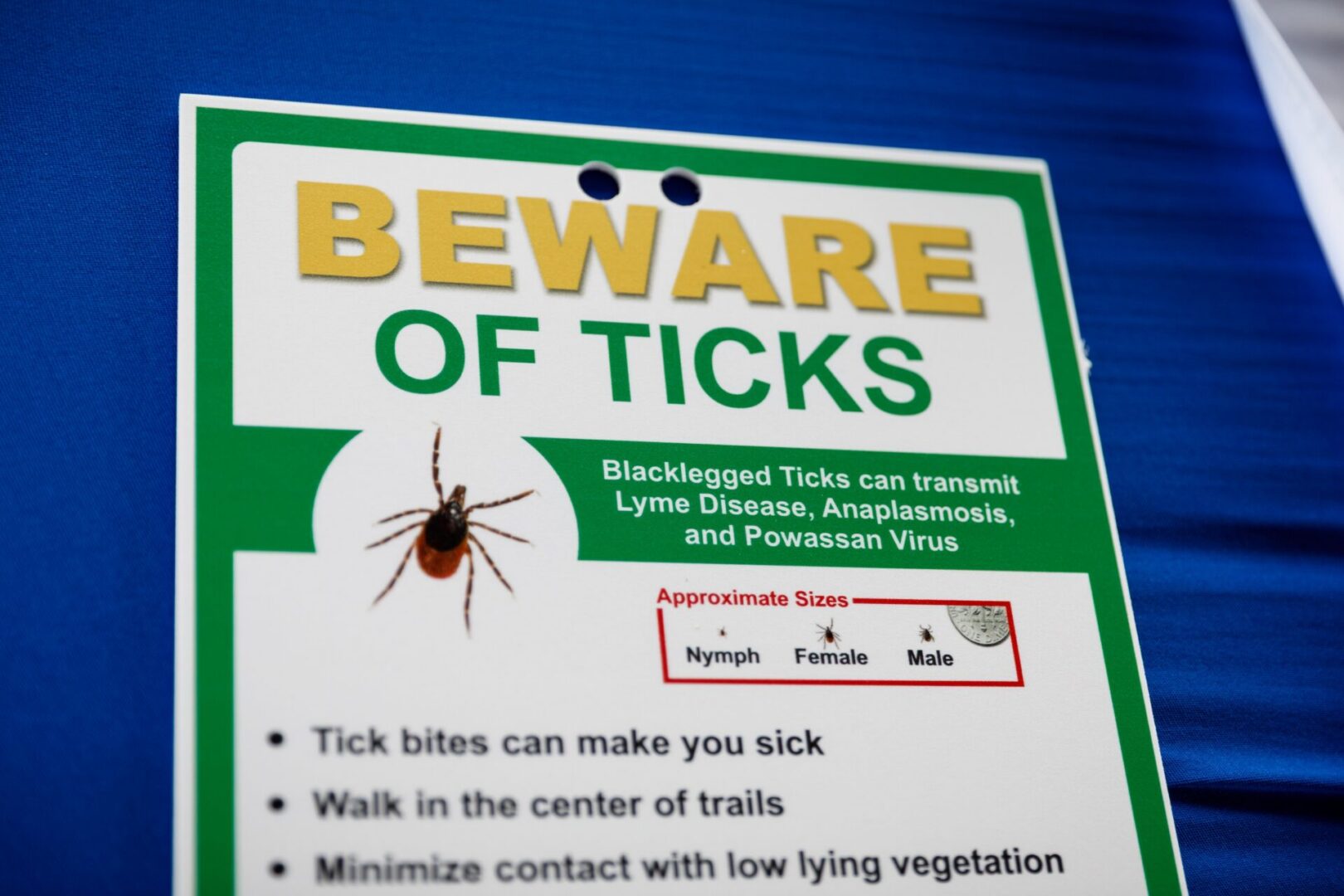
Early warmth that dented fruit crops and jolted backyard gardens could also influence regional tick activity into the autumn, a Pennsylvania tick researcher says.
The disease-bearing parasites are most active in the commonwealth twice a year — from the spring into summer and again in the fall. But unseasonal heat in March and April saw a boost in young ticks that usually begins a few weeks later in the spring, according to Nicole Chinnici, the laboratory director at the Dr. Jane Huffman Wildlife Genetics Institute at East Stroudsburg University.
That shift means the second activity peak, often starting around mid-October, could be similarly early as this year’s ticks transition into adults, Chinnici told StateCollege.com.
A leader of the state-backed Pennsylvania Tick Research Lab, she expects tick activity to dip sometime in July as their summer wave eases by August.
“We should start to see a reduction in the next week or so,” Chinnici said shortly before Independence Day. Hotter weather could accelerate the drop-off, although tick hazards will remain, she added.
Preliminarily, the state Department of Health logged nearly 6,300 laboratory-identified cases of Lyme disease — a bacterial infection and the most common human illness from tick bites — between January and early July. That’s roughly in line with the last few years and just behind the tally at the same time last year, a public dashboard shows.
Of the 2026 cases, 14 were in Centre County, according to the preliminary data. The county is registering 46 reported cases of anaplasmosis, eight of babesiosis and one of ehrlichiosis — all tick-borne illnesses — for the half-year period.
Public health experts warn that reported counts don’t represent all cases, as many people experiencing symptoms don’t receive medical attention or participate in testing. (Centre County’s reported Lyme cases topped 300 in 2023, then slipped to 58 in 2024.) And the flu-like symptoms of anaplasmosis, a bacterial disease, can present more severely than those of Lyme disease, at least to start.
While overall case volumes of Lyme disease appear fairly consistent, anaplasmosis is trending upward even as it lags in total infections statewide, said epidemiologist Leah Lind, the tick-borne-illness coordinator for the state health department.
She cautioned June and July are prime months for Lyme because people are outdoors so much — including for yard work — when blacklegged deer ticks are active. Many ticks may have survived last winter because of snow cover that can insulate them when they’re dormant, Lind said. Ticks can live two to three years.
“Most of them don’t die during the winter. That can be a myth,” she said. “Freezing temperatures don’t kill them because of the cover they take.”
Research shows natural insulation — both leaf litter and snow — is a big driver of ticks’ wintertime survival rates, said Erika Machtinger, an associate professor of entomology at Penn State.
“Human illness depends on more than tick numbers,” she said. “It also depends on infection prevalence, host animals, timing of tick activity, summer weather and human behavior. Winter survival is only one piece of that system.”
An Inconsistent Infection Risk
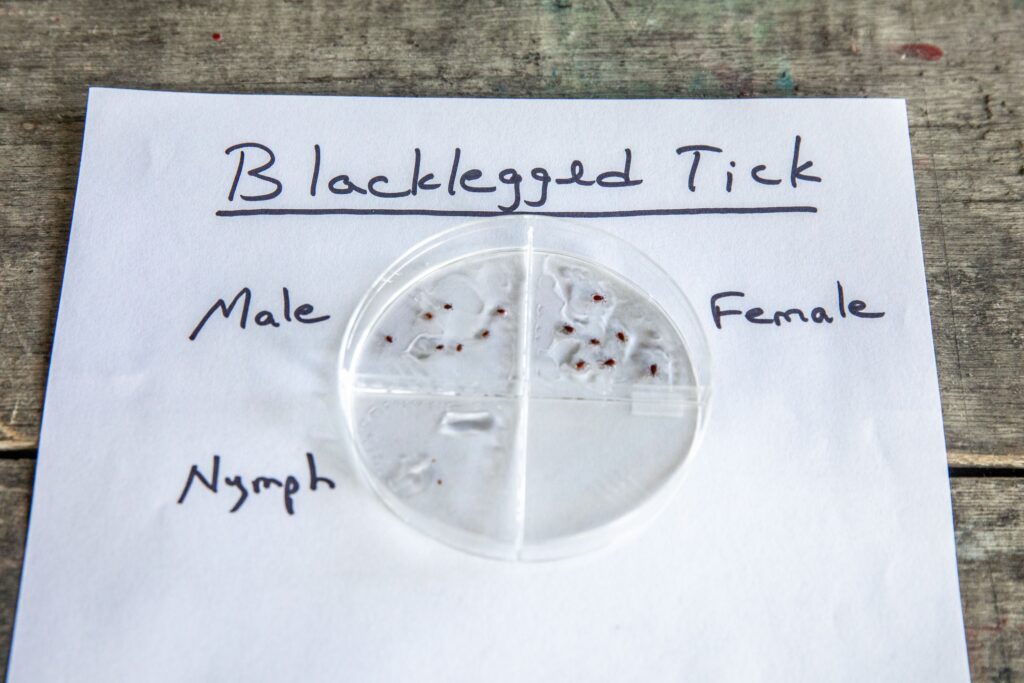
Transmitted through bites from infected ticks, Lyme became a reportable condition in Pennsylvania in 1987. In the summer, about a quarter of young deer ticks, a common and growing species, carry the bacteria that cause Lyme, Lind said.
The figure jumps to about 50% among adult deer ticks in the fall, after they’ve had more opportunities to pick up bacteria from animals like mice, she said. Lyme symptoms range from a rash to headaches and fever, and untreated infections can spread to the heart, joints and nervous system, the Centers for Disease Control and Prevention notes.
Because ticks are so tiny — as small as a poppy seed — their bites can be hard to see, Lind said. The health department recommends bathing and a thorough bodily check for ticks within about two hours of outdoor activities like yard work, hiking and field sports.
“If they are bitten, we recommend people remove the tick immediately” to reduce transmission risks, Lind said. She suggested using tweezers or another removal tool to pull straight up on the tick steadily, without jerking or twisting it.
The health department provides additional guidance online, including for tick identification, bite prevention and tick disposal. The Pennsylvania Tick Research Lab provides no-charge tick testing for state residents. Elsewhere, a tool from the federal Environmental Protection Agency helps identify repellents for pests including ticks.
A Newcomer With Different Dangers
While deer ticks are the most common variety in Centre County, Penn State Extension has begun receiving one-off reports of lone star ticks over the last few years, Extension program specialist Emily Struckhoff said.
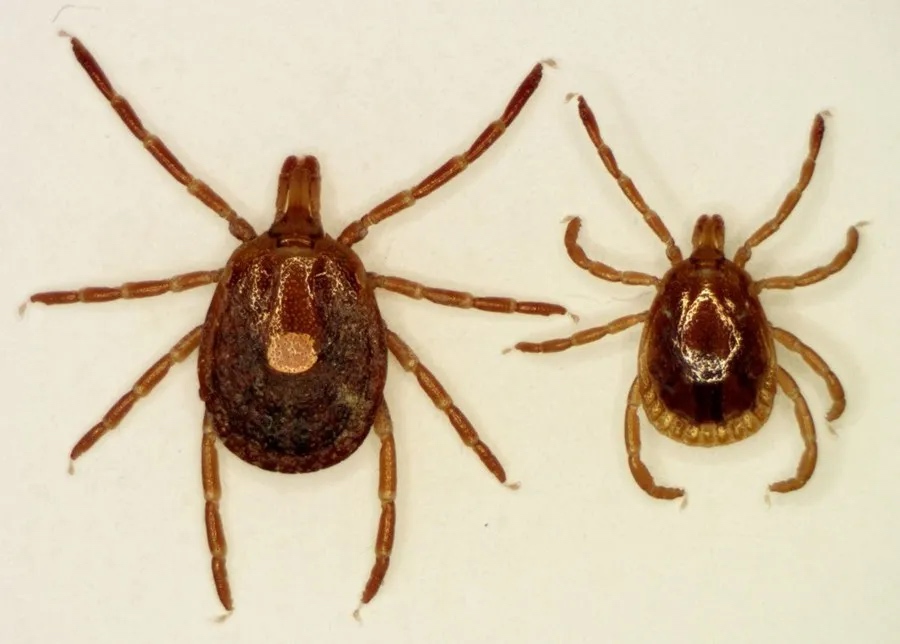
The species historically has been found in more southern states, but milder winters help their survival and reproduction farther north, she said. Known for a reddish-brown color and for a white spot on females, lone star ticks don’t transmit Lyme-causing bacteria but can convey other pathogens.
Specifically, lone star tick bites can lead to alpha-gal syndrome — an allergy to red meat — among other ailments.
“It’s not super-common around here yet, but we are starting to collect it,” Struckhoff said of the lone star ticks. They are known as aggressive biters, according to the state Department of Environmental Protection.
There’s no cure for alpha-gal syndrome, which may affect as many as 450,000 people nationally, the CDC reported. But a vaccination for Lyme disease could be available as early as fall 2027 and is expected to temper its infection rates, Lind said.
Adam Smeltz is a StateCollege.com contributor. Reach him at asmeltz@gmail.com.
More Health News
View all Health News
Mount Nittany Health Preparing to Begin Work on New Bellefonte Facility
Updated 12:18 p.m. Oct. 21, 2026. Mount Nittany Health is getting ready to begin construction for a new Bellefonte facility that will bring expanded services together under one roof. The […]

Community Health Clinic to Offer Free Flu Shots, Affordable Pet Vaccines
Local residents can get free flu shots for themselves and low-cost vaccines and microchips for their pets at a community health clinic this weekend. State Rep. Paul Takac, D-College Township, […]

Paterno: Upcoming Impact Award Honorees Represent ‘the Very Best of Penn State’
Penn State is the nation’s leading service-oriented university, a school where philanthropy and helping others is part of our DNA. That commitment is university-wide, including a long history of service […]


