
Mount Nittany Health on Thursday reported confirmed cases of measles in Centre and Mifflin counties as instances of the viral disease nationwide continue to climb to their highest level in more than three decades.
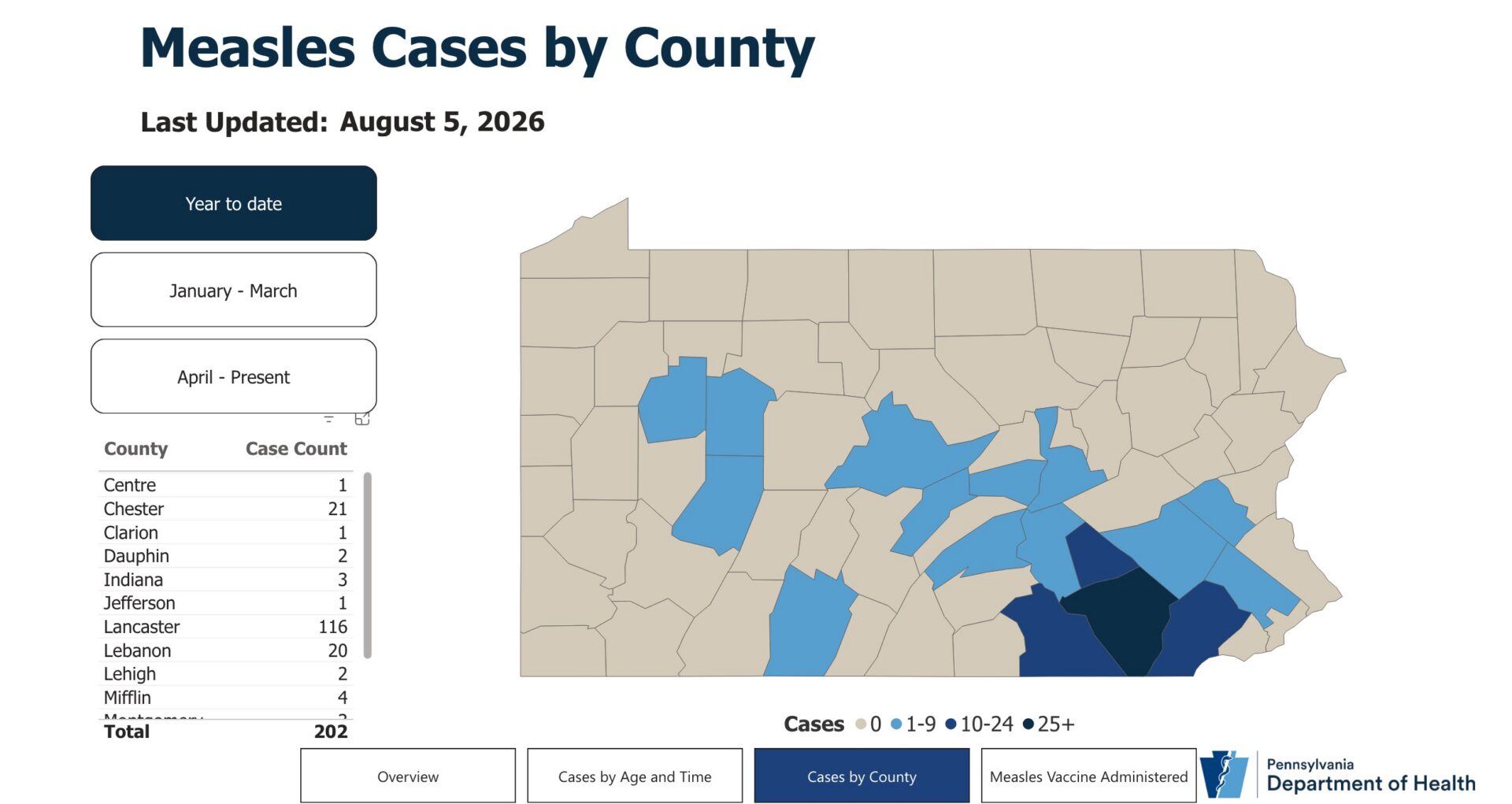
The health system confirmed one in each county, a spokesperson said. It is the only case in Centre County to date this year and one of four in nearby Mifflin County, according to the state Department of Health.
“We’ve notified the Pennsylvania Department of Health and are following all necessary protocols, including thorough contact tracing to ensure anyone at risk is informed and protected,” Mount Nittany Health wrote in a statement.
Pennsylvania has recorded 202 confirmed cases of measles across 17 counties in 2026, including 46 new cases in the last week, according to DOH. The commonwealth had a total of 16 confirmed measles cases in 2025, according to the Johns Hopkins Bloomberg School of Public Health.
No measles-related deaths have been reported in Pennsylvania this year and 34 residents have been hospitalized with the highly-contagious disease. According to the DOH measles dashboard, 36% of the cases have been in people under the age of 18.
None of the cases have occurred in people who are fully vaccinated, according to DOH.
“Vaccination remains our strongest tool to prevent measles outbreaks and safeguard our community,” Dr. Daniel McKinley, medical director of hospital operations & quality at Mount Nittany Health, said in a statement.
Measles spreads through respiratory droplets. Symptoms often take 10 to 14 days to appear after exposure and can include a high fever, cough, runny nose, red eyes and a rash that typically begins on the face and spreads downward, according to Mount Nittany Health. People who believe they or their children have been exposed should contact their primary care or pediatric provider for guidance.
Even brief exposure in shared spaces can lead to transmission in unvaccinated individuals, and anyone who believes they may have been exposed should monitor themselves for these symptoms over the followng three weeks.
The Centers for Disease Control and Prevention recommends all children have two doses of the measles, mumps and rubella vaccine as the best way to protect against the diseases. The first dose is typically given between 12 and 15 months old, with the second dose administered between the ages of 4 and 6. The vaccines usually provide lifetime protection against measles.
Public health officials encourage adults without at least one documented dose to get vaccinated.
McKinley stressed that measles is not just a childhood virus and can lead to complications such as pneumonia, encephalitis and even death.
“Vaccination is a simple and effective way to protect yourself, your family and your community,” McKinley said. “When vaccination rates drop, we see outbreaks. It’s a stark reminder of how interconnected we all are when it comes to public health. By vaccinating, we’re not just protecting ourselves; we’re protecting those who are most vulnerable.”
As of July 30, 2,371 measles cases have been confirmed nationwide this year, surpassing the 2,289 for all of 2025 and making it the worst year for measles in the United States since 1991.
More Health News
View all Health News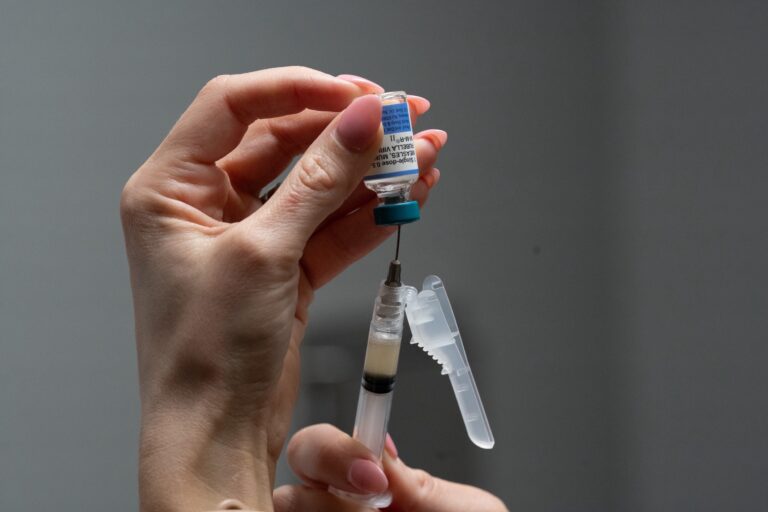
Pennsylvania Records 5th Measles-Associated Death This Year
Pennsylvania health officials reported a fifth measles-associated death Wednesday as the U.S. endures its worst year for the disease since 1991. The Pennsylvania Department of Health said the person was […]
Commissioners OK Tax-Exempt Financing Through Hospital Authority for Ongoing Mount Nittany Building Projects
Mount Nittany Medical Center will use tax-exempt financing through the Centre County Hospital Authority for two building projects following approval by the county Board of Commissioners on Tuesday. The Hospital […]

Mount Nittany Now Projects $15.1M Annual Loss From Cancellation of Sole Community Hospital Status
Mount Nittany Medical Center stands to lose about $6.2 million more than initially projected from the revocation of its sole community hospital status, according to a new court filing in […]


