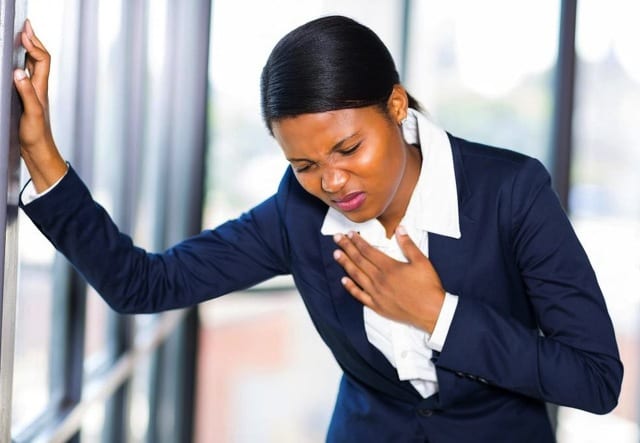
STATE COLLEGE — Every 43 seconds, someone in the U.S. suffers a heart attack. Each year, more than 600,000 of those afflicted will not survive the attack, with nearly half of the victims being women. While we’ve all become familiar with the “Hollywood heart attack” (man suddenly clutches chest and immediately falls unconscious), only a portion of victims will experience a heart attack in this way — and women’s symptoms may be significantly different.
The American Heart Association recently published a scientific statement about women’s heart attack causes and symptoms in its journal Circulation. Three key points were made in this new statement: women frequently have different underlying causes of heart attacks than men (such as the types of plaque build-up); women tend to be undertreated and are less likely to participate in cardiac rehab after a heart attack compared to men; and risk factors such as high blood pressure and diabetes increase heart attack risk in women more severely than in men.
While the most common symptom for any heart attack victim is chest pain or discomfort, women are more likely than men to experience one or more of the other, less obvious symptoms. Women are also less likely to assume their symptoms are heart-attack related, and to wait longer to seek help. Every minute matters. Even if you have doubt, call 911.
In addition to the obvious feeling of pain, pressure or heaviness in your chest, here are other common symptoms experienced by women having a heart attack:
■ Sharp pain in the upper body, including in the neck, back and/or jaw area
■ Severe shortness of breath, either at rest or with minimal level of exertion
■ Sudden “cold sweating” that you suspect is not menopause-related
■ Unexplained or sudden fatigue — one of the most common symptoms, and the easiest to ignore or misdiagnose
■ Unfamiliar dizziness or light-headedness
■ Unexplained nausea — women are twice as likely as men to experience nausea or vomiting during a heart attack
Awareness campaigns over the past decade have helped improve survival rates for women having heart attacks, but much work remains. In Pennsylvania:
■ Heart disease and stroke account for nearly 30 percent of all deaths in Pennsylvania
■ Heart disease alone if the leading cause of death in Pennsylvania, accounting for 31,629 deaths in 2013
■ Nearly 64.5 percent of adults in Pennsylvania are obese and overweight
Dr. Jeffrey Eaton, board certified in internal medicine and cardiovascular disease, is a graduate of the Bowman Gray School of Medicine, Wake Forest University. He completed his residency at Temple University Hospital and a fellowship in cardiology at Dartmouth-Hitchcock Medical Center.