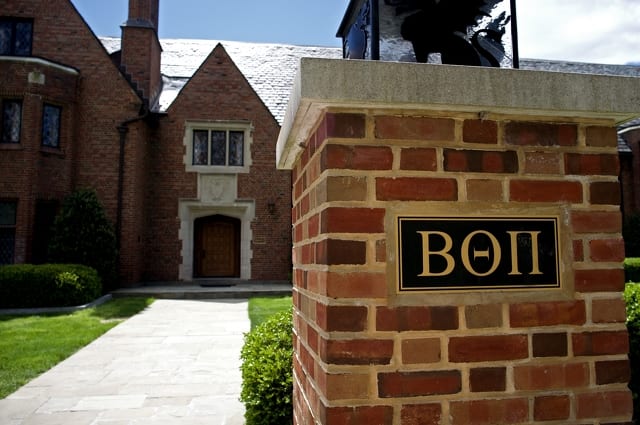
They call themselves “Men of Principle.”
They say their “reputation for high standards and accountability is second to none” because of their “commitment to academic excellence, leadership development, and a zero tolerance policy for hazing.”
They say they are a “shining star,” and that they offer “a truly different fraternity experience at PSU that will challenge the ‘Frat’ stereotype.”
These are the words, available on their website, of “the gentlemen, leaders and scholars” of Beta Theta Pi, “The Leadership Fraternity.”
Are you puking yet? Maybe you’ve got nothing left in your stomach after reading over the weekend the grand jury presentment on the death of Timothy Piazza.
As every major news organization in the country has reported, 18 members of Beta Theta Pi have been charged with crimes in connection with Piazza’s death in February.
According to the grand jury presentment, though Beta was a dry fraternity, the Men of Principle spent $1,179 on alcohol to initiate Piazza and his fellow pledges into their noble order.
Despite the chapter’s no-hazing policy – which is, in any event, a violation of Penn State’s code of student conduct and the law of the Commonwealth of Pennsylvania – the Men of Principle ran the pledges through a ritualized gauntlet of drinking stations.
Though 12 of the 14 pledges, including Piazza, were too young to legally drink, the Men of Principle plied them with vodka, wine and beer.
And though Tim Piazza fell multiple times, bled, vomited, twitched, was bruised, limp, pale, stiff, cold to the touch, and did not respond to being rubbed, splashed, slapped, struck or shaken, the Men of Principle of Beta Theta Pi did not call 911 until 12 hours after they saw him fall down a flight of stairs.
The 12 hours of inaction might be forgiven if the Men of Principle had been so far gone themselves that they didn’t notice Piazza was in a bad way. But the rubbing, splashing, slapping, striking and shaking, along with the strapping on of a full backpack to keep him from lying on his back and possibly choking on his own vomit, and the Internet searches for symptoms and treatment of head injuries, suggest that they knew all too well that Piazza might be in danger.
Not to mention the argument about whether to call 911, which took place less than a half hour after Piazza’s fall, and the group message informing the brothers that Piazza was “going to need help,” which was sent a little more than an hour after his fall.
The security camera footage also reportedly shows that the Men of Principle were awake and functional enough to tackle each other and land on top of Piazza, to step over him when his prone body blocked their path to the kitchen, to post video of him on Snapchat, and to attempt to clean him up and dress him for his ambulance ride to the hospital.
Surveillance footage and phone records show that all the actions listed above were performed between 10 and 11 p.m., between 1 and 2 a.m., between 3 and 4, between 5 and 6, between 6 and 7, and between 10 and 10:48. In other words, the Men of Principle of Beta Theta Pi allegedly knew Piazza was in a bad way just about all night long, from the moment he tumbled until the moment they called for help.
The words accountability and responsibility appear multiple times on Beta’s website. Consider how the Men of Principle behaved after they learned of Piazza’s death. According to text messages quoted in the grand jury presentment, they had the pledges “get rid of any evidence of alcohol,” worried about their liability, settled on a story that has them not being aware of Piazza’s condition until 10 a.m., at which time they “decided to call 911 instantly, because the kid’s health was paramount,” and then deleted incriminating messages.
The generous view of this nightmare, and of all the abuses of pledges and women at fraternity houses here and elsewhere, is that we’re talking about kids. Meaning people who make dumb decisions sometimes. Meaning people who are going to behave irresponsibly sometimes.
This is precisely the problem with the Greek system. You cannot claim to be mature enough to live without adult supervision if you’re kids who cannot be expected to behave responsibly.
You cannot call yourselves Men of Principle when your behavior violates your principles.
You cannot call yourselves leaders if your response to tragedy and transgression is to deny it, hide the evidence of it and then treat it as bad publicity to be neutralized by high-minded hooey about leadership, service and academic achievement.
Time and again, members of Penn State’s 46 fraternity chapters have demonstrated that they’re kids. Therefore, if they are going to be allowed to remain a part of university life, they are going to need a lot more adult supervision than they have been getting, no matter how many philanthropies they support.