

An oversight panel’s recent ruling vacated the deportation order for a State College man who spent more than 40 years in prison before his murder conviction was overturned, only to be taken into custody by immigration authorities upon his release.
The decision by the U.S. Justice Department’s Board of Immigration Appeals restores Subramanyam “Subu” Vedam‘s permanent residency status and puts a moratorium on Immigration and Customs Enforcement’s bid to remove him from the country as his case returns to immigration court.
“Given the facts and circumstances in this particular case, we conclude that the record before us presents an exceptional situation,” Temporary Appellate Immigration Judge Paul A. McCloskey, who was appointed to the BIA by Attorney General Pam Bondi in June 2025, wrote in the opinion explaining the decision.
Vedam remains incarcerated at the Moshannon Valley ICE Processing Center in Clearfield County. His attorneys plan to seek his release on bond, according to a statement from a spokesperson for his family.
Vedam, 64, was taken into custody on Oct. 3 on a detainer issued in 1999 related to a no contest plea, entered after his conviction for the murder of Thomas Kinser near State College, on charges of receiving stolen property and selling LSD when he was 19.
His attorneys asked the BIA to waive the deportation order, arguing that it should be withdrawn based on his exoneration in a murder case for which he was jailed since his arrest in 1982 and his exemplary record as an inmate. Vedam earned three degrees while incarcerated, becoming the first inmate in Huntingdon state prison’s 150-year history to earn a master’s while incarcerated, created and led a prison literacy training program, led fundraising efforts for Big Brothers Big Sisters and tutored other inmates to help them earn diplomas.
Born in India during a brief period when his parents returned to their native country, Vedam was a green card holder who lived in State College since he was nine months old and was on the cusp of earning his citizenship when he was arrested.
He was convicted in 1983 and again at a 1988 retrial for Kinser’s murder. Kinser had last been seen by family on Dec. 14, 1980, when he borrowed a van to drive his friend and fellow 19-year-old State College area resident Vedam to Lewistown to buy LSD. Vedam said Kinser dropped him off in State College when they returned and he did not know what happened to him after that.
After hikers discovered Kinser’s body on Sept. 19, 1981 in a sinkhole at Bear Meadows in Harris Township, prosecutors said Vedam used a .25 caliber handgun to shoot his friend in the head. A murder weapon was never recovered, but Vedam’s conviction was based in part on his purchase of a .25 caliber gun, which he said he did not acquire until after Kinser’s death, and a shell casing of the same caliber found under Kinser’s remains. Casings of different calibers were also found in the area.
In recent years, Vedam’s current post-conviction attorneys uncovered evidence not presented at either trial, including documents they say showed that bullet hole in Kinser’s skull was too small to have been made by a .25.
A Centre County judge vacated Vedam’s conviction in August, ruling that “there is reasonable probability the jury’s judgment would have been affected” if an FBI agent’s bullet hole measurements had been presented. Centre County District Attorney Bernie Cantorna announced on Oct. 2 that he would drop the charges against Vedam because, with key evidence and witnesses no longer available, it would be nearly impossible to prosecute the decades-old case.
Before he was set free from prison, though, he was taken into custody by ICE. A spokesperson for the agency said Vedam is a citizen of India and a “career criminal,” even though he spent nearly his entire adult life in prison.
ICE has sought to deport Vedam to India, where a family spokesperson said “he has no immediate family and few resources to assimilate into a society that is largely foreign to him.”
Prior to the BIA decision, a federal court in October issued an emergency stay of deportation after ICE transported Vedam from the Moshannon Valley facility to Texas in preparation for his removal. He was then returned to Clearfield County.
ICE had argued that Vedam was not “diligent in pursuing his rights as it pertains to his immigration status” and that the clock had run out. For a time, immigration law allowed people who had reformed their lives to seek deportation waivers, but Vedam never pursued it then because of the murder conviction.
The jurisdiction for Vedam’s now-reopened deportation case has not yet been confirmed, the family spokesperson said.
More Local News
View all Local News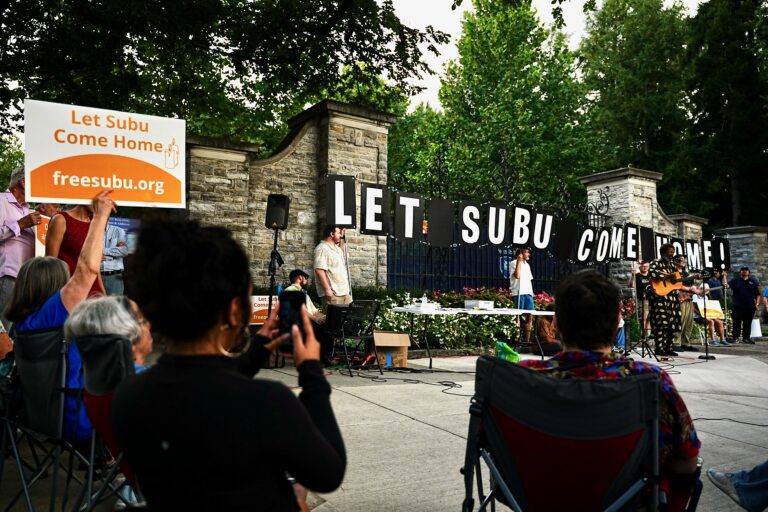
One Year After Subu Vedam’s Exoneration, Supporters Hold Vigil Calling for His Release From ICE Custody
Dozens of people gathered at the Allen Street Gates Thursday evening for a vigil calling for the release of Subramanyam “Subu” Vedam, who remains in federal immigration custody while the […]

Judge Denies Subu Vedam’s Release From ICE Custody While Feds Appeals Immigration Ruling
A State College man who was detained on a deportation order upon his release after four decades in prison for a now-overturned murder conviction will remain in custody while the […]
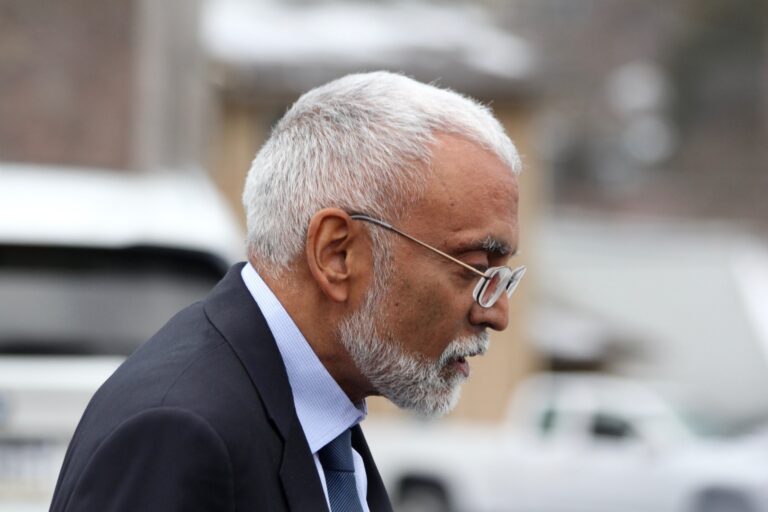
Subu in Limbo: Seven Months and Counting
When Subu Vedam was seized by ICE last October, he thought he’d be released in a matter of weeks, if not days. After all, his murder conviction had been overturned […]


