
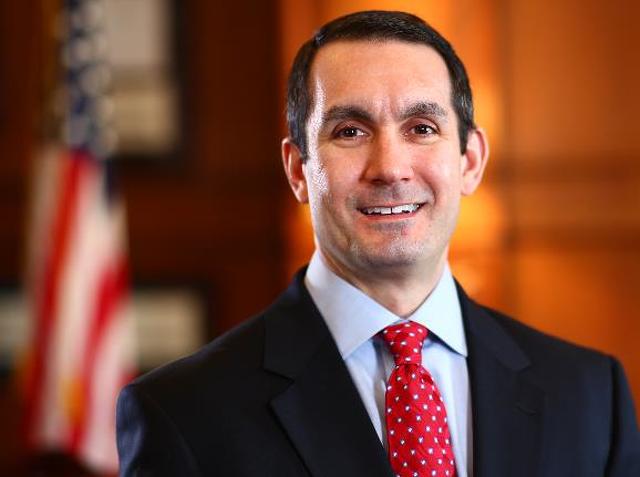
Auditor General Eugene DePasquale said on Tuesday that thousands of Pennsylvania children’s lives have been put at risk by unanswered and untracked phone calls to ChildLine, the state’s hotline for reporting suspected child abuse and neglect.
‘While strengthening laws to combat child abuse was a critical achievement, not providing the funding to enforce those laws was a disturbing failure,’ DePasquale said. ‘Our report shows the results of that failure — 42,000 unanswered calls in 2015.’
In recent years, clearly spurred at least in part by the emergence of the Jerry Sandusky child sexual abuse scandal in late 2011, Pennsylvania has made sweeping changes to its Child Protective Services Law and other laws related to children and perpetrators of child abuse crimes. Sandusky, the founder of the Second Mile charity for at-risk youth and a former Penn State assistant football coach, was convicted in June 2012 on 45 counts related to child sexual abuse dating back to the early 2000s. Penn State in the past three years has settled claims with alleged victims dating back to the 1970s.
Those changes have resulted in an increase in calls to the 24-hour, 7-days-a-week ChildLine, which is operated by the Department of Human Services. The hotline, however, doesn’t seem to have the resources or protocols in place to deal with those increases.
Pasquale announced results and recommendations from an interim report on the audit of ChildLine.
‘The critical problems our audit team has found so far simply cannot wait even another few months until this audit is finished,” DePasquale said. ‘DHS and ChildLine officials need to take corrective action immediately to save children’s lives.’
Calls to ChildLine can be answered; abandoned, meaning the caller hangs up while waiting in the call queue; or deflected, meaning once the queue is full — a maximum of 30 calls as of October 2015 — subsequent calls are terminated. In 2015, 22 percent of calls were abandoned or deflected. DePasquale called the volume of unanswered calls ‘alarming and unconscionable.’ The DHS goal, which was met in 2014, is 4 percent unanswered.
‘Any single one of those unanswered calls could have been a life-or-death situation — and even one neglected or abused child in the commonwealth is one too many,” DePasquale said. ‘DHS’s goal should be to answer and track the outcome of 100 percent of the calls.’
‘Keeping children safe is a critical part of our mission at the Department of Human Services and was a priority for me from the moment I took office,’ DHS Secretary Ted Dallas wrote in a response included in the interim report. ‘Within days of [Gov. Tom Wolf’s] administration taking office in January 2015 we took immediate action to begin addressing the issues at ChildLine.’
He said that the unanswered call rate had been reduced to 12 percent by March of this year. It had peaked at 43 percent in January 2015. Once adequate staffing is in place, DHS expects unanswered call rate to drop below 4 percent.
In 2014 and 2015 111,245 answered calls — a third of all calls — did not generate tracked reports. DePasquale said DHS officials told auditors that these calls provided no information or concerns about a child, but that there is no documentation to substantiate that.
‘DHS must immediately begin tracking all calls and find solutions to handle those that are not directly related to reports of child abuse or neglect,’ he said.
Dallas said that the hotline’s computer system is being updated to track the reasons for all calls and that the updated system will be released in June. Any additional needs for tracking would be added next year.
Auditors also found that as call volumes increased and supervisors had to help process referrals, monitoring of caseworkers’ calls was done only on an as-needed basis. Prior to 2014 calls had been monitored at varying frequency, but no policy was in place to mandate monitoring. In 2015, only seven of 146,367 calls were monitored.
‘With virtually zero monitoring, we have no idea if caseworkers properly handled calls,” DePasquale said. “Given the new laws and regulations, monitoring should have increased. In addition, this means that, for the 111,000 calls that did not end in a referral somewhere, we have no record of the reason for the call and no one monitoring the caseworkers’ decisions not to make referrals.’
DePasquale also recommended that ChildLine consider recording all calls.
Procedures are in place for monitoring, Dallas wrote, but could not be met in 2015 due to understaffing. He said a performance management system that includes monitoring is in the process of being implemented. The feasibility and legal implications of recording all calls will be explored
A key factor in the hotline’s deficiencies is understaffing. Auditors said staffing was inadequate throughout 2015, and that minimum staffing levels were based on available caseworkers and limiting overtime, rather than on volume of calls.
DePasquale laid blame for understaffing on both lawmakers and DHS.
‘Lawmakers voted for this legislation but did not provide the funding necessary to effectively enforce it, while DHS should have been unrelenting in its demand for adequate resources,” DePasquale said, adding that DHS has begun to address staffing since the start of the audit. ‘I am pleased that since the start of our audit, DHS has been working to address staffing needs, but they need to act more quickly. We are talking about the health and well-being of children, which means there is no acceptable excuse for not handling every single call in a timely, efficient manner.”
Dallas wrote that ChildLine has since developed staffing requests based on busiest call volumes and has increased its number of caseworkers from 42 to 69 and supervisors from six to nine. He added that the governor’s proposed budget for 2016-17 includes a $1.8 million increase since 2014-15 for ChildLine.
Jeff Sheridan, press secretary for Gov. Tom Wolf issued a statement following the release of the interim report:
When Governor Wolf took office, his administration inherited a ChildLine program that was not being implemented properly, and was an absolute mess.
Despite the law mandating that calls be responded to in 14 days, due to the high volume of calls, the total number of days reached as high as 26 days. The governor and Human Services Secretary Ted Dallas immediately went to work to fix the problem, and as a result of changes made, including new leadership to oversee the program and additional staffing and resources provided, the Wolf Administration:
- Reduced the number of response days from 26 to 2.
- Increased the number of calls responded to in a timely manner from 47 percent to 100 percent.
- Reduced the number of abandoned calls from 43 percent to 12 percent.
- The Administration is currently working to reduce this percentage to 4 percent, but additional funding is necessary.
The Wolf Administration began fixing the implementation of the program more than a year before the Auditor General began his audit, and while many strides have been made, there is more work to do.
We are committed to continuing our work with the legislature to implement the law and to finding ways to direct additional resources to ChildLine, and we are pleased the Auditor General is now involved in the process and has highlighted the need for more funding and additional staffing.
More Local News
View all Local News
Election 2026: PA 15th Congressional District
C-NET hosted candidates in the 2026 election for interviews conducted by StateCollege.com editor Geoff Rushton. Featured here are interviews with the candidates for Pennsylvania’s 15th Congressional District. THE RACE Pennsylvania’s […]
Making Sense of ‘Central Pa.,’ the Region We Love to Debate and Claim
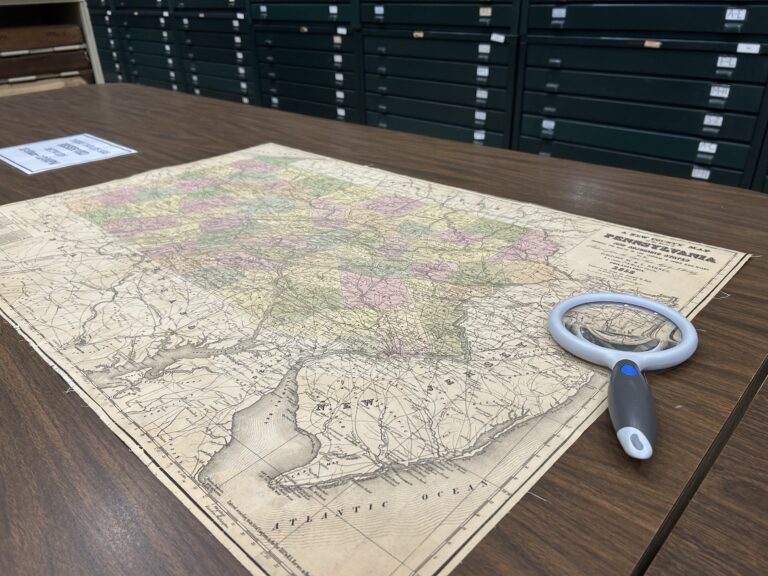
Central Pennsylvania’s nebulous definition can make efforts to talk about the region confusing — and occasionally contentious.

Cider Season in Centre County
With a new option fresh from the Way Fruit Farm orchards, we have a bushel full of hard ciders to sample, taste and enjoy this fall.


