
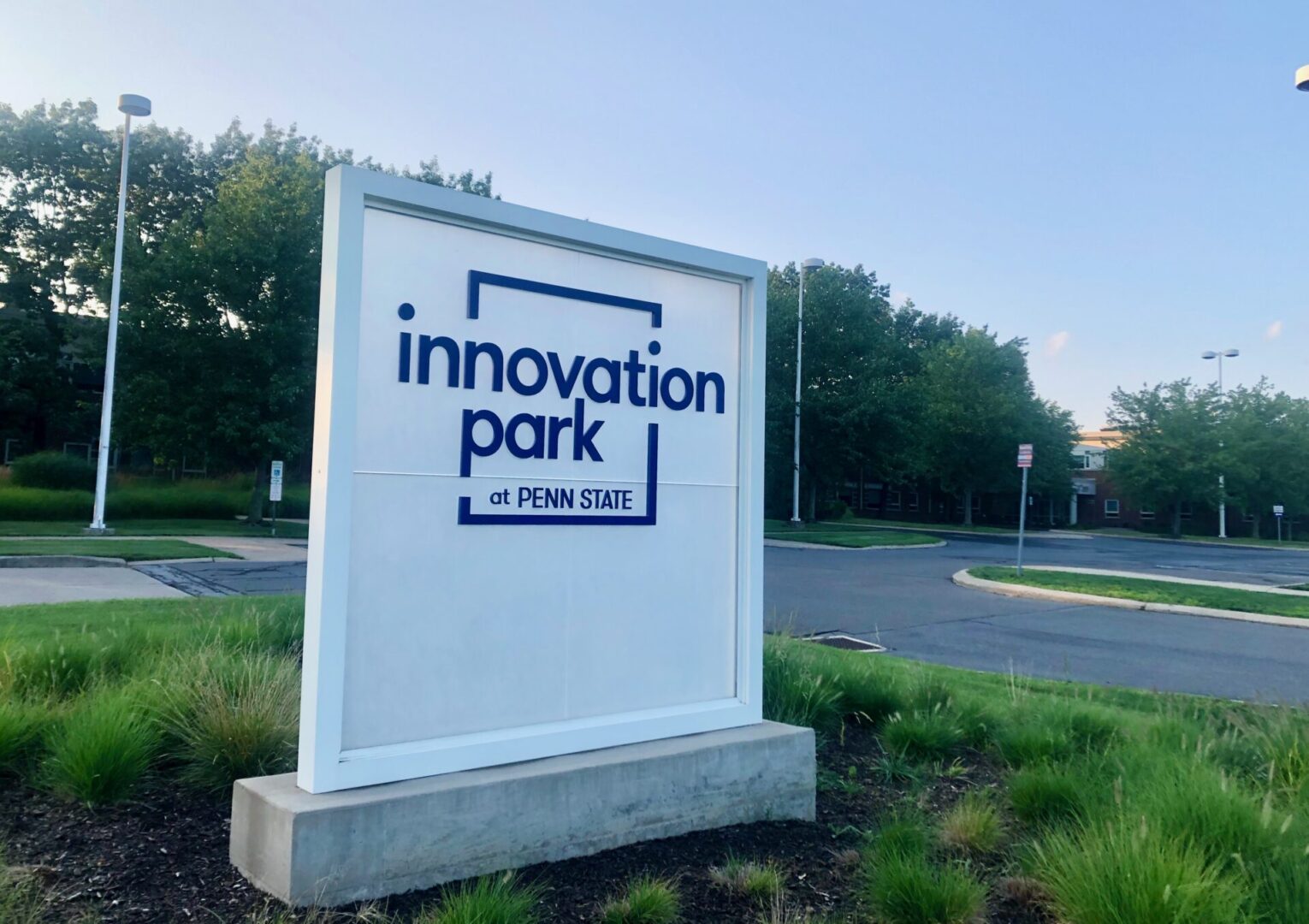
The Centre Region Council of Government General Forum on Monday approved a measure that will allow Penn State to pursue long-term plans for a unified campus for its Applied Research Lab at Innovation Park.
COG’s six member municipalities voted in favor of the university’s Development of Regional Impact application and a 50-acre expansion of the regional growth boundary and sewer service area at the Penn State-owned Innovation Park’s western end.
Combined with property already in the growth boundary, Penn State plans to build out an 88-acre campus for ARL over a period of about 50 years.
Founded in 1945, Penn State ARL has about 2,000 employees and does $450 million in annual research as one of only five U.S. Navy-sponsored university-affiliated research centers.
But university officials have said over the course of numerous reviews of the application and elsewhere that many of ARL’s two dozen facilities spread out across seven locations are aging, in need of significant renovation or replacement and not designed for modern needs.
The lengthy process to expand the boundary began in 2023, when College Township Council authorized Penn State to submit a Development of Regional Impact. Since then, the university developed and submitted a report that included stormwater management planning, a traffic study, sewer service impact on the University Joint Authority, public water from the Penn State Water Utility, emergency services considerations and more.
It has undergone review by myriad regional agencies and each individual municipal member of the COG.
College Township Council member Eric Bernier said on Monday that the regional growth boundary is “the most powerful tool we have for managing sustainable and efficient growth, basically containing sprawl.” But, he said, Penn State’s plan is unique and the council encouraged the university to move forward for a variety of reasons, among them that it “does not promote outward sprawl.”
The expansion, he said, doesn’t require altering transportation networks, is a “logical” extension of an economic growth area and “represents a minor adjustment to the regional growth boundary/sewer service area” because it is contiguous with Innovation Park.
“In fact, I was involved in the development of the zoning districts for Innovation Park, the [University Planned Districts] back about 25 years ago,” Bernier said. “And in my days with College Township Council or College Township [Planning Commission], we always envisioned and anticipated a natural extension of this area for use very similar to what Penn State is planning for.”
State College Borough Council member Evan Myers said that in Pennsylvania, regional growth boundaries are defined to not to prohibit development, but “to channel growth into the appropriate areas with supporting infrastructure” and to “protect rural and agricultural areas from premature or scattered development.”
“Considering the legal definition and what has been presented in a number of meetings, I think this fits into that category,” Myers said. “It seems like it makes sense to go where it’s being proposed.”
He added that he is concerned that if the expansion were denied, the university might instead decide to expand its footprint closer to downtown in areas suited for housing.
Borough Council member Gopal Balachandran said Innovation Park can be “a very important place” for regional bicycle infrastructure and asked if Penn State could be directed to plan for that. Bernier responded College Township Council will do “whatever we can through the land development process to leverage what we can possibly do for the community in those areas.
Another Borough Council member, Matt Herndon, said that he agrees with the legal interpretation of state law that the COG cannot prevent the boundary extension, but disputed the plan being characterized as “not sprawl.”
“It’s moving hundreds, maybe thousands of jobs to a location that’s further from housing and longer to bike to, longer to take transit to than their current locations,” Herndon sad. “Even if we are essentially forced to move forward with this based on judicial interpretation of our law, I would ask that we at least stop claiming that this is not sprawl when it is almost entirely going to be reached by car and will almost certainly increase the vehicle miles traveled in our community.”
Penn State plans to eventually move all of its ARL facilities to the Innovation Park campus. Plans have shown more than a dozen new buildings to be constructed over 50 years, organized around open spaces and walking pathways, and will include specialized buildings for unique research as ARL wins new contracts or needs arise.
Twenty-eight acres of the campus are in the designated Innovation Park and zoned as a Planned Research and Business Park District. Another 10 in Innovation Park and the 50 in the expansion are in the University Planned District and will need to be rezoned by College Township as PRBD. That Penn State-owned land is currently used for grazing and crops and managed by the university’s College of Agricultural Sciences, which university planned Neil Sullivan previously said is aware of the ARL plan.
Building heights will be similar to what is currently at Innovation Park, with a series of two-, three- and four-story structures and the possibility of a few five-story buildings.
While timing for the long-term build-out will be based on need over decades, the first phase is already underway.
A new four-story, 80,000-square-foot ARL facility is under construction at 335 Innovation Boulevard. When the university Board of Trustees approved the $91 million project in November 2024, Sara Thorndike, senior vice president for finance and business, described the new building as “an interdisciplinary research hub,” that “will provide space for relocated research programs and provide capacity for research program growth.”
Following the COG’s approval, the Development of Regional Impact application will head back to College Township for the final step, a developer agreement between the municipality and the township.
More Local News
View all Local News
Penn State Rises in U.S. News & World Report ‘Best Colleges’ Ranking
Penn State climbed into the top 25 for public schools in the U.S. News & World Report “Best Colleges” for 2027 released on Tuesday, but remained much lower on the […]
Centre County Man Who Admitted to Killing His Wife Pleads Guilty to Third-Degree Murder
A Centre County man pleaded guilty to third-degree murder on Wednesday for the strangulation death of his wife in October 2025. Alan K. Reed, 75, will be sentenced to 15 […]
Centre County Prison Board Hears Renewed Call for Outdoor Recreation
A Centre County resident renewed calls for outdoor recreation at the Centre County Correctional Facility at the September Prison Board meeting, prompting a sometimes tense discussion between the resident, commissioners and prison officials.


