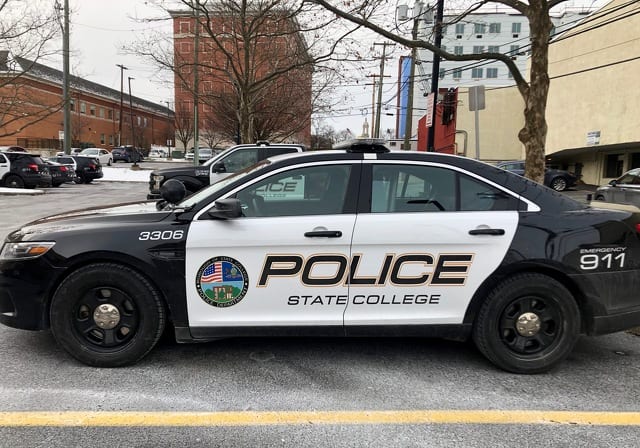
The International Association of Chiefs of Police has begun work on its assessment of State College Police Department policies and practices and is now seeking community feedback through an online survey.
The survey, which consists of 22 questions about the community’s interactions and relationship with the department, is available here until Feb. 11.
In October, State College Borough Council approved a $60,000 contract with IACP to conduct the independent review and assessment. It was one of several measures taken to address issues raised after the fatal shooting of 29-year-old Osaze Osagie by borough police in March.
IACP is described as ‘the world’s largest and most influential professional association for police leaders.’ It provides research, training and programs to create ‘safer communities through thoughtful, progressive police leadership.’
The State College assessment team includes Jessie Lee, former executive director of the National Organization of Black Law Enforcement Executives; Sue Riseling, former longtime chief of police at the University of Wisconsin-Madison; and Mark Lomax, a retired Pennsylvania State Police major.
IACP’s proposal said the team would conduct ‘extensive on-site work,’ analyze historical and new data, compare it to past work and professional standards and in relation to contemporary challenges of police departments to create a series of recommendations. It will focus on existing model practices within the department as well as areas for improvement.
‘The study report will be comprehensive and balanced,’ the IACP proposal states. ‘It will highlight positive aspects of operations as well as those that may need modification… The report and recommendations will emphasize actions the department can employ to achieve objectives more effectively, maximize productivity and meet future requirements in an informed and orderly manner. Additionally, it will document existing foundational components on which to base sustained development and inform the police profession.’
The community survey takes less than 15 minutes to complete and responses are confidential.
In addition to the IACP assessment, the borough also has undertaken other major initiatives following the death of Osagie, who was Black and who was diagnosed with paranoid schizophrenia, anxiety and autism.
Borough council authorized a $100,000 with the National League of Cities Race, Equity, and Leadership (REAL) to lead an assessment, provide training and work with the borough and community members to develop a racial equity plan.
The borough also allocated $50,000 to support the work of a 35-member mental health crisis services task force in collaboration with Centre County. That group is expected to issue its report in the summer.
Another group is expected to to update the 2016 report by the Task Force on Policing and Communities of Color, reviewing what has been done and what still needs to be implemented.
Osagie was shot and killed during a confrontation with State College police, who had come to his apartment to serve a 302 mental health warrant.
Though the officers involved were exonerated by a state police investigation and an internal review, some community members have continued to express concerns about police oversight and training as well as about the availability and operation of mental health crisis services in the area.