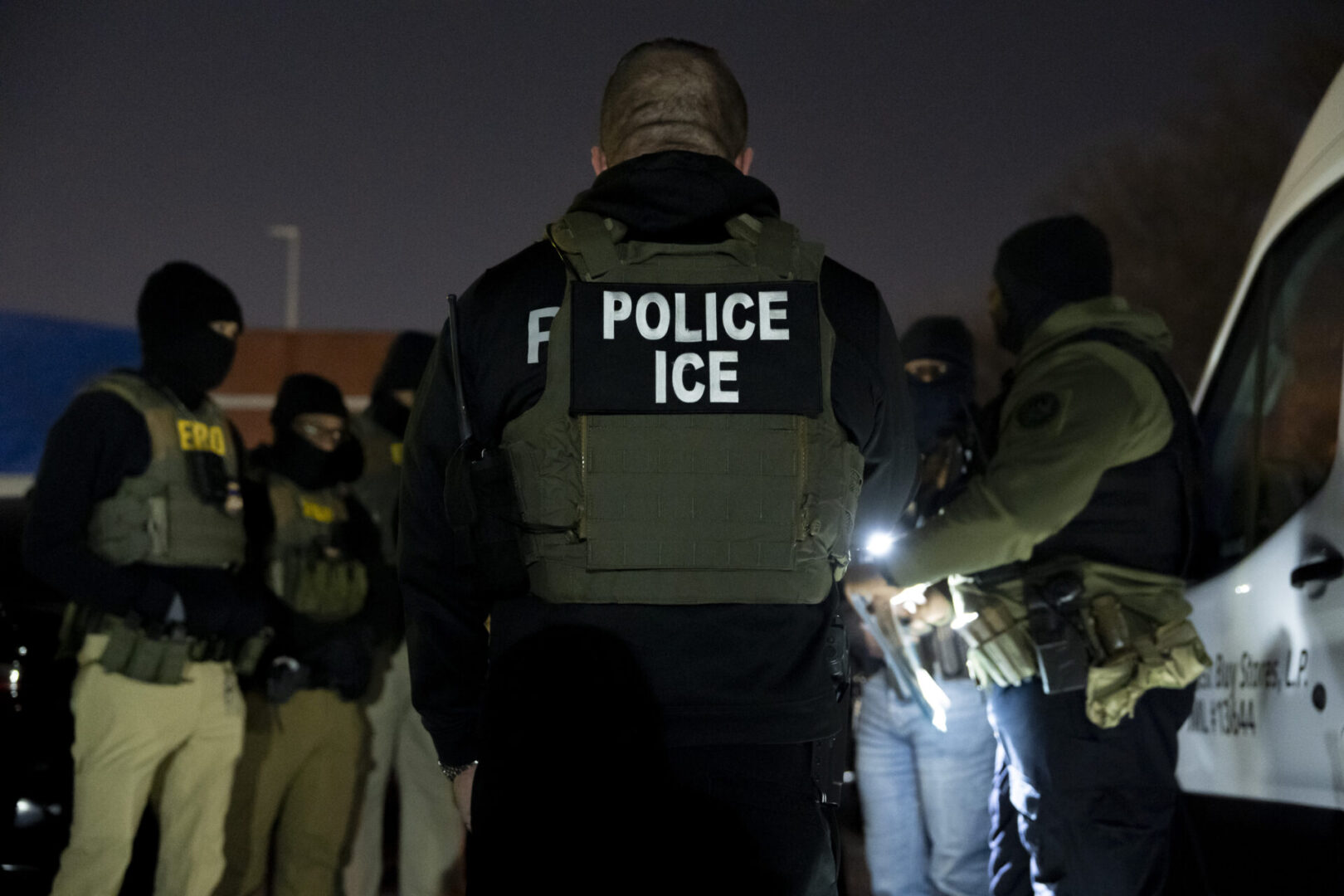
The Department of Homeland Security has included Centre County and State College on a national list of “sanctuary jurisdictions” it claims are “defying federal immigration law,” though it is unclear how either has done so.
County officials reached on Friday were puzzled by the designation, and the borough has in the past explicitly rejected the immigration “sanctuary city” label.
The county and the borough were among 16 jurisdictions in Pennsylvania and more than 500 nationwide included on the list released Thursday following an April 28 executive order by President Donald Trump that required the U.S. attorney general and homeland security secretary to publish the states and local jurisdictions “that obstruct the enforcement of Federal immigration laws.”
“Sanctuary jurisdictions including cities, counties, and states … are deliberately and shamefully obstructing the enforcement of federal immigration laws endangering American communities,” DHS wrote in a news release.
Each jurisdiction will receive “formal notification of its non-compliance with Federal statutes” and a demand that they revise their policies. The executive order claimed jurisdictions that do not comply will have certain federal funds suspended or terminated.
In response to a question from StateCollege.com about how the borough or the county have defied immigration law, a DHS spokesperson wrote in an email that the designation is based on a number of factors “including self-identification as a sanctuary jurisdiction, noncompliance with Federal law enforcement in enforcing immigration laws, restrictions on information sharing, and legal protections for illegal aliens.”
DHS said the list is “actively reviewed, will be regularly updated, and can be changed at any time.”
The designation as a sanctuary jurisdiction came as a surprise to Centre County officials.
“I’m aware of no countywide government action that would support that conclusion,” District Attorney Bernie Cantorna said. “It appears to be made up.”
Commissioner Steve Dershem, the lone Republican on the county’s three-member governing board, said he was “shocked” and “didn’t understand why” Centre County would appear on the list.
“There’s never, to my knowledge, ever been any action taken that would even indicate anything like this,” Dershem, who has served as a commissioner for 22 years, said. “And we’ve always been cooperative with all the federal authorities, but particularly law enforcement.”
As a commissioner, Dershem serves on the county’s board of prison inspectors and said the correctional facility complies with detainer requests.
“If there’s a detainer for anybody, it wouldn’t matter who they were, I think they’re going to enforce it,” he said. “To the best of my knowledge, I’ve never heard a question to that effect. We get detainers from all over. If somebody’s picked up on a warrant from out of county or out of state, we obviously honor all that.”
Centre County has not yet received any correspondence from the federal government about the issue, a county spokesperson said.
State College Police Chief John Gardner and Borough Manager Tom Fountaine did not respond to requests for comment on Friday afternoon, but Gardner has addressed the policy of his department and the borough on immigration enforcement several times in the past, including as recently as January.
Because most immigration enforcement is a civil administrative matter that is the responsibility of federal agencies, State College police do not voluntarily get involved, Gardner said in January. But he said that borough police will assist local, state and federal law enforcement authorities with criminal investigations and will comply with court orders.
“The only way we would get involved in any type of immigration case is on a federal judge’s order or an arrest warrant,” Gardner said. “As far as any round-ups or anything, we would not get involved in that.”
The immigration policy for borough police, Gardner said in January, affirms that the department is committed to providing services to all members of the community, including non-citizens, can assist certain non-citizen victims with obtaining a visa and does not ask for or collect information about immigrant status. Officers have also undergone an “Immigration 101” training in 2018 and 2022, and the department works with multiple legal and immigration community organizations.
In 2017, the borough council adopted a resolution affirming the position that immigration enforcement is a federal responsibility and that it would not voluntarily assist in the deportation of community members. It also reiterated the borough’s longstanding policy not to ask victims or witnesses of crimes about their immigration status.
The resolution was developed with input from Gardner, Fountaine and then-Assistant Borough Manager for Public Safety Tom King, with assistance from Shoba Sivaprasad Wadhia, an immigration law attorney and founding director of Penn State Law’s Center for Immigrants’ Rights Clinic.
Wadhia said at the time that the U.S. Constitution and Supreme Court have long held that immigration enforcement is a federal responsibility.
“If local governments are viewed as immigration agents, their ability to engage the community is severely undermined,” Wadhia said. ‘When a victim of domestic violence or sexual assault is too afraid to report a crime to police out of fear of deportation, everyone’s public safety is at risk.”
After that resolution was passed, some media reports indicated that State College had declared itself a sanctuary city.
Borough officials said that was not the case. It did not contain the typical hallmarks of a sanctuary city to protect undocumented immigrants from prosecution for immigration law violations, such as refusing to turn over those who have been arrested for an unrelated crime, they said.
Requests by Immigration and Customs Enforcement to detain an inmate typically come after a suspect has been booked and fingerprinted and their fingerprints submitted to the FBI. For State College and the rest of Centre County, that happens at the Centre County Correctional Facility. And as Dershem noted, the county has no sanctuary policy.
Borough leaders said at the time that the resolution was a value statement, and Gardner said it changed nothing about how the police department already enforced laws or assisted with investigations.
The borough resolution and rejection of the sanctuary city label came around the same time Trump issued an executive order during his first term similar to the most recent one in April, threatening loss of federal funds for jurisdictions that obstructed immigration enforcement.
“The resolution passed by the State College Borough outlines the position of the borough on immigration enforcement, reaffirms that immigration is a federal responsibility, and also recognizes that its policies must stay within the bounds of the law,” Wadhia said in 2017. “Further, it is unconstitutional for the federal government to force states and localities to enforce immigration law.”