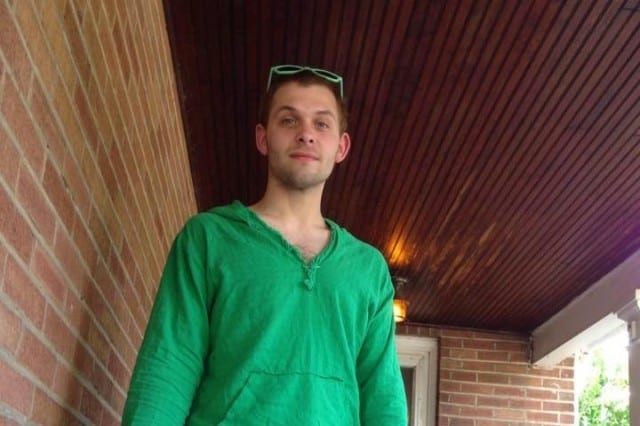
John Van Horn was, by all accounts, a kind and giving person. A talented musician and beloved son, brother and friend, he was working to find a career where he could help youth with disabilities.
The Bellefonte resident also spent much of his life battling his own mind as he struggled with bipolar disorder.
Nearly four years after his death at the age of 23, his mother, Michelle, is sharing John’s story — through her experiences with him throughout his life and in his own words — in a new book that she hopes will help people better understand mental illness and the importance of treatment for it, as well as offering a look at the bright and caring person John was.
A little over a year ago, Michelle decided that John’s story, including excerpts from journals he kept over two periods of his life, could be a lifeline for others and in April, ‘His Beautiful, Tortured Soul: A Look at the Amazing, Positive Life of a Young Man with Bi-polar Illness,’ was published.
‘I really felt like getting that information out to other people, sharing his story and my story, might be a way to kind of let him talk to other people, because he was a very gifted person, very open,’ she said. ‘No matter what his mood was, what he was going through, he would stop doing anything he was doing to help you. I think he just would have wanted to continue doing that and I felt this was a way for him to keep helping other people. That’s why I sat down and started writing it.’
John died on Aug. 3, 2015 from head trauma sustained after he exited a moving car. His manner of death was listed as suicide, but his mother and family remain unsure whether he truly meant to take his own life or whether it was a tragic accident, caused by a heightened state of confusion.
Michelle and John, her oldest of three children, were close. She, too, has bipolar disorder and they understood each other well. His words and demeanor preceding his death, she said, were out of character.
‘The words he said to the young man who was trying to get him home safely to me, he was agitated and was starting to get angry. That’s not something John did,’ she said. ‘He looked over at the guy driving the car and suddenly said ‘I have to go right now.’ Then he went out the window. We’re not even sure he knew that the car was moving. A lot of us don’t know. Sometimes I think yes, he gave up. Other times, I don’t think he did.’
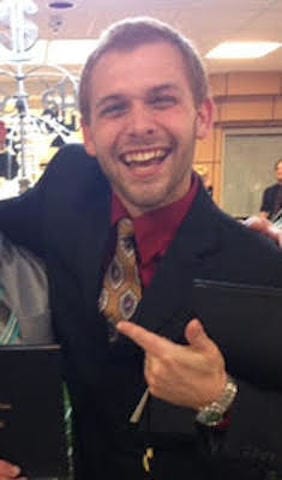
John Van Horn. Photo provided.
John was homeschooled but took several classes at Bellefonte Area High School — where he also played football for a year and was team manager for a year — and graduated in 2010. As a teen he often returned to Camp Kanesatake, where he went during summers as a youth, to volunteer.
His musical gifts were apparent from an early age and over the years he learned to play piano, bass, guitar and mandolin, among other instruments. He was the bassist and vocalist for a band, Subject to Change, that he formed with his brother and two friends.
He went to Lock Haven for two years to study music education, but the experience became too stressful, an example of how his positive attitude and desire to follow his passions came into conflict with his bipolar disorder.
‘In his last journals, especially, you could really see how one day it was a great day and the next day it was a crash. He just doubted himself at every single turn,’ Michelle said. ‘Anybody who knew him at all had to have heard him say a million times, ‘I wish I was good at stuff.’ He was incredible at so many things, but he never gave himself credit for anything. I think that was part of the illness.’
Bipolar disorder, Michelle said, can manifest itself in different ways and can be difficult to understand for those dealing with it. John experienced depression and mania and understood he had a mental illness, but he didn’t know what he would experience from one day to the next.
He wanted to beat it, but said he felt like a burden to others. He tried to overcome it, and had help in his effort.
‘He and I were always very close and that was helpful. He came to me and talked a lot,’ Michelle said. ‘I myself have bipolar, so we understood each other. That was helpful in his journey, trying to manage his illness, going through the process of him getting a formal diagnosis and trying to come up with a new treatment for him over the years.’
But Michelle said she recognizes not everyone has an understanding of mental illness, nor do they necessarily embrace the help that is available. That was a major reason she decided she should write the book.
She’s already heard from one friend who said reading the book with her teenage daughter helped her daughter to understand there is no shame in getting counseling for obsessive-compulsive disorder issues.
‘It’s things like that that made me say, ‘Great, this is one person who is moving forward and that’s positive,” Michelle said. ‘I wish I could just get an airplane and throw them out to everybody and say ‘Read this,’ so there is understanding. I want people to understand. People need to understand, and we’ve certainly come a great deal farther in mental health than where we were in the past.
‘But I would love for people to not be afraid to talk about mental illness and… if they get to the point where they need to do in-patient care not to to be terrified their employers are going to find out and they’re going to lose their jobs. Because people don’t get care sometimes because of those reasons.’
She also wants to see the mental health system improve. She cited the recent case of Osaze Osagie in State College, who had withdrawn from treatment before he was shot and killed during a confrontation with police who had come to serve a mental health warrant.
More resources are needed to help individuals in mental health crisis, she said, before they have reached a breaking point.
‘There are places like Can Help (the county’s crisis intervention service) and there is the police force. There needs to be something in between,’ she said. ‘Not all police officers can be trained in mental health issues, and the Can Help people can’t be trained as police officers. There is a gap, and I’m hoping stories like John’s might open people’s eyes to say ‘I want to work with people like this.’’
Michelle said she also had a medical professional say they would like to use the book with nursing interns during mental health rotations because sharing John’s own thoughts from his journals provides insight from the inside out, and along with her own experiences and those of people who knew him, provide a fuller picture of someone with bipolar disorder.
It’s a way for John to continue helping others, something his mother believes he would be happy to see.
Before his death, John had begun looking for a career helping others. Months earlier he graduated from the Central Pennsylvania Institute of Science and Technology, where he studied precision machining. But he was looking for jobs where he could work with children and adolescents with disabilities.
‘When he decided to try to start working with people with unique disabilities, his reasoning was he wanted to work with kids and make them feel like there was nothing wrong with them like he had always felt like there was something wrong with him,’ Michelle said. ‘I think he would be very excited if people would walk away from this and say ‘He was brave enough to tell me this. I think I can get better or I can help a friend of mine.”
As she grieved the loss of her son, Michelle wasn’t sure she wanted to read the journals, but was glad she did because, as well as she knew him, they offered even more insight about his mind and about who John was as a person. She hopes now that insight can be of help to others.
‘I hope to be able to express to parents dealing with a child with this, or losing a child, that there is hope beyond it,’ she said. ‘It’s so multifaceted but I hope there will be positive out of a very negative situation.’
It was in John’s nature to be positive, something that his many friends who still keep in touch with his family would attest. His journals reveal that positive outlook, no matter how bleak the world may have seemed at times to him.
‘I just… I want everyone to know that sincerity is so easily falsified at times and that the beauty that each of us has is sometimes withdrawn,’ he wrote. ‘If we loved the human race for who they are, there would be no need for ridicule and stigma. Just because someone is an outcast for how they look or act doesn’t mean that they aren’t a beautiful soul.’
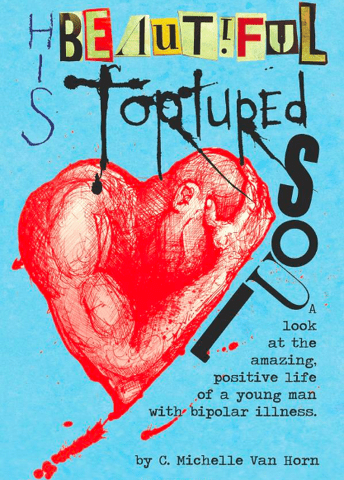
‘His Beautiful Tortured Soul,’ by Michelle Van Horn is available through Amazon.com.