
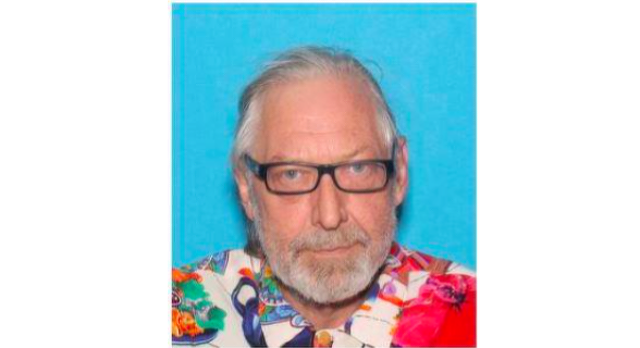
A Centre County jury is now deliberating in the case of two people accused of conspiring to murder Penn State professor Ronald Bettig in August 2016.
After six days of testimony, Centre County District Attorney Bernie Cantorna and defense attorneys for Danelle Rae Geier and George Gene Ishler, Jr. made their closing arguments on Monday morning in Bellefonte.
The jury began deliberating at about 2 p.m.
Geier and Ishler are accused of luring the 56-year Bettig, of Lemont, to Blackhawk Quarry in Potter Township on Aug. 12, 2016, when Ishler allegedly pushed Bettig over a ledge, causing him to fall 75 feet to the ground below.
Ishler reported Bettig missing on Aug. 15 and Bettig’s body was found on Aug. 17. Prosecutors say Ishler and Geier believed they would benefit financially from a will Bettig hand wrote several months earlier.
Geier says Ishler acted alone and Ishler claims Bettig committed suicide. They are both charged with first degree murder, third degree murder, aggravated assault, conspiracy and tampering with evidence. Ishler also is charged with unsworn falsification to authorities.
Deborah Lux, Geier’s attorney, began her closing summation by noting two character witnesses who testified that Geier is “a law-abiding, nonviolent and peaceable individual,” and that evidence of good character is cause for reasonable doubt.
She compared Geier’s demeanor on the witness stand last week to that of Ishler. Where Geier “shut down” and was visibly shaking, Lux said, Ishler was “in your face, controlling and aggressive,” and didn’t back down from Deputy District Attorney Sean McGraw.
“She was not there,” when Bettig fell, Lux said. “She does not know what happened.”
Geier said that she believed Bettig and Ishler walked through a wooded area toward the quarry to check on marijuana plants while she waited at the car. While feeding and changing the child, Geier made no attempt to hide when an adjacent landowner saw their car and came by on his lawnmower to make sure no one was dumping trash.
Witnesses testified that Bettig had been in a deep depression and that his mental and physical health were deteriorating when he met Geier, through Ishler, in early 2016. Lux said that Bettig’s mood improved and he began to regain weight when Geier and her child moved in with him.
“They were both broken. They were both vulnerable,” Lux said. “It’s not surprising they formed a bond.”
Lux said she doesn’t understand the prosecution’s theory for Geier’s involvement because Bettig had given her client a home and was taking care of her. Geier said Bettig had asked her to marry him, and Lux argued that if Geier wanted money, she could have simply accepted his proposal.
Before taking Bettig to the quarry, Ishler, Bettig, Geier and her child traveled to Rehoboth Beach, Del., where prosecutors say Ishler and Geier initially planned to drown Bettig.
“It wasn’t to drown the professor,” Lux said. “That’s absurd. Why would you drive to Rehoboth Beach? Why wouldn’t you get him high and drown him in his hot tub?”
Instead, Lux said, Geier only traveled with Ishler because she was intimidated by him and that Ishler was going there to collect a debt to repay money he owed Bettig. Police said a text message she sent Ishler while in Delaware stating “So ready. I am pissed off,” meant she was ready to kill Bettig. Lux, however, said that the message meant she was ready to go home after being stuck in a motel room all day.
Geier, Lux said, was under duress from Ishler when she went with him back to the quarry where Ishler planted items to make it look like Bettig had been there alone. Ishler allegedly threatened to kill Geier and her children if she did not go along with his plan.
Lux said that after Bettig’s death, Geier cooperated with police, voluntarily surrendered her phone, and agreed to take part in a recorded phone conversation with Ishler.
Geier was not given her Miranda warnings when she was questioned by police. Her sister testified on Monday morning that she and Geier both asked if Geier needed an attorney and were told she did not. Trooper Brian Wakefield testified that she was informed she could leave at any time and the door of the interview room was not locked.
“There is absolutely no motive for Danelle of all people to kill the professor,” Lux said.
Attorney Karen Muir, representing Ishler, said no scientific, medical or forensic evidence or testimony was presented throughout the trial to show that Bettig was pushed to his death by Ishler.
Forensic pathologist Harry Kamerow testified that Bettig died because of a fall, Muir said, not being pushed, and there was no evidence of a struggle or DNA evidence that would connect Ishler to the fall.
Muir also cited the testimony of Pennsylvania State Police reconstruction expert Frank Gauss, who she said estimated Bettig’s initial velocity as 0. Muir said that indicated Bettig was not pushed. She also said there was no physical evidence to indicate Bettig had spiraled or turned his body.
“It’s a suicide, ladies and gentlemen,” Muir said. “The evidence is more consistent with a suicide than a homicide.’
In a recorded statement, Ishler told police “I pushed the professor off the cliff.” But Muir said the statement was made after more than five hours of questioning in a locked room and she alleged that it was made after officers screamed at him, pounded on a table and made a promise that he could possibly see “his old lady” one last time before he “came clean.”
Muir questioned why the interview was not recorded until Ishler made the statement and said that at the end he whispered “Is there anything else you want me to say?”
“He was doing what the troopers wanted him to do,” Muir said.
She added that there was no evidence Ishler had been using Bettig’s credit card as Geier had or that he told Bettig to write a new will that made Ishler the executor. The will was written in the same type of informal language that Bettig used for an earlier will, which was ultimately used by Bettig’s family to settle his estate, Muir said.
The new will also would have left a substantial amount to two of Bettig’s friends, with whom Ishler did not get along well, Muir said.
In delivering the prosecution’s summation, Cantorna took issue with Lux’s contention that it made no sense to go to the beach for the purpose of drowning Bettig.
“If he drowns, it’s just another drowning at Rehoboth Beach. No one is going to investigate it,”” Cantorna said.
Both defendants showed no emotion when they spoke about Bettig on the stand, Cantorna said, and the only time either did was in Geier’s statement to police.
“She was sorry she listened to George Ishler, sorry it led to the professor’s death, sorry she got caught,” Cantorna said.
Geier testified that she had been raped by Ishler and by other men in her past.
“I wouldn’t wish Danelle Geier’s past on anyone,” Cantorna said. “It doesn’t excuse her for the decisions she has made.”
Cantorna said Geier was manipulative and was the key to both defendants taking advantage of Bettig in the months leading up to his death.
Some testimony during the trial centered on Disney stock owned by Bettig. Cantorna noted the testimony of Geier’s half-sister, who said that Geier said she believed it was worth $1 million. Bettig’s brother testified earlier that the stock was worth about $50,000.
“Danelle thought there was a will that gave her Disney stock worth a million dollars,” Cantorna said. “What would Danelle Geier do for a million dollars.
Cantorna said that during the trial Geier and Ishler provided stories that they had never told before.
“They’ve had a year and a half to put their accounts together,” he said.
But, he said, the evidence that they had an agreement to kill Bettig comes from their own statements as well as text messages, which Cantorna said indicate an intimate relationship between Geier and Ishler.
More Local News
View all Local News
Centre County Commissioners Award $215K for Affordable Housing Rehabilitation Projects
Centre County commissioners on Tuesday approved $215,000 for four projects aimed at creating and repairing affordable housing across the county. The funding will support the rehabilitation of three homes in […]
Judge Orders Sandusky Hearing to Proceed After Motion to Cancel
Updated 8:30 p.m. Sept. 4, 2026. A judge has denied Jerry Sandusky’s request to cancel an upcoming hearing originally scheduled for a claim that one of his accusers is recanting […]

Still No Deal Between Mount Nittany Medical Center, Union After Latest Negotiations
Mount Nittany Medical Center executives and the union representing 950 of the hospital’s workers once again were unable to come to terms on a new contract after the latest round […]


