
It’s an age of possibility: Science has granted humans the ability to change their world. And communications allow us to share and store the knowledge of everyone who’s come before.
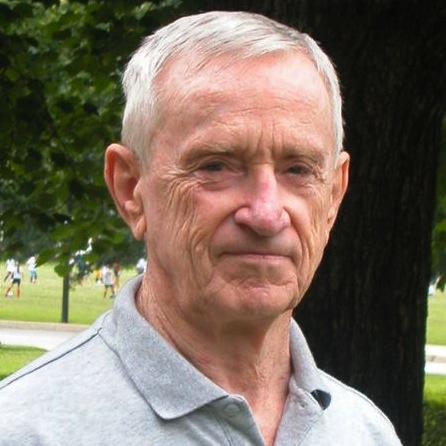
But ‘we keep running into people who refuse to think about what’s going on. They don’t want to think about what’s going on,’ science-literacy expert Robert L. Park said Friday night at University Park.
‘We’ve got to somehow get what we know (about science) to the people who need to know it,’ Park told an audience in Penn State’s Osmond Laboratory. ‘We’re not doing it very well.’
A renowned physics professor emeritus at the University of Maryland, he pointed to perpetual hand-wringing over whether mobile phones could cause brain cancer. All the concrete evidence — including an absence of phone-linked cancer cases, plus Albert Einstein’s century-old research — suggests no threat exists, he said.
Still, popular media have repeated the worry, including in books, Park went on.
‘The public enjoys being frightened,’ he said, ‘We don’t have scary movies because it bothers people. It adds excitement to an otherwise-drab existence. People like to be frightened. But this (science) is not the place to frighten them.’
Park’s talk, ‘The Last Endangered Species,’ was sponsored by the local branch of the American Association of Physics Teachers, the Center for Excellence in Science Education in the Eberly College of Science, the Penn State Department of Physics and the university STEM Teaching Group.
Known in part for his Congressional appearances and newspaper columns, Park lamented that critical revelations in science and mathematics appear to pass by the public.
‘We’re in a world where there’s a lot of information that most of us don’t learn about in school. And it affects the well-being of everyone on Earth,’ he said. ‘ … We are not becoming mathematically adept.’
He said society needs a better way of evaluating the science that reaches the public eye. While he doesn’t have all the answers, he said, bona fide science experts need ‘to get out there and argue in public’ and ‘communicate to a different group of people’ — that is, those not attuned to legitimate science.
‘I try to tell people when I write that nothing is believable until it’s verified — independently,’ Park said.
A Korean War veteran, Park studied at the University of Texas and Brown University. He worked at Sandia National Laboratory before joining the University of Maryland in 1972. In the early 1980s, he opened a Washington office for the American Physical Society. His books include ‘Voodoo Science: the Road from Foolishness to Fraud,’ published in 2000.
Among several flashes of deadpan humor Friday night, Park answered a Penn State audience member who asked about overpopulation: ‘Don’t listen to (Rick) Santorum.’ The crowd applauded loudly.
Sales of contraceptives in Rome, Park added, are higher than those in nearly any other city in the world.
‘People understand this stuff,’ he said. ‘Santorum isn’t going to understand it. But that’s his problem.’
More Community & Entertainment
View all Community & Entertainment
January Is a Call to Action to Respond to Stalking
This column by Centre Safe Executive Director Jennifer Pencek originally appeared in The Centre County Gazette. When we talk about acts of interpersonal violence, oftentimes people will focus on sexual […]

Busy Weekend of Fall Festivals and More on Tap Around Centre County
The weekend of Sept. 29-Oct. 1 is packed with activities around Centre County, including fall festivals, Oktoberfests, fairs, concerts and more. Check out some of the weekend highlights below. For […]
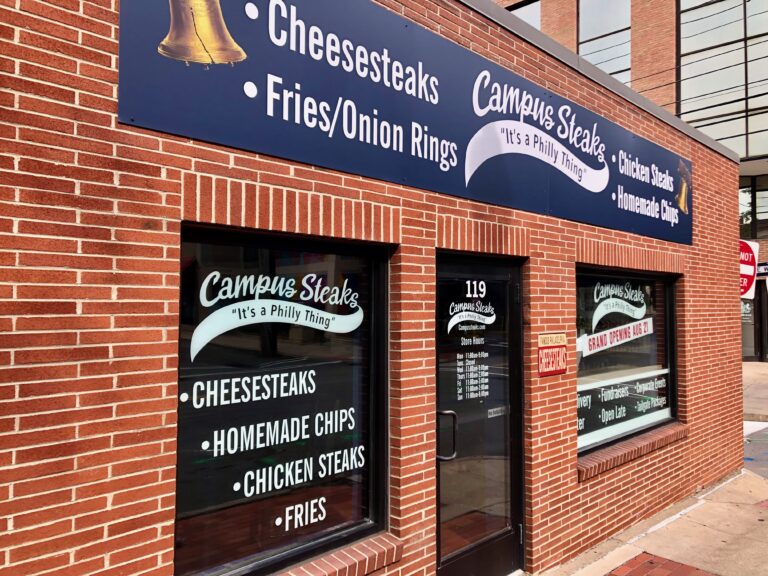
Downtown State College Cheesesteak Shop Sets Opening Date
A new cheesesteak shop that promises a taste of Philly in downtown State College has set an opening date. Campus Steaks plans to hold a grand opening on Aug. 28 […]


