
This story originally appeared in The Centre County Gazette.
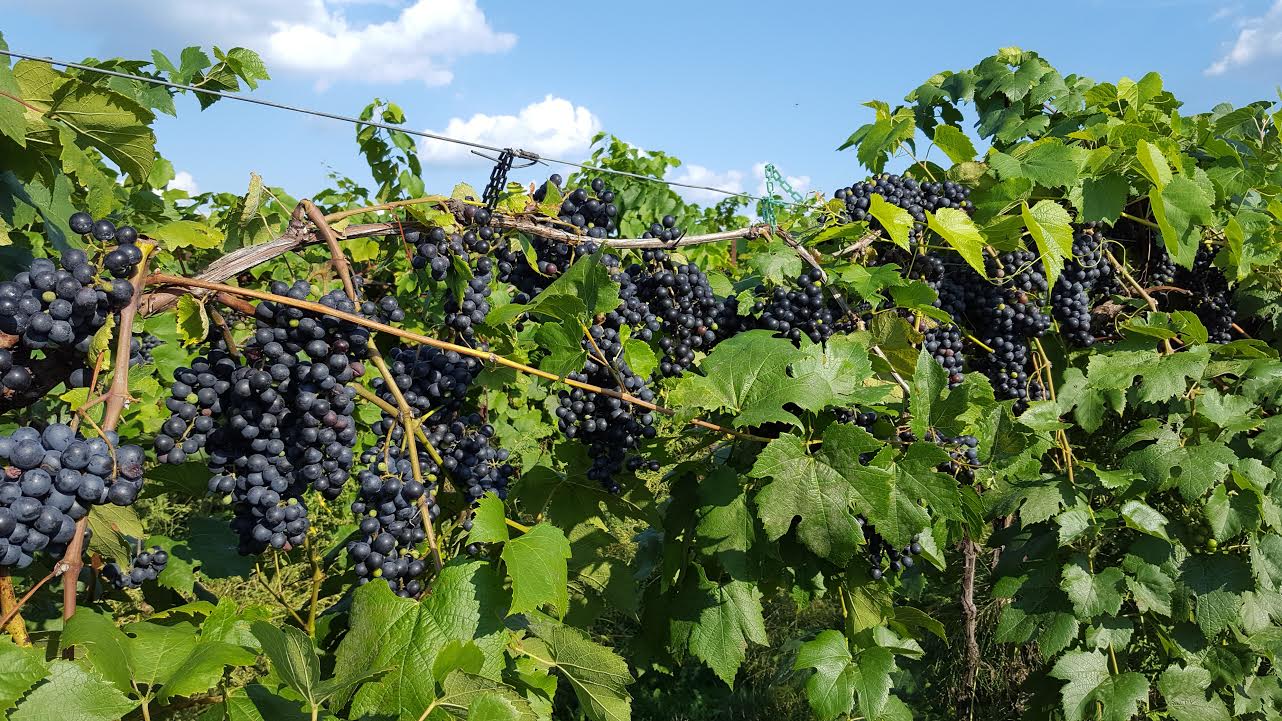
An unusually warm late winter followed by repeated frost and freeze events has left many Centre County growers facing devastating crop losses and an uncertain growing season, with local vineyard and farm owners warning that consumers could soon feel the effects as well.
At Happy Valley Vineyard & Winery, owners Barbara Christ and Elwin Stewart said the damage began after vines budded nearly three weeks earlier than normal following unusually warm February temperatures.
“Everything was budding out about three weeks before normal,” Christ said. “Then we had that big freeze event in April and that wiped out all that green tissue and all the primary buds that were popping out across the entire vineyard.”
Stewart explained that grapevines rely heavily on “primary buds,” which produce the strongest fruit crop. Secondary buds can still produce fruit if the primary buds are lost, but repeated frost events this spring damaged those as well. Tertiary buds, he said, help keep the plant alive but generally produce no fruit.
“I had a foreboding sense that we were going to have trouble way back in February,” Stewart said. “The vines were responding very rapidly to the warming soil temperatures, and then of course it started getting cold again.”
The vineyard, established in 1999, now faces what Stewart described as potentially catastrophic financial consequences if conditions persist.
“We’re typically harvesting 45 to 48 tons,” Stewart said. “If you have to go out and buy those, you’re spending between $2,000 and $2,500 a ton to buy the grapes. So it’s a devastating blow to the bottom line.”
Stewart also emphasized the emotional toll of losing a crop after months of labor.
“We spend all winter long pruning, anticipating that we’re going to have a crop,” Stewart said. “Then to have this sort of thing happen in the spring is really kind of a difficult emotional situation.”
Gov. Josh Shapiro and Pennsylvania’s congressional delegation have urged the U.S. Department of Agriculture to expedite federal disaster assistance for the commonwealth’s farmers.
At Way Fruit Farm, co-owner Jason Coopey said the freeze damage has been widespread across the East Coast, with peaches suffering the greatest losses.
“The peaches were the thing that took the most damage,” Coopey said. “They’re just basically non-existent. But they’re not only non-existent here, they’re non-existent from Virginia, Maryland, New Jersey, Pennsylvania, New York, they all got whacked.”
Coopey said the farm was able to save its strawberry crop through repeated overnight irrigation efforts designed to protect blossoms from freezing temperatures.
“I’ve been up 12 or 13 times in the last three weeks,” Coopey said. “The night that caused the most damage, I started at 10:30 in the evening and irrigated until 8 a.m.”
Despite the damage, Coopey said apples appear to be faring better than initially expected, though lower-elevation orchards suffered heavier losses because cold air settles in valleys during calm nights.
Both growers said specialty crops such as grapes and many fruits often lack the crop insurance protections available to larger commodity farms.
“Specialty crops are not subsidized by the federal government,” Stewart said. “Fruits, nuts, berries, grapes — we’re just out there on our own.”
Coopey said affordable crop insurance options are limited in central Pennsylvania because relatively few farms in the region grow specialty fruit crops at scale.
Consumers, he said, may soon notice the impact at grocery stores.
“If you can find a peach this year, they’re going to be pricey,” Coopey said. “This one was widespread, and the more widespread it is, the more painful it gets for consumers.”
Still, both farms stressed they remain operational and encouraged residents to continue supporting local agriculture.
“We do have quite a bit of product that we can sell,” Christ said.
Coopey echoed that sentiment.
“Except for peaches, I think we’re going to have a pretty good year,” he said. “We’ll have lots of vegetables. We’ll be having stuff. It just might not be peaches.”
More Local News
View all Local News
Harlem Globetrotters Bringing New Rivalry Tour, Free Pregame Party to Bryce Jordan Center
The Harlem Globetrotters are bringing a new lineup of rivals and interactive basketball challenges to Penn State in March as part of the team’s 2027 world tour. The exhibition basketball […]

State High Band Celebrates 100th Anniversary
More than 230 State College Area High School marching band alumni returned to the field on Friday night to join 240 current band members for a celebration 100 years in […]

‘Big Leboneski’ and Friends Are Back in Bellefonte With Tailgate-Themed Display to Raise Money for St. Jude Children’s Hospital
A 12-foot-tall skeleton named Big Leboneski and his friends are back for another year on a Centre County family’s lawn to raise money for St. Jude Children’s Research Hospital. Now […]


