
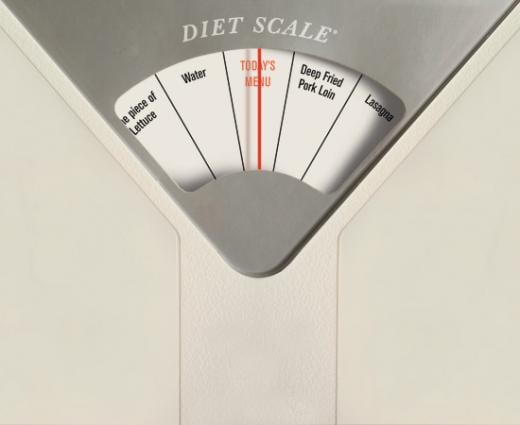
I was in the grocery store the other day, squeezing the avocados to see if they were ripe, when a fellow shopper struck up a conversation about fruit, the cost of avocados and her New Year’s resolution diet. After an exchange of some pleasantries, she said to me “You are lucky because you are thin.”
There was no way, of course, that she could have known that I too have been watching what I eat, exercising every day, taking vitamins, gagging down those disgusting fish oil tablets, and denying myself my favorite Wegman’s sugar glazed blueberry bagels. The pounds and the inches I have lost in recent weeks have nothing to do with luck; it has to do with effort. I puffed up in recent years because I wasn’t working on it. I’m losing it now because of motivation, a goal in mind and a plan to get there.
Luck is defined as that vaporous influence in our lives that some believe impacts our situation, either positively or negatively, through random occurrence or chance. Luck is having your raffle ticket pulled for the grand prize or winning the lottery.
Thomas Jefferson said “I’m a great believer in luck and I find the harder I work, the more I have of it.”
The Attribution Theory of social psychology has examined how people interpret events both in their own lives and in the lives of others. Attributing factors such as ability, effort, task difficulty, and luck to our own or someone else’s successes or failures helps us make order of the world around us. By identifying whether the locus of control is internal (i.e. I can work hard and influence the outcome) or external (i.e. That test was really hard or I’m just unlucky), we attribute cause and effect.
Theorists in Attribution Theory suggest that we look at things in such a way to maintain our self image – both good and bad. One person might attribute successes on the job because of hard work. Someone else attributes being passed over for the promotion because the other candidate knew somebody or the interviewer “didn’t like me.”
I’m reminded of the time I was sitting at the baby pool with my toddler. The Mom conversation around the pool came around to one of the moms asking if any of us worked outside of the home. I said that I was an instructor at Penn State and had a reduced load over the summer, which allowed me to spend time with my kids when they aren’t in school. She said “You are so lucky.”
Lucky? I didn’t tell her about the years I spent working at low-paying jobs with recreation hours (evenings and weekends) to improve my resume. I didn’t tell her about going back to school to get my graduate degree while I was having babies and managing a full-time job. I wanted to tell her about the day I was getting my Master’s thesis ready for printing and my 18 month old thought it was funny to walk across the chapters I had laid out on the floor. I thought about sharing how when I crossed the stage at the Graduate School commencement, I was a little squeamish from both the excitement of finally finishing and because Baby No. 2 was on the way.
It wasn’t luck that one of my thesis committee members called soon after to see if I might was available to teach a few courses. I got my job because I was qualified, put in hard work and paid my dues. Luck had nothing to do with it.
Differentiating effort and luck has impacted how I parent. Teaching my children that, regardless of the situation, their friends, other kids, the teacher or even parental involvement in their lives, they can come out on top with hard work and consistent effort is a great life lesson. Sure, there will be times that life may feel stacked against us but we usually get out of whatever it is by what we put into it. Putting forth strong effort can help us overcome those instances where fate may throw us a curveball.
If you listen to political views, they often differ on this concept of luck versus effort. Do we believe that through effort people can have an impact on their futures, or do we believe that luck of the draw puts some at greater disadvantage? Are people successful because they are “luckier” than the rest of us or does it take hard work and motivation to do well? What do people need to be motivated to improve their own situations?
I look at my brother-in-law who was a rising collegiate track athlete and Olympic hopeful when a diving accident changed the course of his life forever. As a person with a very limiting spinal cord injury, no one would fault him for talking about bad luck, being angry and focusing on the negatives. Instead, he finished college, completed an MBA, has a great career, and focuses on the positive. His attitude? “Why waste time focusing on the negatives of my situation when it isn’t going to be productive?”
His modus operandi is to maximize those things that he can influence and minimize those that he can’t. He’s an inspiration to me and many others and is a daily reminder of how our attitudes about luck versus effort can impact us in every sense.
To the woman in the grocery store, I smiled at the compliment about my good fortune, thinking about those sugary bagels, my aching knees after a run at Rec Hall and the hours I’ve spent doing the Pilates tape over and over in my family room. “Thanks” I said. “Hard work helps too.”



