
The latest out of Washington, D.C., is being called the Buffet Tax plan.
The story goes that billionaire Warren Buffet somehow came to the realization that his secretary pays more in income taxes than he does, despite an obvious difference in earnings.
His perception of this tax injustice prompted him to suggest to his buddies in D.C. – hence the name of the plan – that those who can should pay more in taxes.
I guess he fills out the 1040 long form.
In response to this old-new idea of taxing the rich, the Internet has once again lit up with people supporting — or opposing – the plan. The volume on the talk- show screaming has again hit deafening decibel levels.
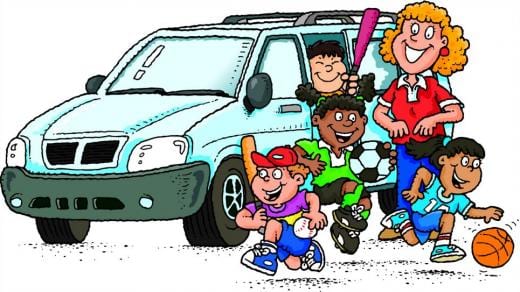
This issue of who gets taxed and how much reminds me of a conversation that took place several years ago when I was in the car with a bunch of fifth-grade boys.
It was my week to drive my son and his buddies from our end of town to something – band, lacrosse, skiing, the movies or something. The general rule for carpools is that, the older the kids are, the more Mom or Dad should try to appear invisible.
Carpool protocol for the pre-teen years suggests that, after initial greetings, the parent driver should quietly fade into the background. Unless spoken to directly, engaging in the carpool discussion — including silliness, “dead leg” contests, mouth farts or mono-syllable references to things that happened that day in school — parental participation is seriously frowned upon.
KIDS ASK THE DARNDEST THINGS
On this particular ride, I had turned on talk radio lest I forget myself and further humiliate my kid by singing along to some rap song. Driving along, undoubtedly trying to ignore the smell of athletic equipment and pre-pubescent boys emanating from the back seats, I wasn’t paying attention to the talk radio discussion. Apparently, the boys were listening.
“Mrs. Kleban,” a voice pipes up from the back of the car, “what do they mean when they talk about distribution of wealth?”
“That’s a good question to ask your parents,” was my first response.
In the rear view mirror, I could see the faces of four children who were not my own and figured that the possibility that their parents had differing viewpoints from mine was fairly reasonable. I didn’t need to be dumped from the approved carpool family list because of allegations of political indoctrination on the drive from Port Matilda.
“Mom,” said my son, actually speaking to me. “Tell him that story about The Four Guys.”
A few weeks before, my son’s class had been getting ready for the pending election. Distribution of wealth had somehow come up in the classroom discussion. When he came home from school asking about it, I had attempted to help him understand it from my limited economic background.
Indoctrination of my own kid is allowed — and in fact, encouraged.
“OK, but there is the thing,” I said to the boys in the backseat. “Your parents may have differing views on politics and it’s not my job to shape your opinions. My job is to safely get you to where you are going and to pick you up and bring you home.”
THE STORY ABOUT THE FOUR GUYS
And I began with the story about The Four Guys.
Let’s say we have four people. Each one starts with $100. The first guy uses his to buy candy, video games and Monster drinks. Pretty soon, his money is all gone.
The second guy uses his to buy healthy food and clothing, but those things are expensive and pretty soon he’s out of money too.
The third guy lives very frugally, goes without and spends some of his money to go to school or to ride the bus to a better job and he is able to turn his $100 into $150.
The last guy works really hard, wears his old clothes, uses his money to start a business, and soon he’s hired some of the other guys and his $100 turns into $500.
“In my opinion,” I said to the boys emphatically, “distribution of wealth is when people believe that the people who have more money should be forced to give a greater portion of their money to the government so that the government can give it to the people who don’t have any left.”
“Hey, that’s not fair!” said one of the boys. “The last guy worked hard, so why should he have to give it to guy who spent his on junk food?”
As the conversation started to liven up, I posed some questions to my passengers.
“What if the guy who doesn’t have any money left has children to take care of?” I asked. “Should the kids be punished for their parents not making good decisions?”
QUESTIONS, QUESTIONS EVERYWHERE
The boys weren’t sure what to do about that. More questions:
“What if the person with no money has a disability and can’t work? What if he wants to work, but there aren’t any jobs in his neighborhood? What if the schools in his town aren’t as good as your schools and so he or she didn’t learn as much? What if the person with no money is just lazy? How can we tell? What if the rich guy is already giving money to charities and other organizations that help people?
And more questions:
“What if the person who started the business got the money from other people, such as his parents? Does it matter that the successful guy who made so much money used things that the government pays for like roads and the post office to get to there? What if the person with no money is elderly? If we take money from those who have more, will that mean that they may not be able to hire the guys who need a job?”
And finally: “Would you be motivated to work hard and make money if you knew the government was going to take it?”
“This is complicated,” said a voice from the backseat.
Out of the mouth of babes.
I’m not an economist or a politician. I’m not a millionaire and I don’t play one on TV. I also won’t fall into the hypocrisy of the Bill Mahers or Sean Hannitys of the world who attempt to oversimplify a very complex issue.
Incentives and/or entitlement, our current system for tax deductions and what often appears to be an inconsistent application and politically motivated demand for exactly who should pay more taxes, cloud an important social and political discussion.
With unemployment as a driving force in our anesthetized economy, decisions that impact job opportunities should not be taken lightly or become a punch line. The terms millionaire and job-creator are not synonymous. But the list of individuals and companies that don’t have money and who also provide employment opportunities is pretty short.
The next time it was my turn to drive, the boys hopped in the car and one of them said, “Hey, can we talk about that political thing again?”
“Nah,” I said, “how about stopping at Dairy Queen instead?”
More Columns
View all Columns
Penn State Lost to Wisconsin: How Bad Was it?
How bad was it? Ahead 17-0 just 18 minutes into the game and lost bad. Ahead 20-10 until Wisconsin scored with just 211 seconds left in the game and lost […]
Penn State Football: Tonight, the Haters Were Right
On Dec. 11, 2023, Twitter user @drewjanda put out a since-deleted post that now lives in sports meme infamy. It read as follows: “The haters said I couldn’t do it. […]

Penn State Football After Dark: Homecoming Contest Begins a String of ‘Night Shift’ Games
Under coach Matt Campbell, Penn State football practice is held early in the morning, with coaches and players arriving at Lasch Building before the sun comes up. For the next […]


