

Fake news is nothing new, but the rise of social media and widespread access to the internet has made more true than ever that old saying (wrong attributed to Mark Twain) that ‘a lie can travel halfway around the world while the truth is putting on its shoes.’
A pair of Penn State researchers are hoping to put those shoes on a lot quicker.
Dongwon Lee, an associate professor in the College of Information Sciences and Technology, and S. Shyam Sundar, distinguished professor in the Donald P. Bellisario College of Communications, were awarded a $300,000 National Science Foundation grant to study misinformation and train machines how to detect it.
A host of websites — such as the long-running Snopes.com — have dedicated efforts to evaluating what’s true and what isn’t, and mainstream media have made fact check features a regular part of their coverage. Facebook, too, has rolled out an initiative to warn users of ‘disputed content.’
What the Penn State researchers are hoping to do, however, is find a system that can call out fake news from the start and make that classification known to users as soon as they see it on their digital devices.
“We want to understand fake news better to build machine-based detection methods,” Lee said in a news release. “Consider that some kind of machine-based tools can tell you when you look at a Facebook post, for instance, if it is likely to be suspicious or not, with an accompanying certainty score. Maybe you will think about it one more time before you share it with your peers. If you aren’t blindly sharing information with your peers, the impact of fake news will decrease sharply.”
The research will involve studying characteristics that indicate fake news, developing an algorithm for computers to detect it, training human coders and testing whether machines can do better than people at weeding out false stories.
Sundar said fake news is a complex issue.
“The fake news phenomenon is not simply about the information being false,” Sundar said. “It’s also about false sources, deceptive language, sensational content, gullibility of online news consumers and interactivity of the medium. Therefore, a fundamental challenge for the project is to capture this complexity through theoretical analyses in a way that permits computational analyses and training protocols for detecting fake news.”
The project, titled “Training Computers and Humans to Detect Misinformation by Combining Computational and Theoretical Analysis,” was funded through the NSF’s EArly-concept Grants for Exploratory Research (EAGER) program and is expected to last for about two years.
Sundar, who is co-founder of Penn State’s Media Effects Research Laboratory, has studied the psychology of online news consumption for two decades. Lee specializes in research on data mining and machine learning.
More Latest Penn State News
View all Latest Penn State News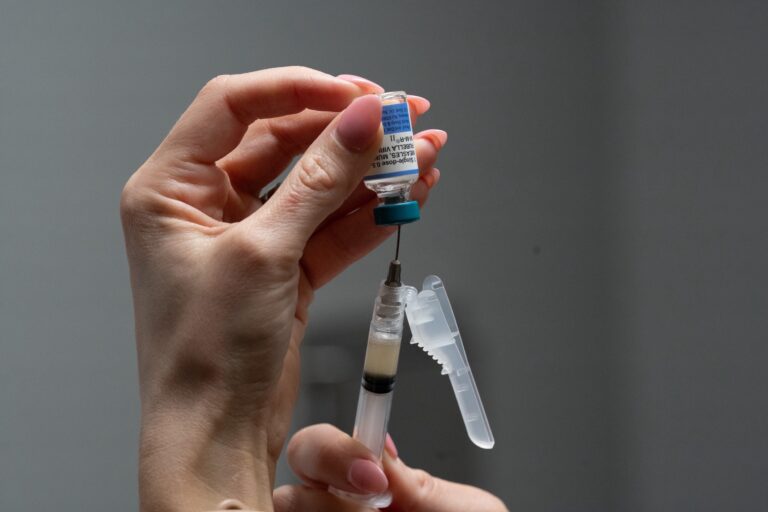
Penn State Urges Prevention as Measles Cases Rise in Pa.
Penn State officials on Thursday urged community members to ensure they are protected against the measles as cases of the virus continue to rise across Pennsylvania and nationally. No confirmed […]

Big Ten Blood Drive Puts Penn State in Race for $1M Grant, Seeks to Boost Supply Amid Critical Shortage
Penn State is asking students, alumni and fans to donate blood as the university joins all 18 Big Ten schools in a competition that could bring a $1 million grant […]

New International Students Adjust to Happy Valley With Hearts Still Connected to Home
Each August for the last 10 years, I’ve written a column about Penn State’s newly-arrived international students. Why that emphasis, you ask? Well, to put it bluntly, our campus and […]


