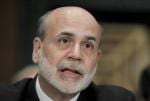
Last month I wrote about quantitative easing part two or QE2— the effort by the Federal Reserve to use monetary policy to get the economy growing faster.
Since the election and the start of QE2, the Federal Reserve is moving to add another $600 billion to the money supply, now heading towards about $2.6 trillion since the recession started. Yet despite this giant stimulus program, the economy remains moribund and unemployment is stuck around 9.6 percent.
According to the press releases and the articles written in the financial press, the notion is that an increase in asset prices (stocks and commodities are increasing in price as a result of all the quantitative easing) will result in a trickle down to the general economy that will result in a pick up in the gross domestic product and an increase in employment.
Neither has happened so far.
I suggest that the quantitative easing has another purpose. The Federal Reserve is accommodating the gigantic budget deficits of the Federal Government. When the Federal Government runs budget deficits, it issues bills, bonds and notes to the investors to cover the shortfall. The Federal Government is now taking in—via tax revenues—around $1.3 trillion less than they are spending. This is more than is available from investors worldwide.
To cover what investors will not buy and to keep interest rates artificially low, quantitative easing allows the Federal Government to continue running large deficits. The Federal Reserve is accommodating the Federal Government deficits, with the hope that 1.) eventually Congress will reign in spending and 2.) that all the borrowing will lead to more economic activity (it hasn’t, but I am repeating myself).
What’s an investor to do in this environment? As long as the game is on and quantitative easing continues, commodities and stocks are the right place to put your money. I would add investing in the bonds of foreign countries, whose currencies are stronger than the dollar. I also recommend holding more cash than you might otherwise, not for the returns but for the safety of your principal.
Eventually, this game of quantitative easing and government deficits will end and we will all have to face the notion that we have borrowed too much, spent too much and have too little equity in our economy.
We will also have to face the continuing exit of the boomers with their aggressive spending from the consumer economy. The demographic group following the boomers is 11 million people smaller. So the consumer economy will likely be smaller for a decade or longer. Those of us investing now are used to growth, having been taught since World War II that growth in the economy is to be expected. It is over.
As we come to realize that quantitative easing won’t work, investing will be quite different. When the music stops, pay attention and be willing to move to cash while we sort out the consequences. It does not matter if you are in mutual funds. Be prepared to sell them and move to cash if their performance falters. Financial security comes from paying attention and making moves that are appropriate. If you have money invested, now is the time to get serious. This time it is different and not a continuation of the past sixty years.
Related coverage