

Editor’s note: COVID-19 has impacted Centre County in numerous ways, and The Centre County Gazette is united with the community, working to provide information and resources during this challenging time. In the weeks ahead, The Gazette will be speaking with some prominent community stakeholders about the pandemic and how the region is responding to it. The series kicks off with Michael Pipe, chairman of the Centre County Board of Commissioners.
CCG: How do you feel Centre County has handled the COVID-19 crisis overall? What are some of the biggest impacts of COVID-19 in Centre County?
Pipe: I think one of the biggest things that really affected us and allowed Centre County to flatten the curve was the decision by Penn State to not have the students come back after (spring) break and also to go to a lot of telework and online work.
I know that was such a huge challenge for people and a real big change. It was really just a huge shift in how a lot of people live and work, and a lot of companies followed suit.
We at the county also followed suit and implemented a lot of policies related to telework. I think because we as a county are set up many times to have half-a-million people come in for football games and other events, in addition, with not having as many students here (currently) that just makes us have a little bit more room. We are, in essence, sort of a rural and urban county at the same time right now where we have a lot of rural areas and we don’t have many, as much population density, as we do toward the Centre Region of the county.
I think also Mount Nittany (Medical Center) has done a great job of getting their resources up and running. Geisinger and some of the other rural health clinics we have throughout the county really helps by enabling us to do a lot of procedures that are in place.
However, as we’ve seen with SCI-Rockview and our correctional facility as well, mitigation and the stay-at-home regulations … it’s still not enough in some cases.
People do have to come to work. We have a lot of those critical workers that are throughout the county that are making sure that we’re able to run. So we are going to still continue to see those cases occur.
But I think that the citizens are handling it really well. And we’re trying to do our best to take each day, day by day.
CCG: Do you feel the county is prepared to handle a scenario where the number of cases severely grows larger? Will there be enough medicine supply, medical supplies and resources?
Pipe: As of today, we are still, as a nation and as a commonwealth and as a community, thoroughly lacking in the PPE that we need to make sure that our frontline health-care workers have what they need.
In many cases, entities are weeks away from depleting their resources. We understand that resources are on their way here, but we haven’t seen them yet. So that’s the concern, as well as the testing. It’s not just the fact that the test is available.
We also need to make sure that we have the re-agents that are needed to actually have a test come back to do the testing and we know they’re in short supply and that’s what’s happening everywhere.
In addition, contact tracing is such an important part of making sure that we can get to the people who have COVID-19 and (get) their contacts alerted to this as well.
One of the things that is a challenge here in Centre County is we do not have a county health department. In many cases — where many of the counties where this has been spread — they do have that.
In many counties, that is a multi-million dollar agency that is essentially able to do contact tracing to find out where the community spread is occurring. In Centre County, that is left up to a lot of our medical entities.
And so we don’t have as much of the data available. So we can’t play as (much of) an active role, but we can still work with them, coordinate with them and a lot of the entities that we have, like our county jail and other entities where they’re going to have to still be working. … We need to let them know if we are seeing cases develop and get first responders that information as well.
We’ve also been made aware from the FEMA perspective of what those mass-casualty studies and plans will look like in terms of if there was a slide here. People right now are more concerned about community spread, where somebody who was asymptomatic or people who are asymptomatic may not realize that they are (positive), they’re again spreading within the community without realizing it.
CCG: Many people around the country have been laid off or furloughed. How have Centre County workers been affected by the shutdown? What help is out there for people who may be having financial struggles due to the current crisis?
Pipe: We talk about this all the time. You know, all elected officials and community members see this, we have a really phenomenal community that wants to work and wants to be innovative and wants to be creative and entrepreneurial.
But due to how a pandemic affects the community, there needs to be that shutting down and … the community can’t be as vibrant as it is. You have to go virtual. You’ve got to find different ways to do it.
And one of the drawbacks of the pandemic is when you have a community that really does rely on tourism, that relies on entertainment, that relies on sports, those things can’t happen right now because we need to keep people safe.
So a lot of the venues that held tens of thousands of people, like Beaver Stadium, are going to be empty for months to come. And that is done for people’s safety. We want to make sure that our health-care system is functioning on all cylinders.
And, due to that, we’ve had a lot of people throughout the community that have had employers make tough decisions to do furloughs, layoffs, or reduce hours.
The Centre County government hasn’t been spared that tough decision, and it really comes down to the fact of whether you’re in the private sector, nonprofit, or government, for the realization that if there’s not revenues coming in or if there’s a huge uncertainty about whether or not revenues are going to be coming in, those kind of tough decisions are going to be made.
So for individuals out there who have had furloughs occur, layoffs and reduction in hours, we are encouraging everybody to file for Pennsylvania unemployment and to make sure that they know that they’re entitled to that $600 per week in additional benefits from the federal pandemic unemployment fund. That can help people throughout the summer months get the help that they need to make their bills and put food on the table for their families.
And I’ll put a plug in for the attorney general, Josh Shapiro, and also, Governor Wolf, who put out a great compendium of additional things that people can request. Some mortgage companies are allowing people to delay some of their payments and some credit-card companies are looking at doing that as well. We’ve got a lot of our energy and utility providers in the county who have let people know there’s not going to be shutoff notices. Renters know that they’re not going to be kicked out of their apartments.
CCG: Centre County seemed to be thriving before COVID-19 caused everything to shut down. With State College always growing and towns like Philipsburg and Bellefonte seeing positive growth, how do you think the county will fare once businesses are allowed to reopen? How is the county helping small businesses during this time?
Pipe: We have been really instrumental in trying to promote the (Paycheck Protection Program) loan program; also, for regional effort, through the (Pennsylvania Industrial Development Authority) program the state has been doing to put loans and grants out for businesses, in addition to having some regional groups put out money, whether it’s CBICC or SEDA-COG, they have been instrumental in putting out money and putting out loans. So that’s going to help companies make it through the next weeks to come.
The challenge becomes that as we’ve seen through pandemics throughout history — and there have been many throughout this last century and through the last 100 years-plus — is that there is going to be a resurgence of it until a vaccine is available. So, understanding that and making people aware and setting ourselves up, especially is going to come from the federal level.
I think at most, we’re going to have to understand that as we go through this, there are going to be places within our state and in our community and also the country at large where there’s going to be cases that are going to surge and there’s going to be those times where we may need to go into additional lockdowns.
Businesses need to restructure themselves to make sure that there is social distancing that’s occurring. They may need to set up their business differently, with tables spread more apart in restaurants, repurpose office spaces where people have more space, having teleworking occur for some businesses.
For some, that’s just not realistic at this point, so the state and federal governments need to help out as much as possible.
In the $2.2 trillion bill that was passed, if you were a county with half-a-million population or more, you’ve got a direct line of money.
We are saying we need that here locally as well for smaller counties — the rural counties — because we can put that money out as well. We can help those businesses out as well. That is a huge portion of the federal or state government help that could put money into the hands of the counties that we can be passing on to our small businesses. That would be a huge help.
CCG: Amid this crisis, this pandemic, is there anything that gives you hope?
Pipe: Oh my gosh, yeah. I talked about it earlier. I think we all can sense that we’ve got a lot of humble people here. And so I think that as we see people making masks, people helping one another in so many different ways, I think it gives us a lot of hope in the future.
I think that there’s been a time that we can reconnect so we can find the things that are important and to realign ourselves, and so that gives us the opportunity to do that. I see a lot of good happening right now.
I’ve always believed that out of adversity, you come out stronger. And I think that we’re doing that right now. It’s so exciting to see all the different universities and colleges that are announcing that they’re test-driving vaccines or potentially finding ways that we can cure this coronavirus situation. It’s exciting to see that in such a short amount of time.
But again, there are challenging days ahead for sure. I think if we just take it day by day and try to help out in any way that we can, we’re going to make it through. So, I’m very hopeful for the future.
CCG: That’s great, thank you. Anything else to add?
Pipe: I think the big thing would be just to talk briefly about elections. We were very fortunate to have the General Assembly and the governor on a unanimous basis move the election from April 28 to June 2, giving us five more weeks.
I think it’s a huge thing. It’s a small thing, but it’s a huge thing at the same time, in that if people can request their ballot by mail, it will be a way that they can keep people safe, both people who are going to vote on Election Day and also our poll workers.
And, so people can take the time to request the ballot if they’d like to vote. That would be phenomenal, because it would keep people healthy.
More Local News
View all Local News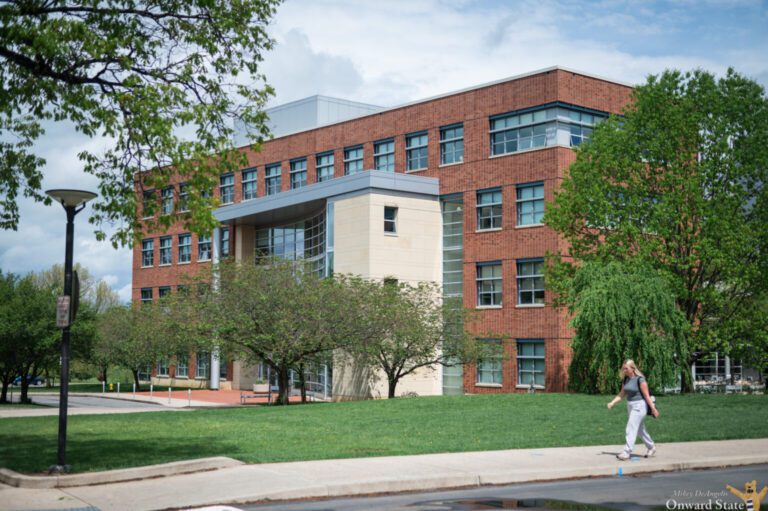
Dunkin’ and Jimmy John’s to Open in Penn State Business Building
Two national chains will offer new dining options in a busy Penn State academic building. Dunkin’ and Jimmy John’s will open this fall in the café space of the Business […]
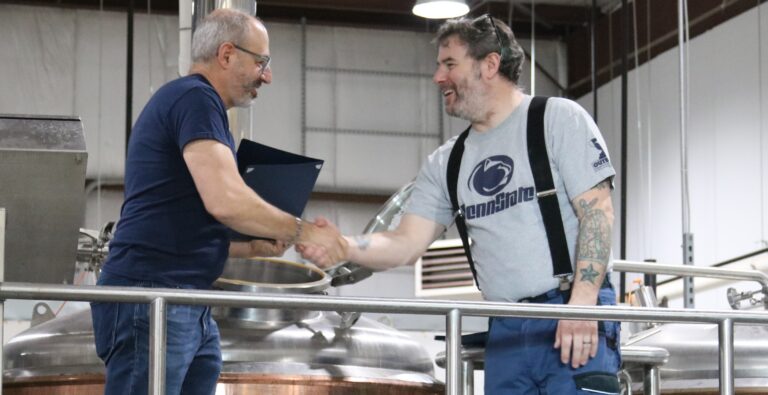
How Continuing Education at Penn State Equips Today’s Workers With Skills They Need Now
The needs may be different, and the format may have shifted since its launch in 1967, but at its core, Penn State Continuing Education continues to do what it has always done: equip Pennsylvanians to work in the industries that…
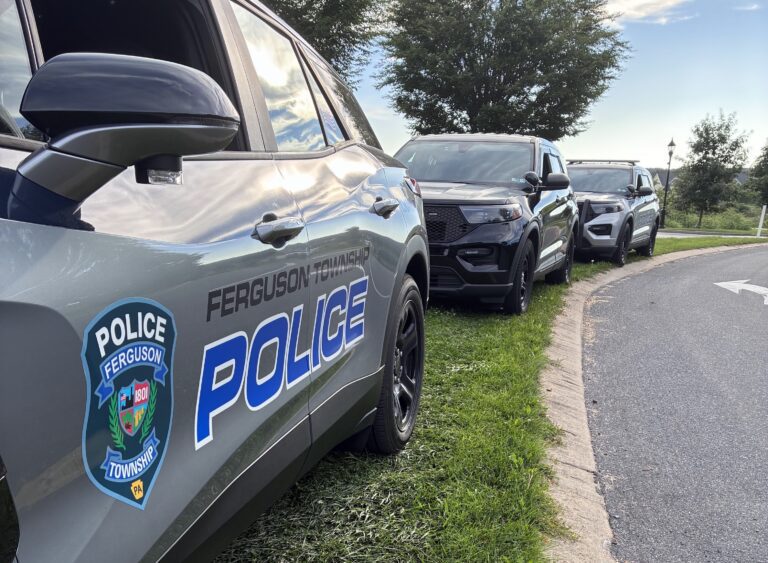
Ferguson Township Police Make 21 Stops During Strategic Traffic Enforcement on Blue Course Drive
Ferguson Township police made 21 vehicle stops and issued “numerous” citations during a strategic traffic enforcement on Friday, according to a department news release. The enforcement, conducted on Blue Course […]


