
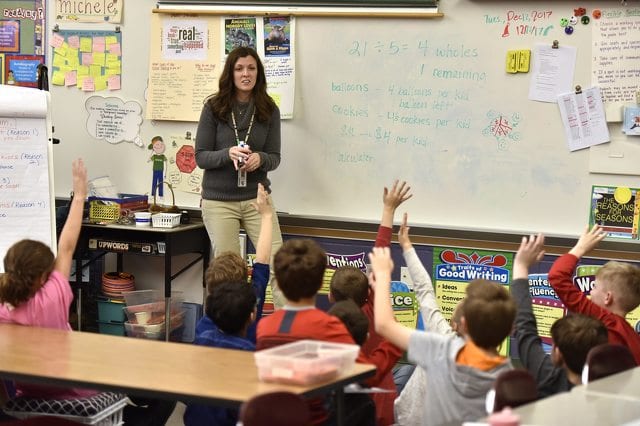
State College Area School Board on Monday approved a new core math program to support curriculum adopted last year for kindergarten through fifth grade.
‘Bridges in Mathematics,’ published by the Math Learning Center, will serve as the math resource for the district’s elementary schools, the culmination of a process that began in 2014-15 with a committee tasked with research and recommending a math curriculum.
That committee included teachers from each grade across schools, special education and gifted/learning enrichment teachers, Penn State math education and teacher education professor Gwen Lloyd and Andrew Baxter a Penn State math lecturer and director of the Pennsylvania Math Institute.
In July 2017, the committee recommended a K-12 math curriculum, which was approved by the board, and then reviewed seven core math resources to support it. Those were narrowed down to two options — ‘Bridges in Mathematics’ and “PA Ready Math,” published by Curriculum Associates.
‘Bridge in Mathematics’ was ultimately recommended based on evaluation of content and instruction, assessment, teacher support, and home school connections.
“There’s been a lot of research that has gotten us to this point,” Board President Amber Concepcion said.
Deirdre Bauer, director of curriculum for K-5, said the program balances teaching math facts with helping students better understand the ‘conceptual underpinnings.’ Committee members conducted two site visits to districts using the resource and made the decision to recommend it after the second visit to a district that has been using it for four years.
‘My very first question was ‘What do the children think of it?’ and they said they absolutely love it,’ Bauer said. ‘That was the most important part for me.’
“I was really impressed with what I saw with the students,” added Vernon Bock, assistant superintendent for elementary education.’
Observing students enjoy learning math and teachers who liked teaching it were among a number of reasons ‘Bridges’ was recommended. Others included its alignment with national standards; a clear vision of how grade level instruction is built from year to year; support for flexible thinking; an intervention component; support for struggling students to grow to grade-level standards; assessments throughout the learning process; teacher support; online components; STEM components in the last unit; and integration of homework occasionally but not everyday.
Teachers will receive two days of training before starting the first unit and half-day sessions throughout the year. Bock said that the extended school day for elementary schools beginning in the fall builds in time for teacher collaboration and professional learning communities, which also will provide time for teachers to discuss and become more familiar with the resource.
The initial purchase cost is expected to be about $290,000, with annual recurring costs for materials to be no more than $60,000 per year. Bauer said that’s less than the annual cost for the current math resource being used in the district.
An informational session for parents and guardians was held earlier in February, but Bock said additional family nights will be scheduled for this spring and summer. The resource also is available for public viewing at the Panorama Village Administrative Center.
State High Project Update
Though classrooms opened in the new State College Area High School south building in January, work is continuing to for phases two and three, which will complete the south campus and provide substantial new construction on the north campus.
Career and Technical Center shop areas are now operational, though CTC students have received classroom instruction since returning to classes from winter break, said Ed Poprik, director of physical plant.
Contractors have been working to complete the new cafeteria, kitchen and culinary arts space and are working toward an April 2 occupancy. Poprik said that schedule is aggressive, but that he believes it is attainable. Culinary arts students, however, will stay in their current space until their spring testing is completed to not cause disruption.
Phase three demolition work has been delayed because of the delays during phase two. Plans call for the overall State High project to be completed by the summer of 2019 and Poprik said the project team will ‘be aggressive’ to make up time and meet the original schedule.
More Community & Entertainment
View all Community & Entertainment
January Is a Call to Action to Respond to Stalking
This column by Centre Safe Executive Director Jennifer Pencek originally appeared in The Centre County Gazette. When we talk about acts of interpersonal violence, oftentimes people will focus on sexual […]

Busy Weekend of Fall Festivals and More on Tap Around Centre County
The weekend of Sept. 29-Oct. 1 is packed with activities around Centre County, including fall festivals, Oktoberfests, fairs, concerts and more. Check out some of the weekend highlights below. For […]
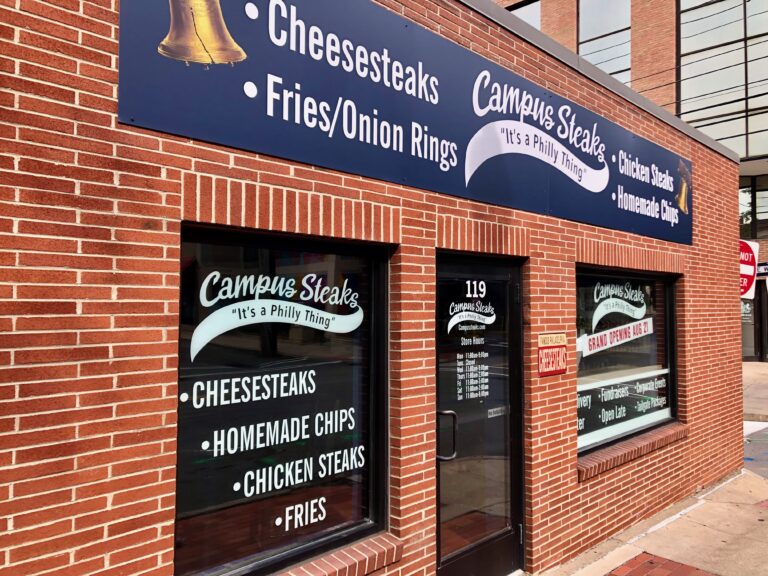
Downtown State College Cheesesteak Shop Sets Opening Date
A new cheesesteak shop that promises a taste of Philly in downtown State College has set an opening date. Campus Steaks plans to hold a grand opening on Aug. 28 […]


