
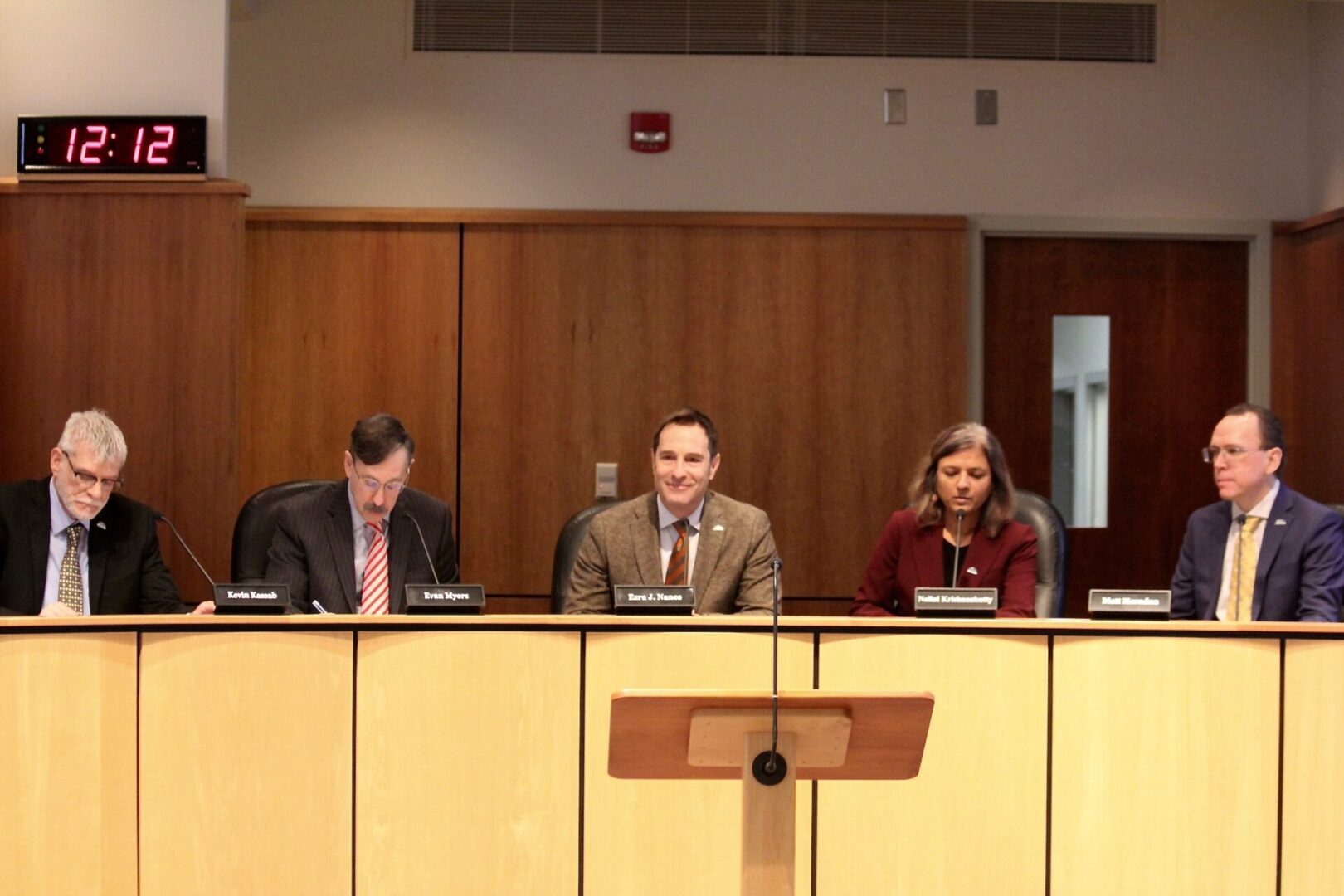
State College Borough government is gearing up for what figures to be an especially busy new year.
Borough Council met for the first time in 2026 on Monday, and though as the annual organizational meeting there was little business to be conducted, members and Mayor Ezra Nanes looked ahead to several key issues.
At the top of the list are the completion of the borough’s long-in-the-works rewrite of its decades-old zoning code and balancing the budget, as well as addressing affordable housing, sustainability and downtown planning, said Nanes, who was sworn in for his second term as mayor at the start of Monday’s meeting.
“This year, 2026, is going to be huge,” Nanes said. “I think that this council will undertake some decisions and actions that will have generational impact, that are going to be some of the most important things that any council that sat up here has ever done. And I’m so proud to be a part of that, and I look forward to supporting this council, working with this council, to make those decisions that these council members… will make.”
The zoning rewrite has been a regular point of emphasis for council and staff over the last several years. Written in 1959 and amended more than 220 times since then, the borough first initiated efforts for a comprehensive revision in 2016. Work, however, ramped up in recent years and review of a draft of the massive document took place in the fall.
Though council had hoped to advance an approved draft by the end of the year, discussions will continue into 2026, and Nanes said the matter is “right up at the top” of priorities.
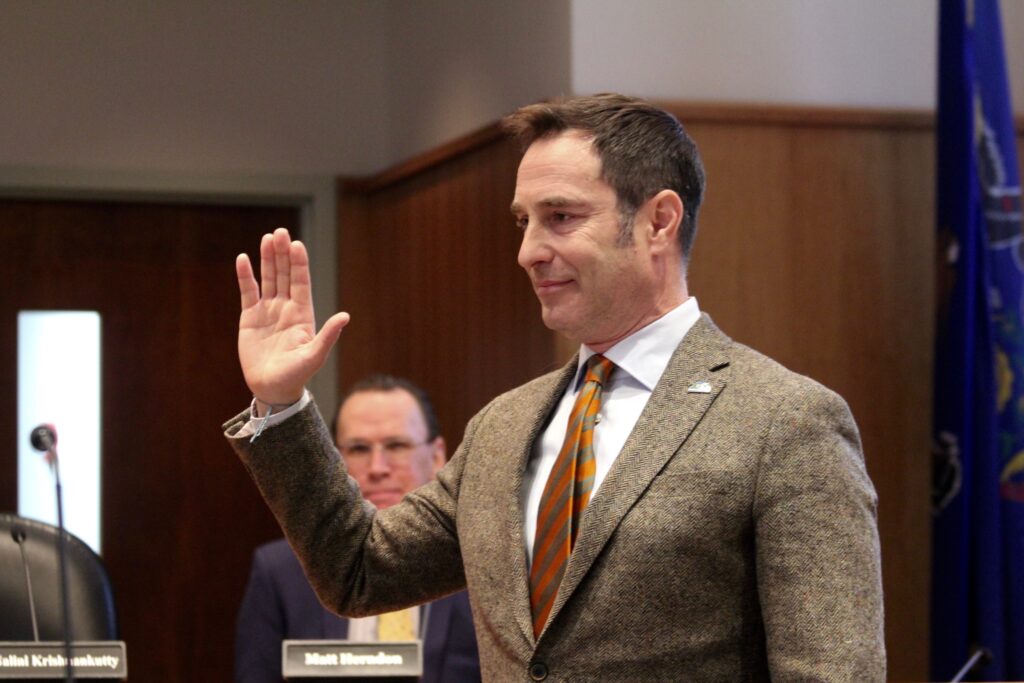
“We’re in the home stretch of that but this is the part of the process where there are some details that have to be worked out and there are a few zones, including some in the downtown, that need some more discussion,” Nanes said after the meeting. “So I’d say, personally, I think, broad strokes, we’re very close to the finish line, but there are some more discussions that have to be had.”
Among the revision’s major policy aims are creating significantly more housing opportunities, supporting a thriving downtown commercial district and walkable neighborhood business districts, recalibrating parking requirements and encouraging a variety of modes of travel.
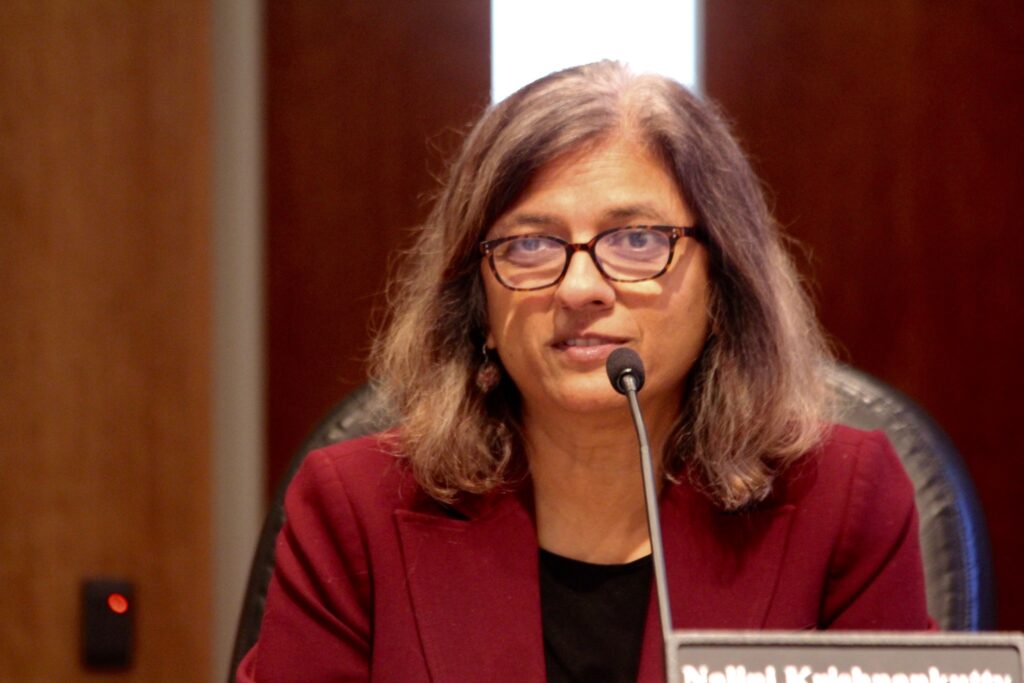
“We will be working on our zoning rewrite, trying to increase housing affordability and accessibility for all our residents,” said Councilwoman Nalini Krishnankutty, who was sworn in for a new term on Monday. “How can we do this as fast as possible, while also slowing down to incorporate community feedback into zoning revisions that embody a collective vision for State College?”
While the borough can’t mandate what developers build, it can use the zoning code to encourage building that achieves its aims, Nanes said.
“You can incentivize housing to be built, and you can have certain clauses in the zoning that require a certain amount of inclusionary housing,” he said. “But the main thought behind the zoning is that if we allow for more housing to be built, that will increase housing availability, which over time should allow for some of those units to become more affordable. Right now, there’s a lot of demand for a very low supply driving prices up. Developers build what they choose to build based on their business model, so we don’t control what anybody builds, but we can create the circumstances that incentivize it.”
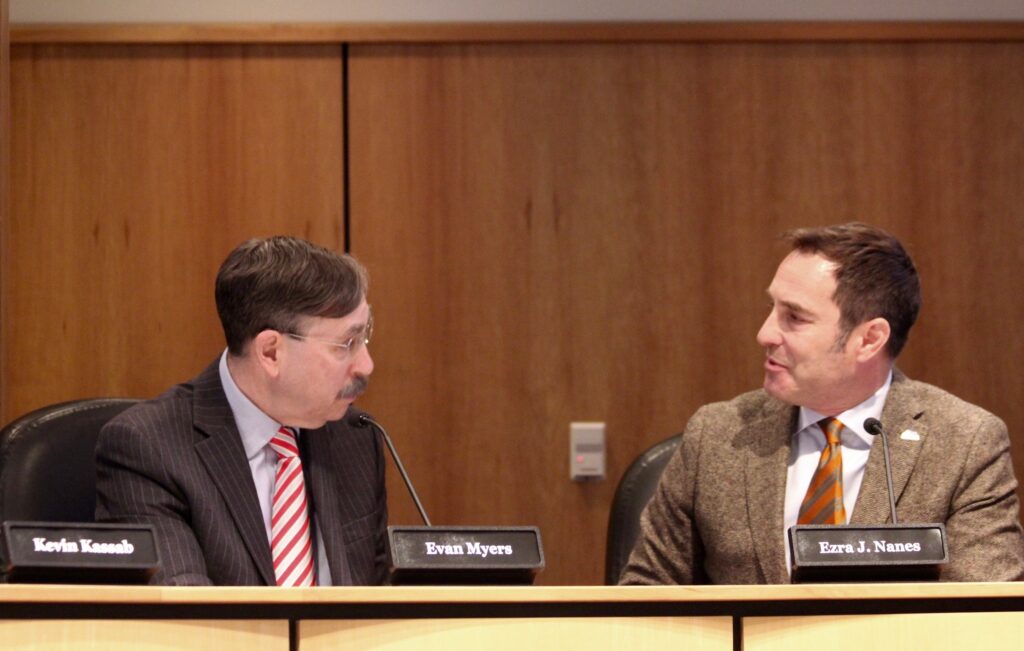
Evan Myers, who was unanimously reelected council president on Monday, said borough government has “much work to do in 2026,” and cited the zoning revision at the top of the list.
“We have that new zoning law to enact to replace one that is more than 65 years old with one that will help create more affordable housing spaces and provide for local businesses to thrive in places they can afford, create a more pedestrian and bicycle-friendly community, one that stands for sustainability,” Myers said.
Myers also pointed to the budget as one of council’s most pressing matters in 2026.
The borough’s 2026 budget is, for the sixth consecutive year, structurally unbalanced, meaning recurring revenues do not meet current expenses. A proposal by staff to increase real estate taxes by eight mills to balance the budget was shot down by council, which instead opted to use $2.8 million in unexpected transfer tax revenue and $1.2 million from deferred street projects to lower the tax increase to two mills.
Myers emphasized on Monday that the borough has used reserves and windfalls to cover the gap, but that council has agreed to begin working early in the year on finding structural balance for the budget.
“This council has pledged that in 2026 we will work through a methodology to arrive at that structurally balanced budget while recognizing that people come first,” Myers said.
Nanes said he does not believe the borough can cut staff and still be able to deliver the services residents expect.
“Our budget is mostly based around the people that we have, so nobody wants to cut any of our phenomenal people,” Nanes said. “And to be honest we’re not in a position to remove people who do essential jobs, and the people who live here, who visit, value the services that we provide. So I think what we’re going to have to do is really just start early and take a hard look at a lot of different areas and figure out where some of those savings might be. I don’t think I can answer that question for you today, but I know that council and the manager and the financial team will be able to come up with options.”
Krishnankutty added that she hopes to find a way to balance the budget without putting the burden on taxes.
“The privilege of being a council member comes with responsibility, and as I see it, this year we’ll possibly be analyzing options to ensure the borough’s financial sustainability,” she said. “How can we do this without further tax increases?”
Looking forward to the coming year, Nanes said his mayoral service is “is founded in the principle of human dignity,” and that will continue to define his second term.
“I intend to continue that practice, building a dignity-centered community where every person feels welcomed, included, safe, where we have accountability for our actions, where we recognize people’s accomplishments and contributions, where we accept people’s identities, regardless of what they are, and where we acknowledge people’s experiences, because we all have different experiences,” Nanes said.
His first four years, he said, were a learning experience in serving as mayor of State College, a position that does not vote on policy but has a voice in presiding over council and acting as the official representative of the borough.
“This time around, I had the experience of four years, so I know what the role is,” Nanes said. “I know how to serve in this role, approaching these four years with a lot of enthusiasm and much more understanding of the community and the dynamics. I also know to expect the unexpected and have a lot of humility because of those four years of service.”
More Local News
View all Local News
Site Work Getting Underway for Long-Planned Bellefonte Waterfront Project
After years of planning and delays, work on the Bellefonte Waterfront project is getting underway. Fencing was installed this week around the empty lot on West High and Dunlop streets […]

‘The Price Is Right Live’ Returning to Bryce Jordan Center
“The Price Is Right Live” is coming back to Penn State’s Bryce Jordan Center next spring, giving State College-area fans another chance to “come on down” and compete for cash, […]
Penn State Introduces New Public Health Major
Students interested in preventing illness, improving health care access and addressing health problems affecting entire communities now have a new degree option at Penn State. The university’s College of Health […]


