

One of the women in my book club made a statement a few weeks ago that has stuck with me.
We have been discussing “The Four Agreements” by Don Miguel Ruiz. I highly recommend the book; it is very powerful. The book is described as a guide to personal freedom through the examination of our beliefs and how those beliefs limit us and cause our personal suffering. As we shared our thoughts on the book, my friend mentioned that she has a friend who uses “This is the story I tell myself” to describe things that happen in her relationships, her family and at work.
This is the story that I am telling myself.
I’ve been thinking about her friend’s reframing of perspective a lot in recent weeks. It offers an interesting and new lens by which we see the world.
Framing our review of our interactions and our experiences with “This is the story that I am telling myself…” suggests a basic understanding that there may be more than one way that people see the world. It suggests that I know that my perspective may be different from yours. It suggests the understanding that my way – which feels right and just to me – may not be the way that others see the same thing. It starts us on the way to empathy and connection to others.
It acknowledges that people hear, see, feel and think different things about the same event or experience based on the day, their mood, and perhaps things as simple as their diet and how much sleep they have had. Our past experiences, our environment and our nature impact how we see the world.
You have an upsetting interaction at work. In retelling the story to your roommate or spouse or, most importantly, in that tape that you replay in your head, we tend to narrate through our own lens which, is impacted by our personal biases. By changing it up and saying “I acknowledge that this may be my side of the story” we open the door for greater understanding and communication. It may serve as an opportunity to let things go.
In today’s political climate, we need a whole lot more reframing of our experiences and our perceptions.
Listen to the differences in how stories are reported in the news depending on who is telling them. It’s sometimes hard to believe that the same experience or event can be described so differently. It would be so refreshing for people to start off with “this is the way I see this story based on my personal biases.” Instead we get rhetoric, hyperbole and more and more bias in news.
President Trump’s decision last week to pull out of the Paris climate agreement provides a great example. People on one side are telling the story in such a way as to paint it as a certainty that our planet is a goner as a result. People on the other side are telling the story to reflect it as supporting their skepticism of climate science.
From my lens, the decision to not be part of this agreement doesn’t automatically equate to changes in policy related to the use and respect of our resources.
Similarly, it was interesting to watch the decisions made last week by comedian Kathy Griffin. Most people, regardless of political affiliation, were disgusted by her decision to pose with a picture that appeared to be with a beheaded President Trump. This woman has made a living being absolutely horrible to and about other people, particularly those with whom she disagrees politically. Her evolving story in response to the reaction of the public, her fans and her employers showed the lens by which she views the situation. My telling of that story would include the words “publicity stunt,” “backfire,” and “hypocrite.”
If we don’t acknowledge that there is at least a difference in how people in a shared experience see or hear or take away different conclusions and we only paint it as “I’m right and you are wrong,” we are going to continue to be divided.
In “The Four Agreements,” Don Miguel Ruiz talks about implementing the agreements as the way to helping us understand that because we see things differently. Be impeccable with your words. Don’t take things personally. Don’t make assumptions. Always do your best. Simple enough rules to live by that can also help you change your lens.
From relationships within families to our colleagues at work, reminding ourselves that how we tell our shared stories and experiences reflects our individual perspectives can do a lot to improve our relationships. More importantly, it can do a lot to improve the way we see others.
More Columns
View all Columns
Everything I Experienced Covering a Game at the New Ryan Field
This past Friday, I had the honor of covering Penn State in the first game played in Northwestern’s new Ryan Field, and it’s an experience I won’t soon forget. The […]
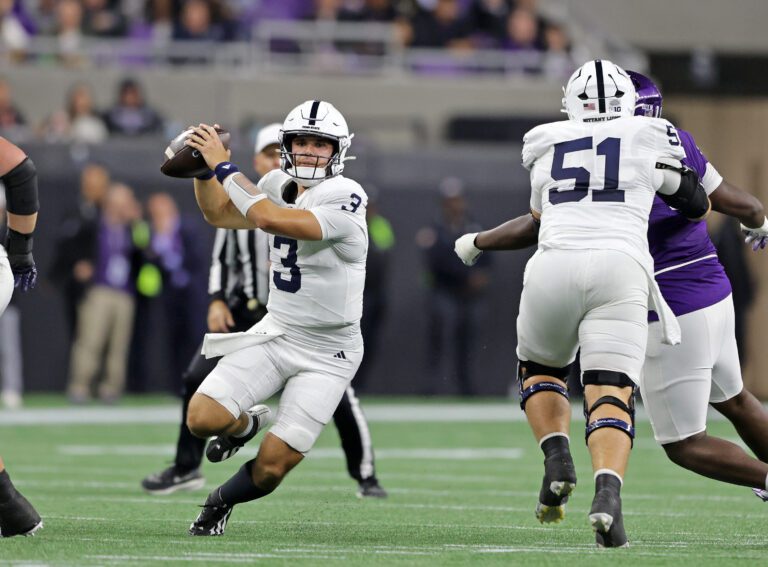
Here’s How Penn State QB Rocco Becht Thinks He Can Do Better
EVANSTON, Ill. — Rocco Becht is a smart guy. He’s a wise old head in college football terms. This is his fifth season playing and mostly starting Power 4 football. […]
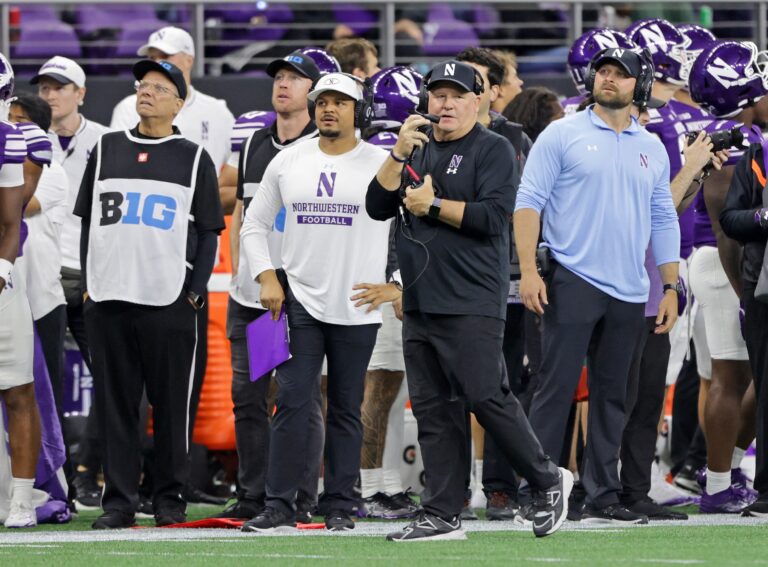
Worse Than Bad. Chip Kelly, Jerry Neuheisel and Northwestern Pile On Penn State. Again
EVANSTON, Ill. — Important dates in Big Ten Conference offensive coordinator hiring history, good to know especially now, in the aftermath of Penn State’s total collapse over the past six […]


