
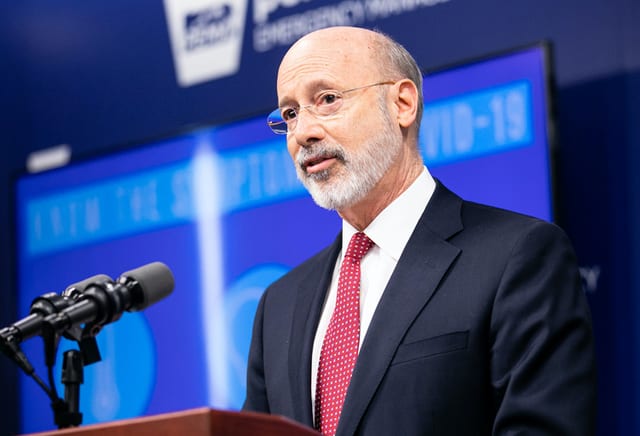
For one night only, Pennsylvania bars and restaurants must stop serving alcohol on-site at 5 p.m. on Thanksgiving eve, one of a series of targeted mitigation efforts announced by Gov. Tom Wolf’s administration on Monday as the commonwealth’s surge COVID-19 cases and hospitalizations continues unabated.
Wolf and Levine also issued a stay-at-home advisory urging — but not requiring — that individuals leave home only for school, work or essential needs. New orders also included stricter maximum occupancy limits and more stringent requirements for schools.
New modeling by the Institute for Health Metrics and Evaluation projects that Pennsylvania could have 22,000 COVID-19 cases per day in (the record high is 7,126) and run out of intensive care unit beds in December. IMHE also projects if mitigation measures such as universal mask wearing are not adhered, Pennsylvania could more than triple its COVID death total to 32,000 by the end of February.
“As our hospitals and health care system are facing greater strain, we need to redouble our efforts to keep people safe,” Wolf said. “If our health care system is compromised, it isn’t only COVID-19 patients who will suffer. If we run out of hospital beds, or if hospital staff are over-worked to the breaking point, care will suffer for every patient – including those who need emergency care for illnesses, accidents, or chronic conditions unrelated to COVID-19.”
The Wednesday night before Thanksgiving is typically one of the busiest — and most crowded — for bars with social gatherings on the eve of the holiday. To curb the potential for larger gatherings and spread of the virus, bars, restaurants and private catered events must end alcohol sales for on-site consumption at 5 p.m. on Wednesday. Patrons may not possess alcohol on site after 6 p.m.
Take-out sales may continue as normal and on-premises consumption may resume on Thursday.
Wolf also reduced the maximum occupancy for both indoor and outdoor venues.
Maximum occupancy for indoor events:
|
Maximum Occupancy
|
Allowable Indoor Rate
|
|
0-2,000 people
|
10% of Maximum Occupancy
|
|
2,001 – 10,000 people
|
5% of Maximum Occupancy
|
|
Over 10,000 people
|
No events over 500 people
|
Maximum occupancy for outdoor events:
|
Maximum Occupancy
|
Allowable Outdoor Rate
|
|
0-2,000 people
|
15% of Maximum Occupancy
|
|
2,001 – 10,000 people
|
10% of Maximum Occupancy
|
|
Over 10,000 people
|
5% of Maximum Occupancy up to 2,500 people
|
Wolf said that the administration will be stepping up enforcement of existing and new mitigation orders through the Department of Health and if necessary through state police or regulatory agencies.
“As Pennsylvanians, we have a responsibility to one another, to do what we can to protect each other and preserve the life we all love in this commonwealth,” Wolf said. “For those who refuse to do their part to protect their neighbors and communities and refuse to accept that their actions have consequences that cause pain and suffering for others, we will be stepping up enforcement of all of the public health orders Dr. Levine and I have put in place.’
Local law enforcement and governments have been provided with guidance, Wolf said.
‘While statewide mitigation steps are necessary, local leaders can implement their own orders, ordinances, or directives in order to protect health and safety as long as they are stricter than those mandated by the state,’ he said.
State College and College, Ferguson and Patton townships have adopted their own ordinances for enforcement of mask-wearing and social distancing measures. Bellefonte Borough Council will hold a public hearing on a potential mask ordinance on Dec. 3.
As part of Wolf’s mitigation and enforcement order, telework remains mandatory for employees whenever possible.
Wolf also announced liability protection for all businesses that maintain in-person operations and are open to the public. Businesses will receive immunity from civil liability only as related to Levine’s masking order except incases of willful misconduct, gross negligence, recklessness or bad faith.
Pre-K to 12 public schools in counties that have been in the substantial transmission level for at least two consecutive weeks are required to attest they have committed to safety measures. Those that do not must move to fully remote learning with no extracurricular activities.
Centre County is among 59 that have had substantial transmission for at least two consecutive weeks.
“All of us have a responsibility to slow the spread of this virus so our children can stay or return to the classroom,’ Wolf said.
The administration also is advising all Pennsylvanians to limit unnecessary travel and keep gatherings held in homes to members of the same household.
“We are in a very dangerous situation, and we need to work together to stop the spread of COVID-19 right now because if we give in to the virus, we will lose many more Pennsylvanians. And that is unacceptable,” Wolf said.
More Local News
View all Local News
Centre County Commissioners Award $215K for Affordable Housing Rehabilitation Projects
Centre County commissioners on Tuesday approved $215,000 for four projects aimed at creating and repairing affordable housing across the county. The funding will support the rehabilitation of three homes in […]
Judge Orders Sandusky Hearing to Proceed After Motion to Cancel
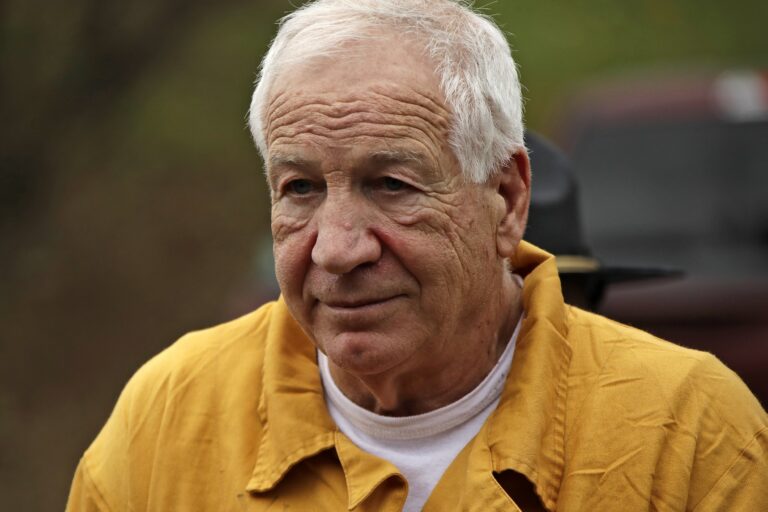
Updated 8:30 p.m. Sept. 4, 2026. A judge has denied Jerry Sandusky’s request to cancel an upcoming hearing originally scheduled for a claim that one of his accusers is recanting […]
Still No Deal Between Mount Nittany Medical Center, Union After Latest Negotiations
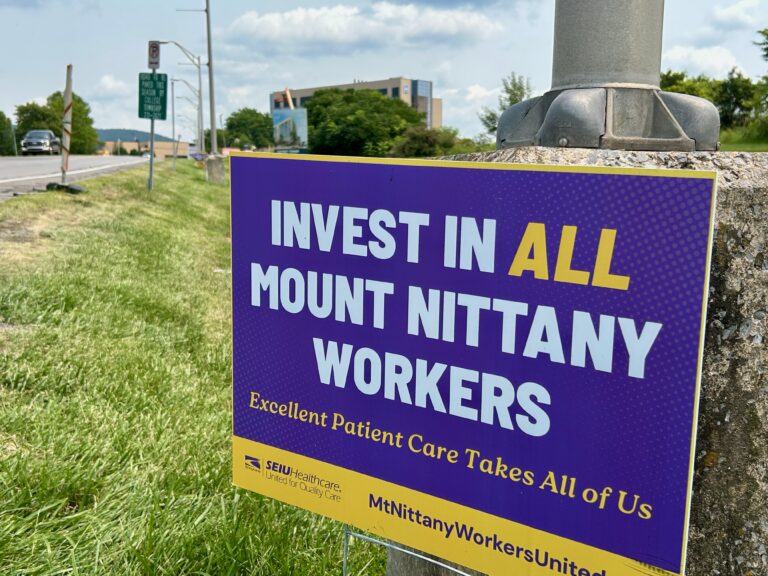
Mount Nittany Medical Center executives and the union representing 950 of the hospital’s workers once again were unable to come to terms on a new contract after the latest round […]


