According to their budget for 2025-2026, the State College Area School District expects to receive $204 million from local and state sources to educate approximately 7,600 students. That equates to a bit over $26,800 per student.
Except, the district won’t educate 7,600 students with that money. In that number are around 350 charter school students, 380 Catholic school students, 100 homeschoolers and 50 students at other private or religious schools, leaving the district with about 6,720 students to educate.
Sadly, the over 500 homeschoolers, religious and private school students get no money from the district to educate themselves, but are instead a boon to the State College school district in that they leave over $14 million behind for the school district to use as it sees fit. Granted, this is not unique to State College; virtually every district in the state does the same thing. It sounds a bit unfair doesn’t it?
However, charter school students, thankfully due to Pennsylvania charter school law, do get some money from the district to educate themselves. The district expects that charter school students will receive about $7.1 million for this fiscal year– at a bargain price of $20,300 average per student — saving the district over $6,000 per charter school student.
Between the homeschoolers, religious, private and charter school students, they leave the district with around $197 million for it to spend on the 6,720 remaining students. An average of $29,300 per student. An extra $2,500 per student more than what the district would have had to spend if the district had to educate all those students.
In other words, if you know someone who attends, or has children who attend, a charter, religious or private school, or are homeschooled, make sure to thank them for their generosity! The charter school parents and kids are donating $6,000 per student per year to the district, and the others over $26,000 per student. That is extremely kind of them!
Now, you would think that with those extra millions that the school district saves by not educating these students it might see fit to give a rebate back to every taxpayer. Or, save the money for future needs. Well, you can guess how likely it is that the school board chooses the first option, and they are constrained by law as to how much they can “save,” so the second option is limited.
And, unfortunately, like many governmental entities, if you give the State College Area School District Board extra money, it will find ways to spend it. In fact, it will spend it and more. And raise taxes every chance it gets, outside of an international pandemic.
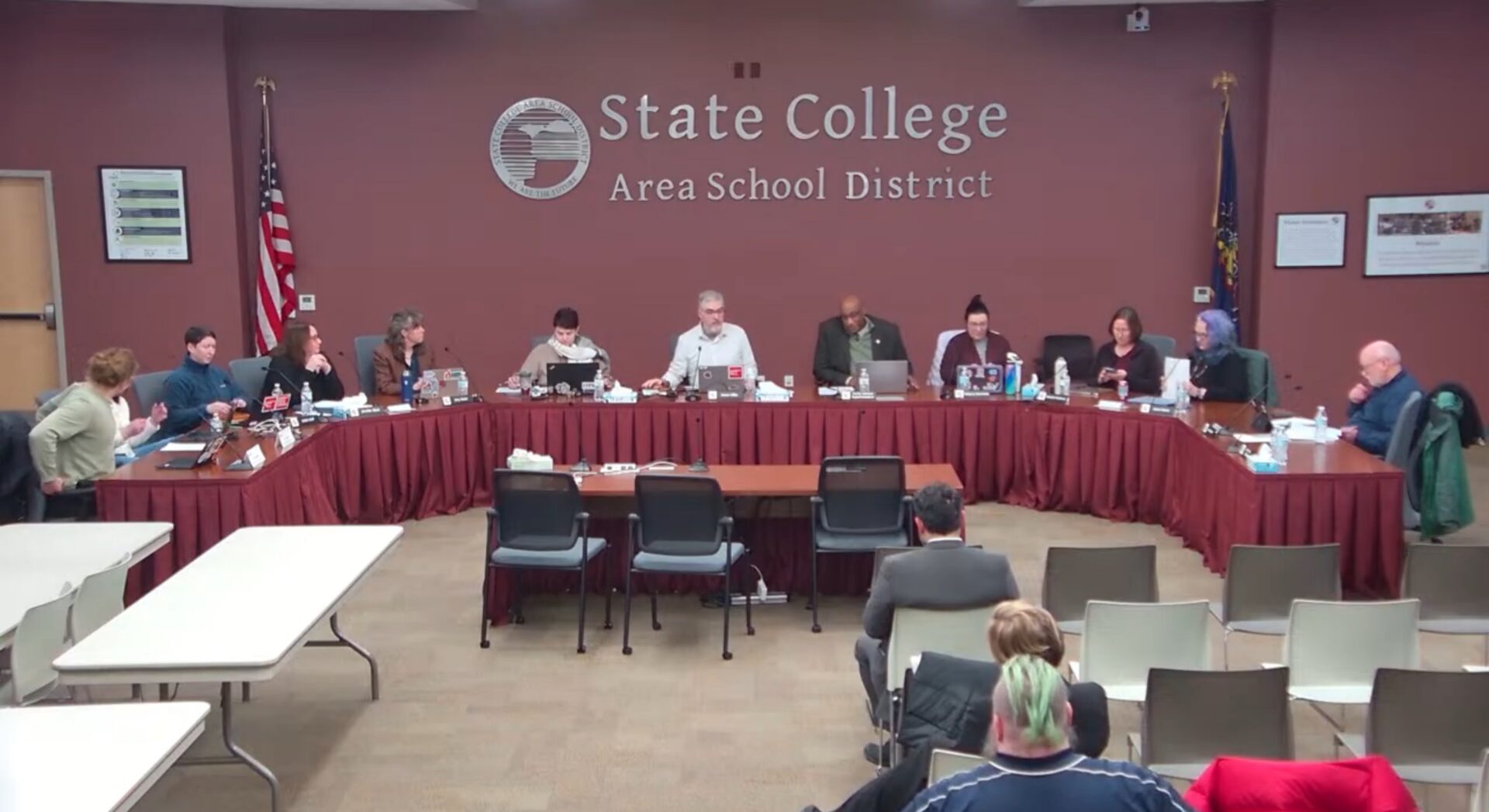
Since I have been a member of the school district’s Citizen’s Advisory Committee for Finance for over a decade, and have noted numerous times on this website the school board’s willingness to raise taxes, two weeks ago I “put my money where my mouth was,” and tossed my name in as a candidate for a school board seat that was vacant.
As a parent whose children successfully used several different educational methods – traditional school, charter school and homeschooling – and can provide that unique viewpoint, as well as someone who is registered to the largest political party in Centre County, comprising over 41% of registered voters in the county, yet has had zero representation on the school board for some time, I believe I could provide knowledgeable input as well as a bit of diversity of thought.
And I even made some very specific suggestions to the board for improving the district and the board – things such as:
- Putting forth a referendum to change the district from an at-large voting system to a ward-based system.
- Ensuring the district’s negotiating team for the next teacher contract has at least one individual on the team who is unaffiliated with the district beyond being a resident.
- Edit the charter school section on the district’s website – which has incorrect and misleading information on it – and provide income/expenses by student type as I mentioned in the early paragraphs of this column.
- And raise taxes only when additional income is needed, not because “you can” by the Act 1 Index.
Of course, the school board chose someone else. Someone not affiliated with the majority party in the county, who doesn’t even work in the district, or the county for that matter.
Over the years I’ve touched on some of the above suggestions in past columns, but the last one is what I want to spend a few words on now.
The district is not only the largest local governmental body by income, it is also the one that raises taxes the most. A common misconception of school board members is you need to raise taxes whenever you can up to the Act 1 Index, because if you don’t, you lose that tax revenue and new higher tax rate forever.
For those unacquainted with the Act 1 Index, it is a percentage set by the state which determines the maximum allowable tax increases for each tax the school district levies. The part that gets missed most often is that it’s the maximum the school board can increase taxes without either an exception from the Pennsylvania Department of Education (uncommon), or voter approval. In other words, it’s the easy way out.
But, if you don’t take it, that money is not lost forever. School boards can always go to the voters if they need to raise taxes. And when they do that they can always recoup any unnecessary increases they may have, but didn’t levy in the past.
For my money – almost $6,000 worth of taxes my wife and I paid the school district last year – that is the fiscally responsible way to run the school board. Get the voters’ buy-in on any tax increases and raise taxes only when you actually need the tax revenue. Not because you can and it’s the easy thing to do.
Now, some might suggest that if the school board had to raise taxes and went to the voters for an increase, the voters could turn them down. That is true, but the State College Area School District is an affluent district where the major employer is all about education. If the school board really needed a tax increase for education, I’m sure they would get the votes for the increase.
So, although I don’t expect that this new board member will have any effect on the tax-and-spend ways of the current school board, at a budget of over $200 million and a personal buy-in on our part of close to $6,000 – not to mention the over $200,000 they received to educate my kids but spent it on others (you’re welcome!) – it would be a heartening change of pace if they did!