
One of the major talking points of this offseason has been “who will be this year’s Indiana?” — as in, which team will seemingly come out of nowhere to compete for a national championship, likely following a heavy transfer portal influx.
The answer is no one.
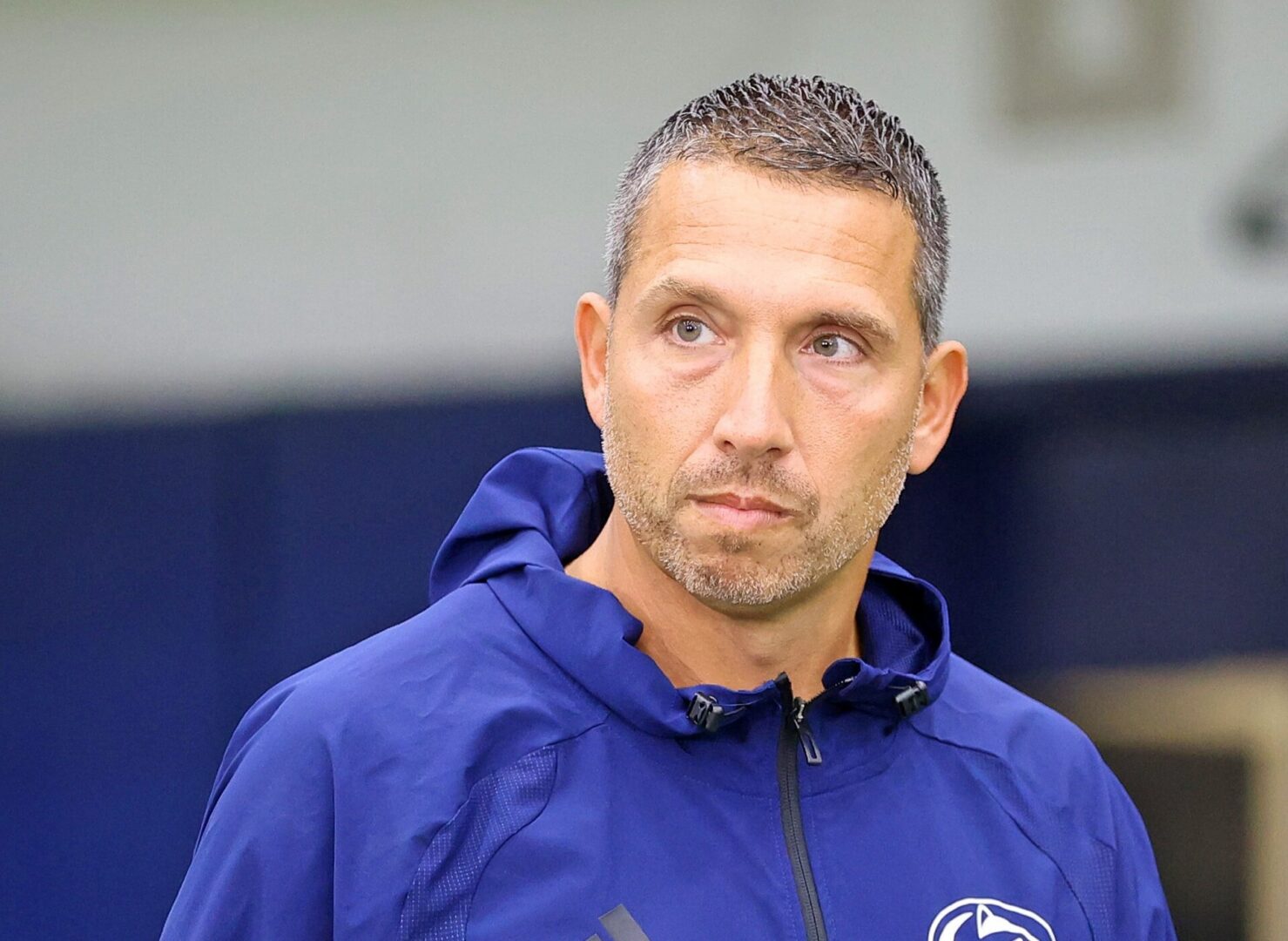
That’s because there’s only one Curt Cignetti, and he did something that’s never been done before and possibly won’t be done ever again. That said, Penn State has a unique opportunity to follow Cignetti’s blueprint under head coach Matt Campbell.
There are already several similarities — both come from schools with inferior resources and brought along many of their assistant coaches and players, many of whom were underrated or overlooked.
But the Hoosiers’ turnaround didn’t happen in one season, it happened in two. Cignetti’s first campaign in 2024 resulted in an 11-2 overall record, including an appearance in the College Football Playoff. That set the stage for last season, when they won the program’s first national championship.
For Campbell to follow, he’d need a strong opening season in Happy Valley to establish momentum. One season usually isn’t enough to draw a conclusion about the success or failure of a coach (Nick Saban went 7-6 in his first year at Alabama and lost to Louisiana-Monroe). And a coach’s first season generally comes with the most leniency, as he’s still adjusting to a new environment and bringing in his own recruits.
Above all, a strong first year provides proof of concept — and in the modern college football ecosystem, proof of concept is what drives the financial engine. It’s critical for mobilizing support across massive donor bases.
Indiana has the largest living alumni base in the world. Penn State sits at No. 2. That’s the similarity other schools lack.
After Cignetti led the Hoosiers to that 11-win season, it woke up the sleeping dragon. A fanbase that had long laid dormant, at least when it came to football, was suddenly spurred into action, triggering an immediate transformation across the entire NIL ecosystem. It wasn’t just ticket sales and merchandise that surged; the program’s collective operations scaled rapidly across multiple fronts.
In today’s landscape, NIL success requires a multi-layered approach. High-net worth mega-donors provide immediate war chests for transfer portal needs — famously illustrated by billionaire Mark Cuban, an Indiana alumnus, making his first-ever donation to the Indiana athletic program in December 2024.
But just as crucial is the grassroots layer, where thousands of alumni contribute through recurring monthly collective subscriptions and local business partnerships, creating a high financial floor that ensures long-term roster retention.
When on-field performance validates the vision, passive boosters convert into active financial participants. CEOs and local business leaders take notice. One-time donors start monthly subscriptions. Recurring donors bump their tier. Major brands line up to partner with the program.
Modern donors view NIL contributions much like venture capital: they want to see an early return on investment before deploying significant capital. Cignetti’s inaugural run provided that exact validation, helping Indiana report a record $183.43 million in total athletic revenue during the 2024-25 school year — a figure that jumped nearly $10 million from the prior year and likely surged even higher in 2025-26, though those numbers aren’t out yet.
Expecting a national championship in year one or two from Campbell and the Nittany Lions is unrealistic. But a strong inaugural campaign can reignite a donor base that had grown hesitant.
During James Franklin’s final seasons, as the NIL arms race went parabolic, booster skepticism set in. Fans hesitated to open their wallets until they saw proof that Franklin could break through on the biggest stages — a return on investment he ultimately couldn’t deliver.
Campbell doesn’t need a national title right out of the gate to change that narrative. He just needs to show that the program is moving in that direction. If year one provides that proof of concept, the financial engine will kick into gear.
More Penn State Football
View all Penn State Football
The Four-Headed Monster: Inside Penn State’s Backfield Strategy
For the last four years, Penn State relied heavily on a predictable tandem of Kaytron Allen and Nick Singleton to anchor its offense. As training camp nears its conclusion, new […]
Penn State Quarterback Rocco Becht on Local Fame, His Fall Class and His Dad Hanging Out With the Team
Penn State quarterback Rocco Becht is the most prominent transfer from Iowa State this past offseason. Other than head coach Matt Campbell, of course. In three seasons at Iowa State, […]
Matt Campbell Praises Rocco Becht’s ‘Almost Flawless’ Fall Camp, Shares Other Updates
With fall camp nearing its end, head coach Matt Campbell met with the media inside Penn State’s team meeting room to provide updates entering his debut season in Happy Valley. […]


