
Penn State wasted away an early 17-0 lead over Wisconsin to fall 24-20 in heartbreaking fashion last Saturday, including an offensive performance that left many dissatisfied.
Paramount in the Nittany Lions’ loss were several questionable offensive decisions related to both personnel and play-calling and the unit struggled to move the ball for much of the evening.
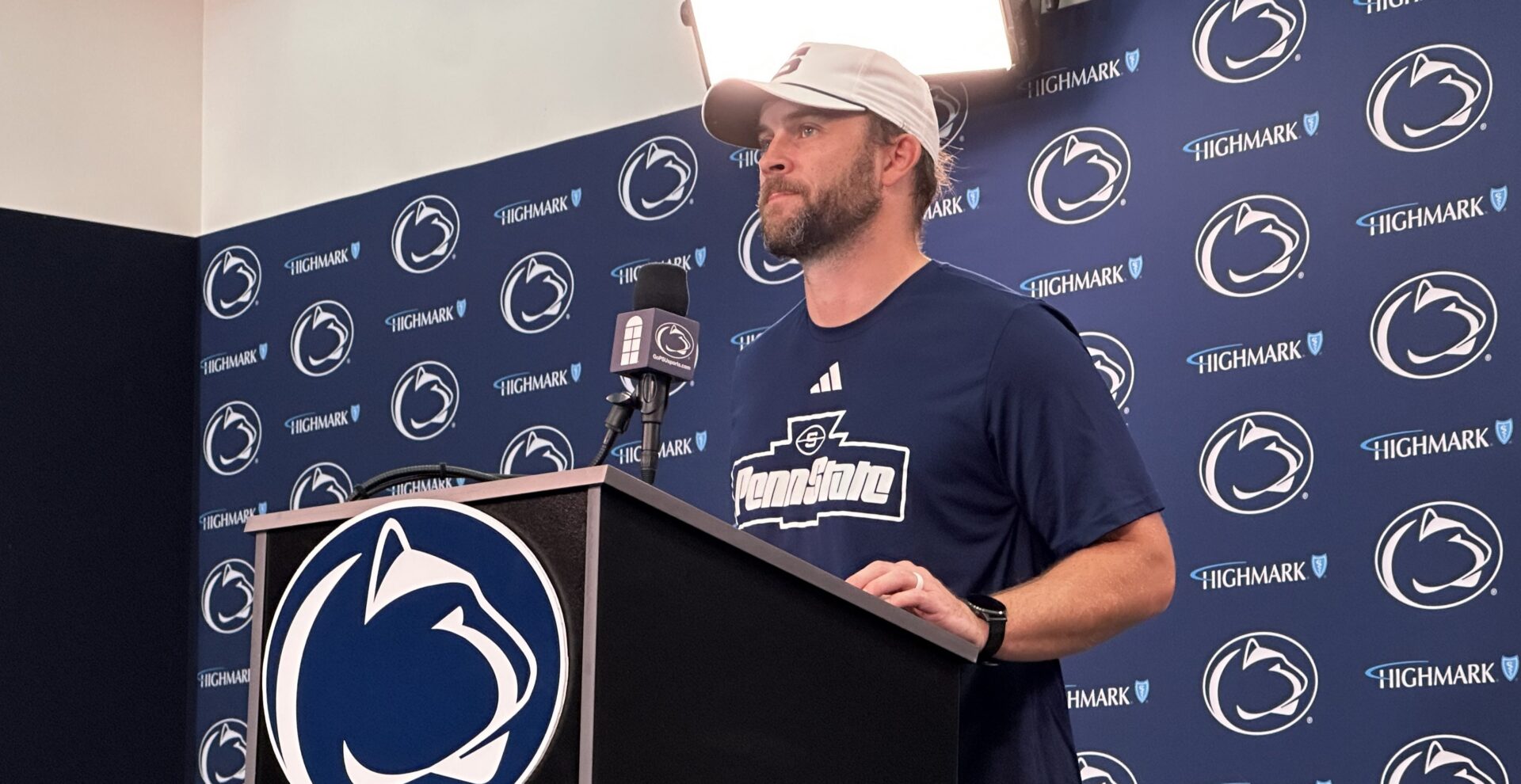
On Tuesday morning, offensive coordinator Taylor Mouser met with the media to field questions about the subpar performance.
One of the most glaring scenarios was the fourth-and-1 at the end of the third quarter, where the team lined up to go for it before the quarter ended. Out of the break, the offense once again came out, but Penn State called a timeout and then punted. Mouser said it was ultimately Campbell’s call, but he understood the decision.
“The defense had been playing so great up to that point, and we already gave them momentum with the tipped ball pick … if we didn’t get it, we were going to put our defense in another bad spot,” Mouser said. “So I understood it. I’m always going to support whatever he wants to do, and he’s gotten here because his gut is rarely wrong.”
Campbell said afterward he was “50/50” coming out of the break but after seeing the defensive alignment, didn’t feel like the Nittany Lions “had the advantage.”
Other play calls drawing concern included three runs on third-and-long situations, an ultra-conservative approach that ultimately backfired. While Mouser acknowledged the “cowardly” nature of the play calls, he described it as the lesser of two evils between forcing a downfield throw with a passing game that simply wasn’t executing all night.
Included in the decision-making process was the threat of throwing an interception, with quarterback Rocco Becht not seeing the field well and the defense already anticipating a pass.
Personnel-wise, the tight ends were rarely involved despite heavy 12- and 13-personnel looks. Mouser called Ben Brahmer, Andrew Rappleyea and Gabe Burkle “three of our best pass-catchers,” but only Brahmer recorded a reception.
“We’re gonna have to find ways to get them the ball and easier ways to at least make those throws,” Mouser said. “And I still don’t think we’ve sniffed just how good that room can be, and just the standard I think those guys can play with. But from an attitude and effort standpoint, it’s pretty good, I have to do a better job of giving those guys the ball.”
Additionally, only one wide receiver caught a pass in the loss — Chase Sowell, who hauled in six for 70 yards. However, Mouser said the Badgers’ defense prevented the team from spreading the ball out more.
“The coverage kind of dictated where the ball was going to go, and they took some of that away … when we tried to, the defense did something where maybe it took Rocco’s eyes in a different place,” Mouser said.
As far as the running back rotation, all four of Penn State’s primary ball-carriers saw action in the first quarter, though only James Peoples saw any amount of success. Mouser clarified that position coach Savon Huggins has ultimate control over who gets subbed in for each drive, but the team still hasn’t narrowed down the rotation.
“Everything after games like that is always being evaluated,” Mouser said. “Are you playing the right people, are you putting the right people in the spots to be successful? And through the first four games, you hope to have found a rhythm with one of the guys or like a bell-cow, and we haven’t yet.”
More Penn State Football
View all Penn State Football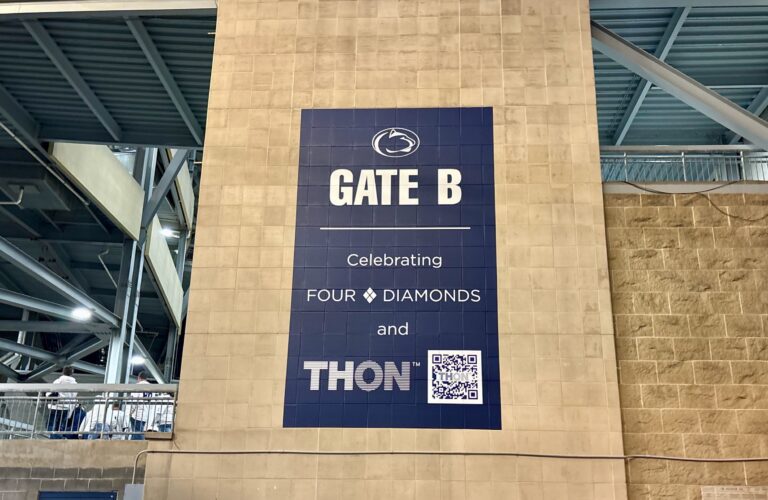
THON, Four Diamonds Honored With Permanent Recognition at Beaver Stadium
The efforts of Penn State’s THON and Four Diamonds to conquer pediatric cancer now have a permanent recognition at Beaver Stadium. Banner signage installed at Gate B ahead of Saturday’s […]
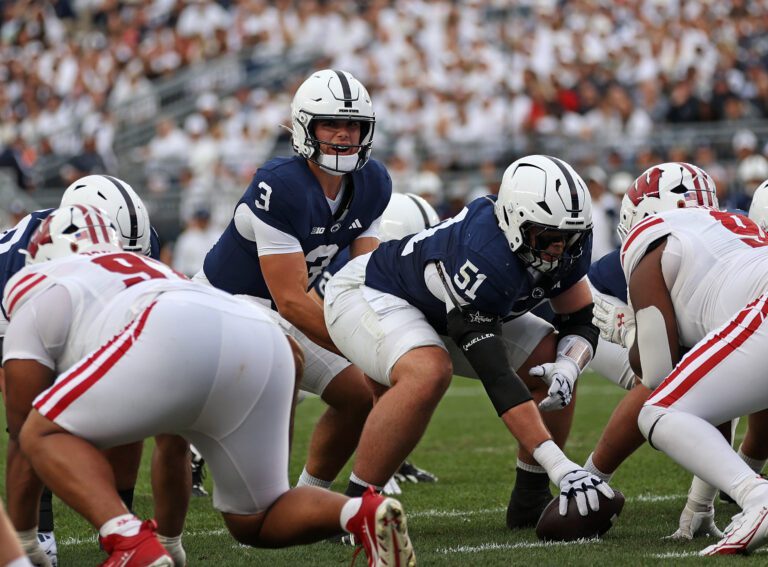
Penn State Game 4 Snap Counts vs. Wisconsin and Season Totals
Penn State’s winning streak was snapped last Saturday at the hands of Wisconsin, which battled back from a 17-0 deficit to knock off the No. 13 Nittany Lions at Beaver […]
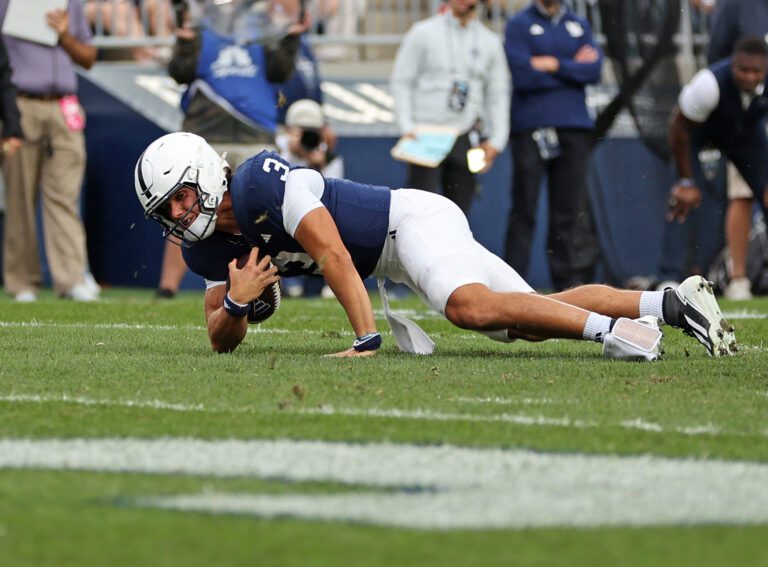
The 2 Kinds of Penn State Football Adversity: In-Game and Post-Game
Penn State coach Matt Campbell talks a lot about handling Adversity. A lot. It’s going to come, he says. It’s how you handle it. Adversity came to Beaver Stadium on […]


