It’s not news that the news tends to be personality-driven, but this is ridiculous. It’s all-Donald, all-Hillary, all-Bernie all the time.
Consider the lead story on the New York Times home page as I write this. Headline: ‘How Trump Lives, As Told by His Butler.’
Scrolling down the Washington Post’s home page, I count 14 mentions of the orange-visaged one’s last name.
I, too, have succumbed, both last week, and right here. But newsroom resources are finite, which means we have to ask, when a news organization devotes all that precious time to the candidates for president of the United States, what stories aren’t being covered?
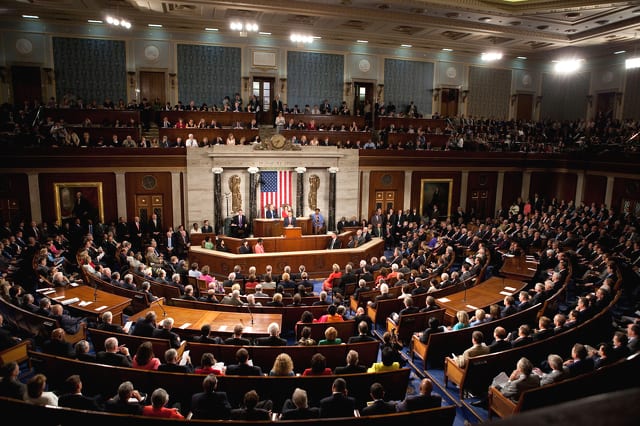
How about U.S. Congressional elections? It’s true that Capitol Hill has been much in the news of late: Bernie calls for campaign finance reform to keep those millionaires and billionaires on Wall Street from buying influence on the Hill.
And Congressional Republicans argue, bizarrely, that President Obama should let his successor choose a replacement for the late U.S. Supreme Court Justice Antonin Scalia because, you know, you wouldn’t want to disrespect the will of the people (who twice elected Obama by comfortable margins and expect him to conduct normal presidential business until he leaves the White House next winter).
But how much have you heard about the looming battles for control of Congress?
It may be that many of these races haven’t heated up yet, but the relevance of the Congressional races to the presidential race, which has been on full boil for months, should be obvious.
Take Bernie Sanders’ campaign, assuming it’s still viable when you read this. Before, we heard that Sanders couldn’t win because America wouldn’t put a socialist in the White House. Now we hear that even if Bernie won, Congress wouldn’t enact any of the sweeping changes he is calling for.
Confronted with that assumption, Sanders talks about the need for a political revolution.
‘What does a political revolution look like?’ he asks. ‘It means that 80 percent of the people vote in national elections, not 40 percent.’
And then? Unclear.
One possibility is that a huge turnout gives Bernie a ‘mandate,’ which is supposed to mean that the will of the people will have been made so clear that Congress would have to bow to it.
Well, in 2008 there was talk of an Obama mandate when he beat John McCain by more than 7 percentage points, or more than 10 million votes – but somehow Congress never got the memo that it was now supposed to do the new president’s bidding.
Which brings us to the other possibility: that a huge turnout of Sanders supporters will result in smashing victories for Democratic House and Senate candidates, who will then work with President Sanders on at least some of his signature proposals.
Remind me, I said to the news sources I rely on every morning to tell me what’s going on in the world: How many Senate seats are up for grabs this November? How many House seats might the Democrats win according to a best-case scenario?
But my news sources are way too busy Trumping and Cruzing and Clintonizing to pay much attention to all those faceless fundraisers who want to serve in Washington.
I found what I was looking for, eventually – one usually does, on the World Wide Web – but not on a news site.
So here is what I learned from a website with the ungainly name Ballotpedia.
Going into this election cycle, the Republicans hold 54 Senate seats and the Democrats 44 (there are two independents). Ballotpedia offers an exhaustive slicing and dicing of how many of the 34 seats that could change, uh, butts this fall are held by incumbents (our own Republican Sen. Pat Toomey is one of them) and how many are thought to be ‘safe’ for either party.
The upshot is this: The Democrats have a realistic chance of regaining control of the Senate in this election.
On the House side, where all 435 seats are in play, at least technically (Republicans have represented our neck of the woods since 1973), the GOP holds a 247-188 majority. The experts think the Democrats will narrow the gap if Sanders or Clinton is elected in November, but not enough to gain control.
That’s where Bernie’s ‘political revolution’ comes into play. Should he be swept into office by a mighty tide of disgust and hope, enough fresh-faced Democrats could get swept in right along with him to give him the votes he needs to break up the big banks, tear up those big college tuition bills and offer Medicare for all.
Unlikely? Of course. But then, his entire candidacy has been unlikely.
Obama’s presidency has been an eight-year lesson on the limits on executive power. The way the news media obsess about presidential hopefuls while ignoring Congressional candidates, though, you would think we were electing a dictator this fall.
Let’s hope we aren’t.