
Inside/Outside State College is a regular column by Jeff Deitrich offering views on downtown and the outdoors within a 30-minute driving distance.
The first weekend in May brings an unusual and under-the-radar contest to our area—the annual Birding Cup sponsored by Shaver’s Creek Environmental Center. Chances are you don’t know about it or what it signifies.
Birders do.
It signifies the peak of spring migration for scores upon scores of migratory birds that pass through our area. May is indeed the best month for that type of birding.
The Birding Cup is a contest to see which team of birders can identify the most bird species in 24-hours straight. While it begins and ends at Shaver’s Creek, teams fan out and scour a wide radius in the area all through the day and night to identify birds by sight and sound.
The largest number of combined species spied during the Cup is 195. That’s 195 identified bird species in our region in just 24 hours. Certainly the number present in our area then is far higher over the course of a year.
Most birds are identified by sound, and the teams must do so without the aid of very helpful apps, like Merlin Bird ID. I have that app on my phone, and it helped me to ID ten different birds by sound in about two minutes at my camp in Hyner north of here. I could consciously only make out four different calls, and I only knew what two of them were. The app is that good.
But the teams don’t have that luxury. I went with a team back in 2008, and it was almost theatrical to hear team members mimicking the calls of various birds at 3 a.m. in hopes that a potential mate would call back. It worked many times. Look up the sound of a barred owl sometime and imagine your companion calling that out in the woods. There are even stories of owls swooping literally into the caller’s head to warn off a potential rival for its mate!
Often there would be long moments of patience, calling and then listening intently–sometimes in the deep forest, sometimes in a wetland, sometimes on a dry hilltop. Then, the moment the real bird called back, a very excited and very brief celebration ensued, followed by the team hurriedly piling back into their car and whizzing off to the next potential site, which had been mapped out in advance.
Today the teams have technology better than just binoculars to see the birds. Many have night vision thermal monoculars to help them “see” the birds, although they still need to be able to identify what they see.
The Birding Cup is just one example of this bit of a craze that is birding. Those who fall under its spell are a bit like me with trout fishing. They dive right into it and go on quests to find species that are either uncommon to their area, or in an area where the birder is the uncommon one. Some go on trips to far off lands—Patagonia, New Zealand, Nepal or even Antarctica.
But, as my friend Jon Kauffman of the Tussey Mountain Hawk Watch said when we chatted recently, you don’t need to go far to be excited about birding.
“I didn’t find my interest in birds until my 20s. As I got into it, there was a thought of traveling around the world,” he said. “My need to travel the world is not there anymore. We got this idea that we need to travel a thousand miles to see something special. We got lost in that. But think about a child. You don’t need to take a child very far to get them excited. I value that mindset.”
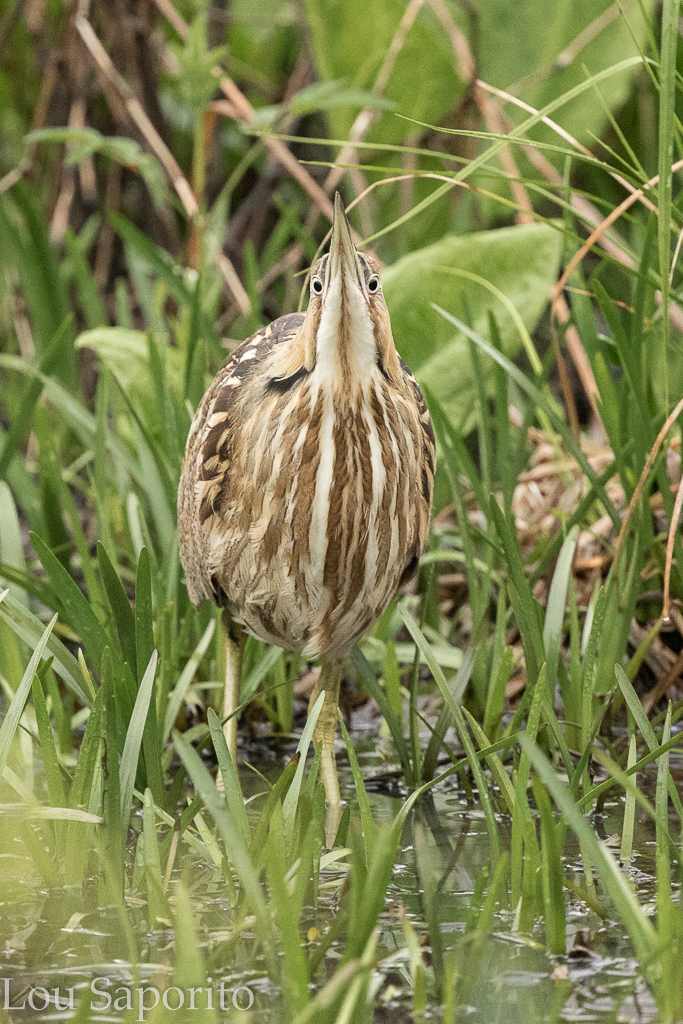
Jon and I could have talked for hours longer about the similar experiences we have—him with birding and me with trout fishing.
“It’s the same thing, except it’s not fish, it’s birds,” Jon said. “You’re trying to outwit the bird, or more correctly to understand their thought process–trying to understand their needs and getting a step ahead of them. Each fish has a need. Each bird has a need. Food, nesting grounds, etc. Then you have to read the landscape.”
Good fishermen and good birders share similar qualities that others simply don’t yet possess. “It’s like Sherlock Holmes said,” added Jon. “‘I see no more than you, but I have trained myself to notice what I see.’”
Jon and I both notice more in our respective pursuits to a point where each of us is cognitively not even thinking of it; it becomes a part of you.
He noted that, when many birders start, as it was with him, most birds are just a box to be checked off or a number in their pursuit of a high annual count. These days, however, each bird is far more meaningful.
“What do I want to be known as? Do I want to be known as the best birder, or is it more just for me? These days I’m thinking more of what it means to me,” Jon said.
What started him down the larger path was the PA Bird Atlas, an effort that started in the 1980s and is redone every 20 years.
“Because of the Atlas, today I’m thinking holistically about the relationship I have with the birds,” Jon said. “It has cultivated me to systems thinking. It’s objective, but it has a deeper meaning and now makes me think about what the birds need. It’s created an opportunity where I’m out in the breeding season, June and July, not just the migration season.”
Breeding season made Jon focus more on the year-round knowledge of birds. The four seasons you need to know in birding are: fall migration, wintering, spring migration, and breeding. In the birding community, it doesn’t matter what month you’re in. Each has its own set of challenges and successes.
“In breeding season, they’re doing that no matter what,” Jon noted. “They have mouths to feed no matter what. In migration, they’re out there for themselves.”
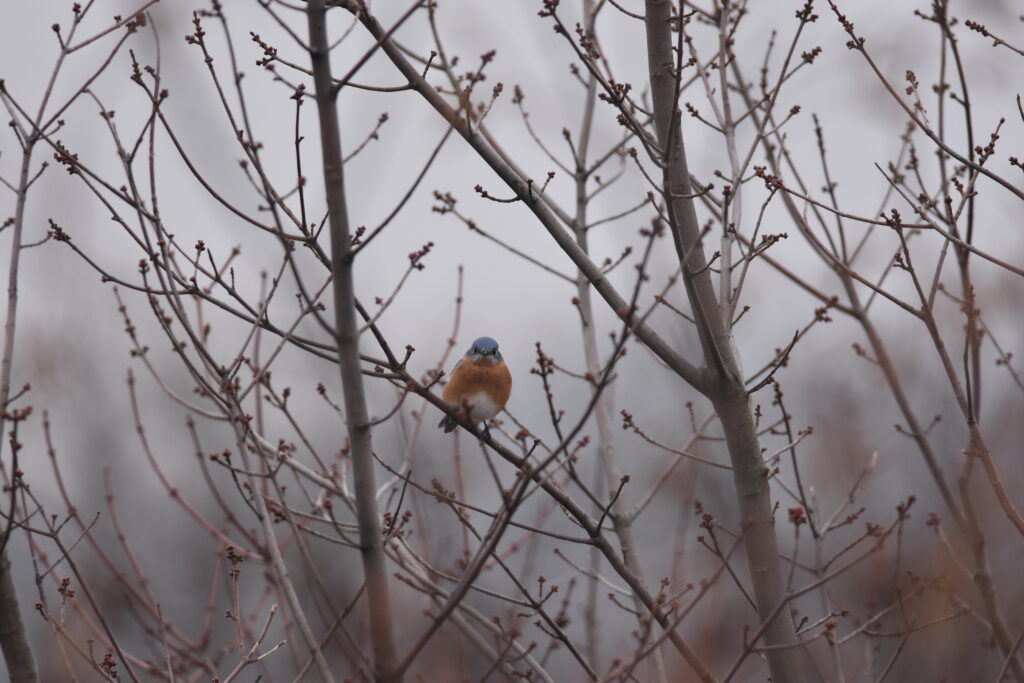
And they’re burning calories either way. As one example to feed that need, Jon said that about 7,000 insects are consumed in a month by just one brood of bluebirds.
Then there are weather patterns that can significantly alter a bird’s life, just as they can alter our own. Think of the destruction of a hurricane moving up the coast.
“In a big hurricane, that bird is struggling with the effect of that storm coming up the coast the same as we are. Sometimes they don’t make it,” Jon said. “Understanding the weather pattern can heighten your experience and give you the knowledge of how to manage your time, especially in migration. It can give you the opportunity to see a bird that is out of the ordinary in our area.”
In our area, Shaver’s Creek is a great place to start with birding, both because they have many skilled and enthusiastic birders, but also because you can see in-person and close up many of the birds that you would otherwise only hear or see from a great distance. Its Klingsberg Aviary is truly amazing, especially after being rebuilt and expanded several years ago. To see a bald eagle, or a great horned owl, or a red-tailed hawk up close inspires awe.
The staff at the Aviary used to take their raptors on the road in the community and at schools. I remember seeing middle schoolers light up when one of the staff started talking about the wing span of a golden eagle as the largest of our raptors, and then the eagle, as if on cue, spread its wings wide!
Turns out it was indeed on cue. One of the things I learned when I worked there is how to make that happen. In the wild, birds sit on branches, right? And branches sway left and right and up and down, right? But do you know what branches never do that a human arm can do? The twist. So, when the time is right, the staffer with the raptor on his or her wrist needs to twist their wrist just enough to make the bird uneasy, and poof! Like magic, it spreads its wings.
Sorry for letting that trick out of the bag, Aviary staff. Don’t worry. I’m sure it will still make children’s eyes wide with wonder—adults, too. I imagine they still do that at the Aviary sometimes.
In addition to Shaver’s Creek, there are multiple other groups that can help get you into birding. We have one of the best clubs in the region: the State College Bird Club. Millbrook Marsh Nature Center offers opportunities for bird walks. ClearWater Conservancy, the Penn State Arboretum and the Penns Valley Conservation Association all have birding programs and walks. State College Borough is a “certified Pennsylvania Audubon Council Bird Town,” according to Jon, just as it was named a Tree City USA years ago, and the borough has several programs and field trips on birds.
In addition to local birding groups, walks and programs, every citizen can now participate virtually via services like Ebird.com and Discord. Like the Merlin app, Ebird is supported by the Cornell Lab of Ornithology.
“Ebird has blown birding out of the water,” Jon said. “It’s citizen science, like a Facebook for birding. It shows the birds that are reported and when you can find them and where on public ground.”
That makes birding accessible to everyone with an internet connection. You don’t have to meet with other birders at a particular location, though most people would say that sharing your birding successes and excitements directly with friends makes it more fun.
Shaver’s Creek happens to be home base to a separate endeavor—the Tussey Mountain Hawk Watch. Just as our ridge-and-valley region is fantastic for glider flights, it is also fantastic for migrating hawks and eagles. There are a ton of them that pass over us. There is a paid position, and some volunteer hawk watchers literally sit on top of Tussey and Stone Mountain ridges near Pine Grove Mills and count every one of each species that they see soaring by on the thermal currents.
Jon said spring migration lasts about two months, and the fall migration is about three months. The birds, he explained, are more keen on getting to their breeding grounds in the spring and more relaxed and meandering in the fall. The spring season averages about 1,800 raptors soaring overhead, while the fall adds that season’s nestlings and usually showcases 3,000-5,000 of the predators.
Back to the Birding Cup for a moment. That competition is open to all skill levels. It’s a friendly competition that is also a fundraiser for Shaver’s Creek. “I encourage families and groups to do it,” Jon said. “One thing that’s great about bird watching. It’s ‘collective effervescence.’ That’s a feeling of belonging, of being part of something greater than yourself. It’s kind of like a Penn State football game. It gives you a feeling that you’re a part of something.”
As we talked and shared stories, I got carried away and shared several of my favorite and quite possibly unique fishing experiences. Then I paused and asked Jon if he had any truly memorable birding experiences to share. His wasn’t during a birding trip, but during a day at Shaver’s Creek when a hummingbird accidently got into the main building. It tried in vain to get out and quite literally exhausted itself trying to find an exit.
Jon shared, “It had burned all of its calories to the point where it couldn’t move and just sat on the floor. I literally walked up and put my finger out next to it on the floor, and it stepped onto my finger. Newt (the Nature Name of one of the Shaver’s Creek interns) saw it and couldn’t believe I was walking around with a hummingbird on my finger. I walked it over to the hummingbird feeder. It just sat there drinking and drinking. When it finally had enough energy again, it zipped off. It was completely an awe moment.”
Moments like that are out there for all of us to share with nature and, if we’re lucky, with each other.
As Jon said, “It’s so exciting. Find your little excitement and go with it. I am perfectly OK being out there by myself.”
I am, too. However, when I noted that, after my father’s passing, I now fish almost solely alone and miss the camaraderie, Jon said something perfectly prescient.
“You’re not by yourself. You’re surrounded by life. There is always an ant or a tree or a bird.”
Right you are, Jon. I’ll bear that in mind when I’m out there solo, and I wish all of you happy birding!
Jeff Deitrich is a retired hotelier and outdoors writer living in State College. He welcomes comments at psumohs@yahoo.com.
More Columns
View all Columns
Battista: Perspective and Perseverance for Penn State Football
This is my appeal to all my fellow Nittany Lion football fans to take a chill pill and put things in perspective before you have a nervous breakdown with regard […]
Penn State After Michigan: A Top 20 Bye (Week) and Sell
ANN ARBOR, Mich. — Penn State left the Big House here on Saturday night as the not-so-proud owner of a four-game losing streak. With an upcoming bye week, Matt Campbell’s […]
Penn State QB Rocco Becht’s Big Mistakes in The Big House: In His Own Words
ANN ARBOR, Mich. — Penn State quarterback Rocco Becht’s three second-half turnovers in The Big House were the biggest kind of mistakes. Interception, interception, lost fumble. And in a span […]


