
The era of homemade meals is a thing of the past. When I was younger, I had homemade meals on the dinner table just about every night of the week. However, in this ever-changing fast-paced life we are all living, it’s hard to remember what your mom put in her homemade chicken noodle soup or how grandma made her meat sauce.
More and more people are looking to the Internet for answers and, sadly, you sometimes cannot get the answer there, no matter how long you spend on your computer or smartphone. Some people can’t learn from reading a recipe; they need to actually see the recipe being made right in front of their eyes. Some people have the gift of being able to cook, and some people have the gift of ordering takeout.
If you really want to do the whole homemade-from-scratch cooking thing and need some direction, never feel like you can’t ask for help. It’s completely acceptable and may or may not save you from ruining your hard work, throwing it in the trash and calling for takeout.
Last week, as I was pulling out of a parking spot, an acquaintance frantically wave her hands to get my attention. As I rolled down the window, she asked me, “Ciara, what cheeses do I actually need to make lasagna?” When I get questions such as these, I smile from ear to ear.
I was more than happy to say, at minimum, you need ricotta and mozzarella. I then explained how I make mine, letting her know the secret to making that ricotta cheese layer oh-so-yummy is adding three eggs to every pound of ricotta cheese, mixing in 1 cup of shredded mozzarella cheese, salt and pepper to taste and adding a little bit of heavy cream.
Two weeks ago, my gym guru asked me if I would do meal planning for him. I was more than happy to help. As he was eating, he would say, “Why does your chicken taste so much better than mine? It’s not like your adding tons of fat.”
Again came that smile, across my face from ear to ear.
I followed up his question with a question. “Can you please tell me how you cook your chicken?” He told me he used a frying pan, non-stick spray and chicken.
I explained that when I make a chicken breast, I use 1 tablespoon of olive oil (no virgin in my kitchen; straight olive oil) and sear it with a little salt and pepper, along with some minced garlic and onions. As the oil begins to disappear, I add a bit of white wine for additional flavor and to ensure the chicken stays moist.
It’s little tips like this one that remind me not too many people had the upbringing our parents and grandparents did, when they were in the kitchen helping their parents cook.
Now, as I said, some people have a culinary gift and know how to combine flavors, and some people just don’t. So, as I said, don’t be afraid to ask for help. A new trend is local colleges and business schools, and even some restaurants, offering cooking classes. I’ve even had people eating in my restaurant ask for cooking tips, and I’m always happy to help.
Here are the most frequent questions I am asked:
■ Why does my chicken look gray, soggy and lifeless?
All food releases moisture as it is being cooked, and you need to leave room for the steam to escape. Be sure to leave breathing room in your pan, and if you are crunched for time and need to speed things up, use two pans at once. Scrubbing an extra pan is better than lifeless food.
■ Why is my pasta clumpy and gluey?
No matter how good a cook you are, your pasta dish will be a complete and utter failure if your pasta comes out of the pot sticking together. The problem, yet again, is space.
All pastas and noodles need room to release their starch and cook evenly. Most people don’t know that pasta absorbs nearly double its dry weight in water. So, if your noodles don’t boil in enough water, the inevitable problem of sticking will happen. A quick and simple solution is to use plenty of water — for each pound of dry pasta, you need about 5 quarts of water. And, give the pot a stir as soon as you add the pasta to keep it separated.
■ Why is my steak not juicy?
Cooking takes time, and this problem happens more often than you might realize. It doesn’t matter if you are grilling, frying or broiling a steak: Once it’s done ,it needs a good five to 10 minutes to rest and let the juices redistribute.
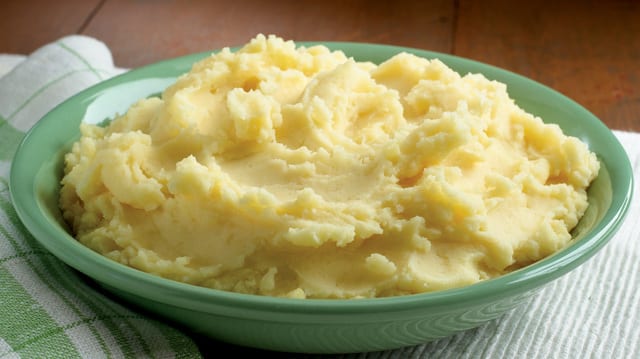
People mess up traditional mashed potatoes more often than you could ever fathom. They are either dry, or gummy, or have no flavor. Here’s a full-proof recipe.
MASHED POTATOES
Start to finish: 40 minutes
Servings: 8
1 dozen medium-to-large potatoes, cut into chunks
1 stick salted butter, cut into chunks
2 cups shredded Parmesan cheese
1/2 cup heavy cream
Salt and freshly ground white pepper
Boil the potatoes until tender. Drain.
Mash the boiled potatoes using a metal potato masher. As potatoes begin to mash down, make a hole in the middle (as if you were going to add gravy) and add butter and Parmesan cheese. Let cheese and butter melt for about 3 minutes.
Cover bowl with a dry and clean hand towel to keep in the heat.
Next, pour in heavy cream and season with salt and pepper. Continue to use metal potato masher to make chunky mashed potatoes, or, for smooth mashed potatoes, use an electric mixer and beat until creamy.
More Community
View all Community
Penn State Creamery Revives Retired Ice Cream Flavors With ‘Throwback Scoops’ Program
A retired flavor is returning to the scoop line this week as Berkey Creamery launches a new program aimed at bringing some of its former favorites back to Penn State. […]

Centre County United Way to Join Give Like Dolly Day in Support of Imagination Library
Centre County United Way will join the Dollywood Foundation and Imagination Library communities around the world on Friday for a global day of giving honoring Dolly Parton’s legacy of inspiring […]

Firewood 4 Good Program Helps Keep the Community Warm
A local church is offering free firewood to those challenged with heating their homes this winter — especially those who need help paying for gas, oil, electricity or wood and pellet bills.


