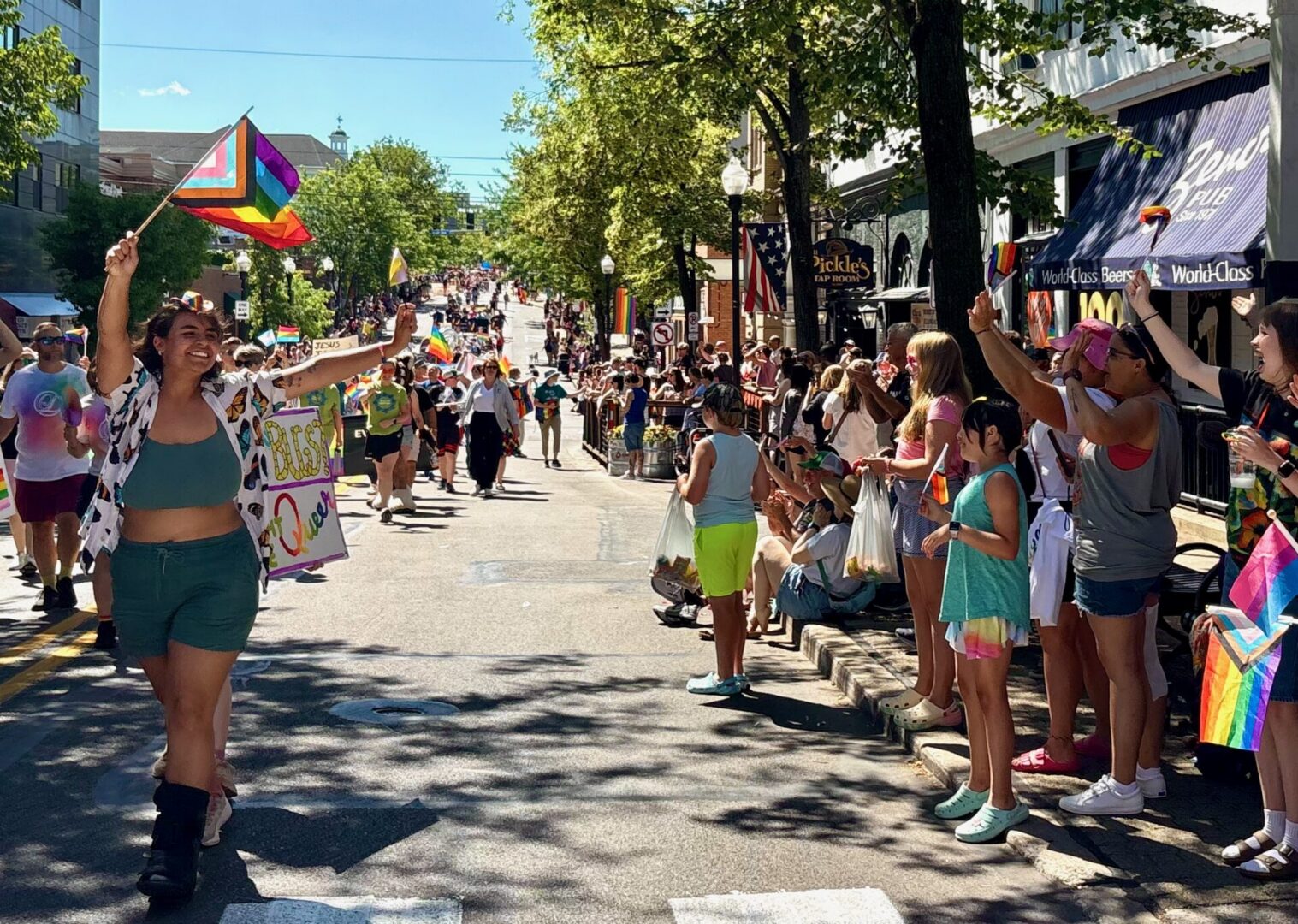
Thousands of people lined downtown streets and packed Sidney Friedman Park on Saturday for State College Pride, a daylong celebration that combined festivity, advocacy and community solidarity at a time when many LGBTQ+ advocates say rights and protections remain under pressure nationwide.
The annual event, organized by Centre LGBT+, featured a parade through downtown State College followed by a festival with live entertainment, speakers, vendors, community organizations and family activities.
The celebration drew participants from across central Pennsylvania and beyond, continuing the growth of an event that has become one of the largest Pride gatherings in the region.
This year’s Pride came amid what organizers and speakers described as an increasingly difficult national climate for LGBTQ+ people, particularly transgender individuals. Yet the mood throughout much of the day remained focused on visibility, belonging and celebration.

“At the end of the day, we know that we have every right to exist, because we are human,” an event organizer told attendees during opening remarks. “This is our celebration, not only today, not only in the month of June, but every single day that we live, and that we are our true selves.”
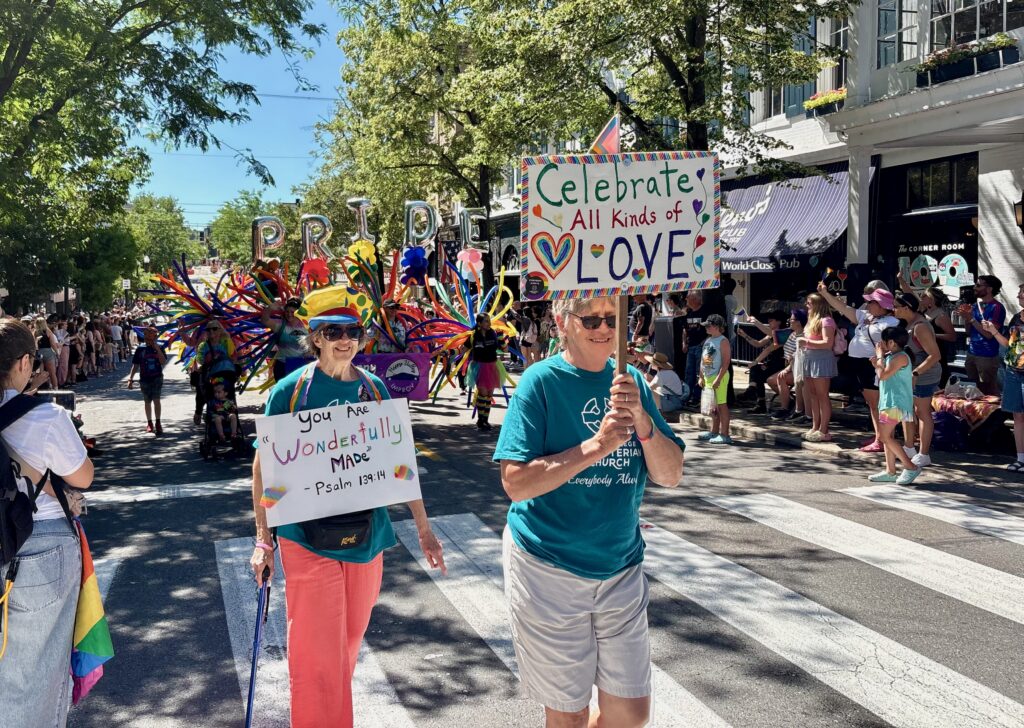
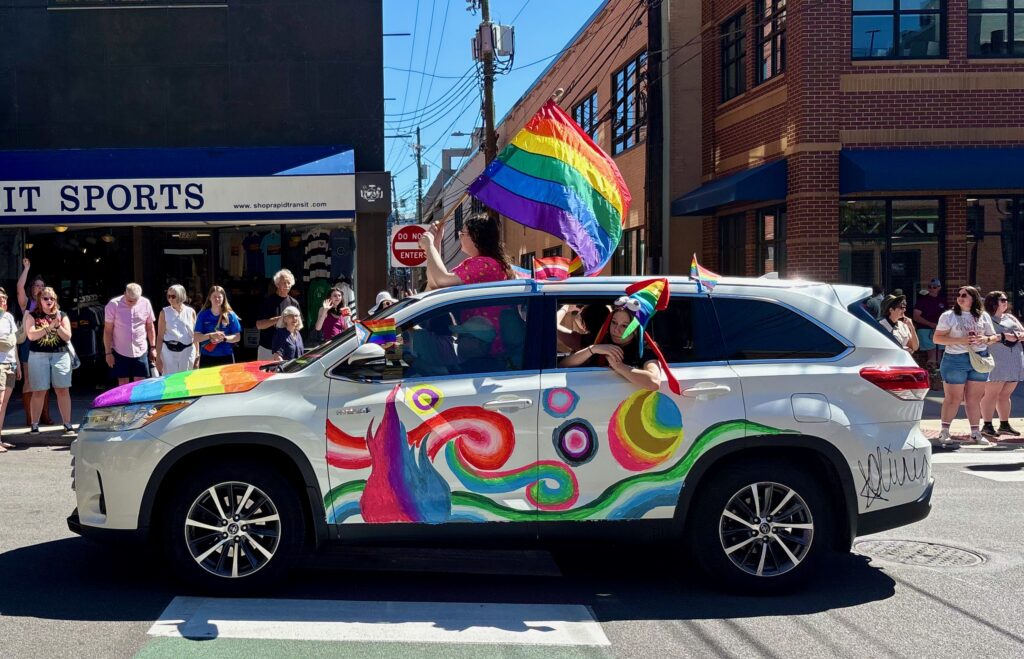
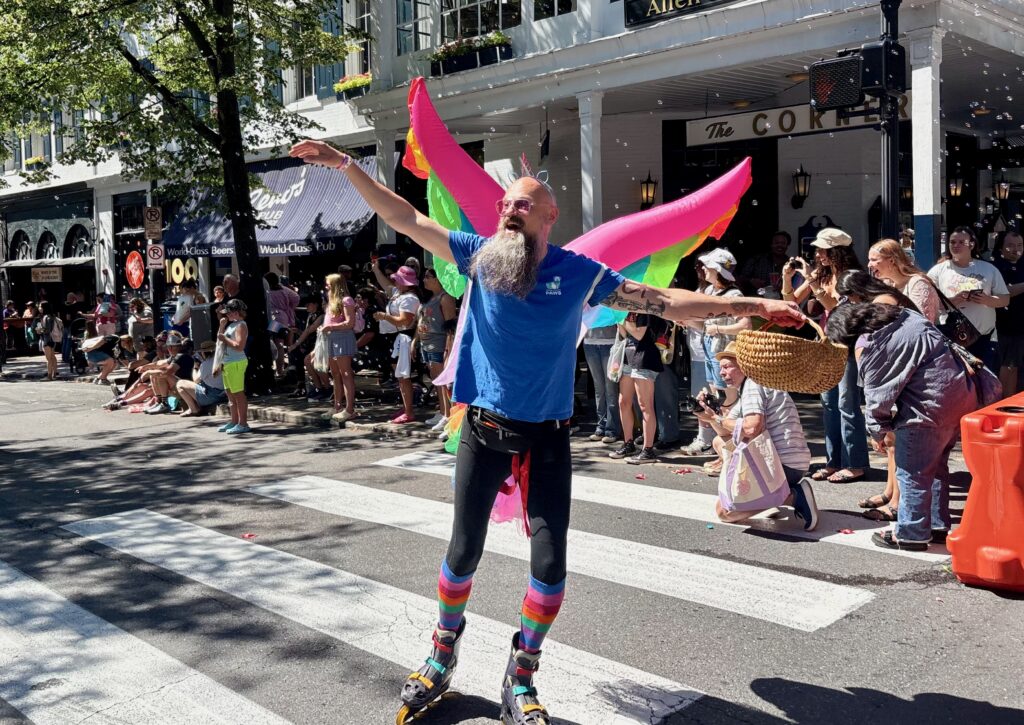
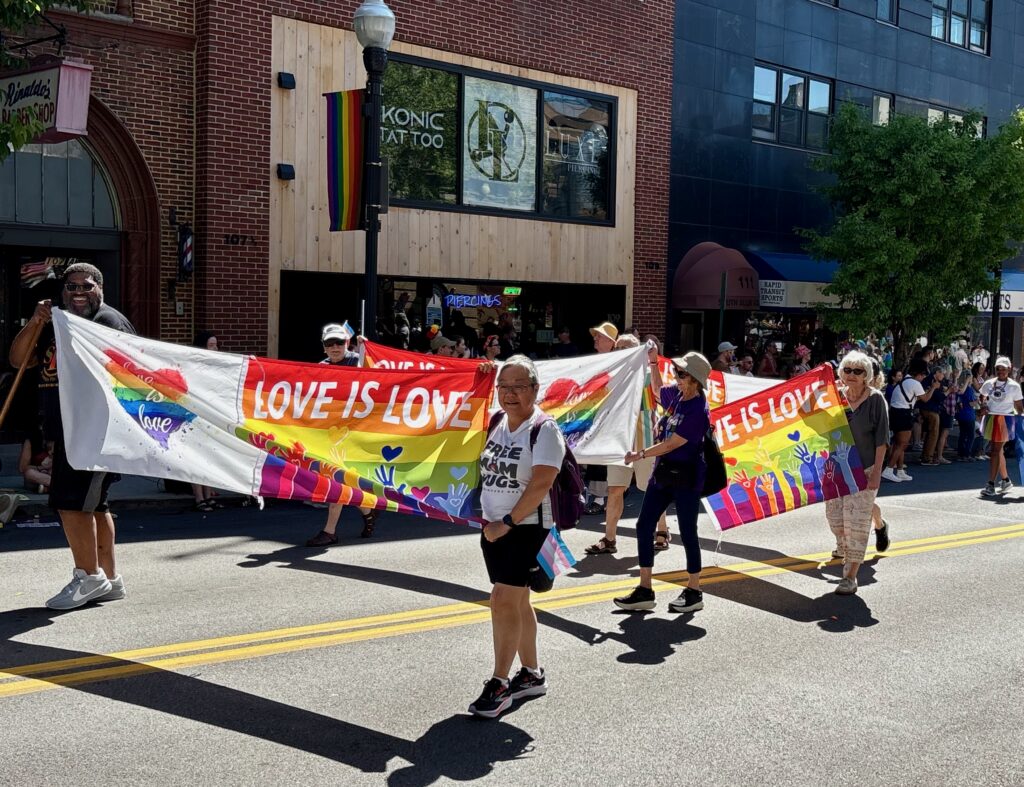
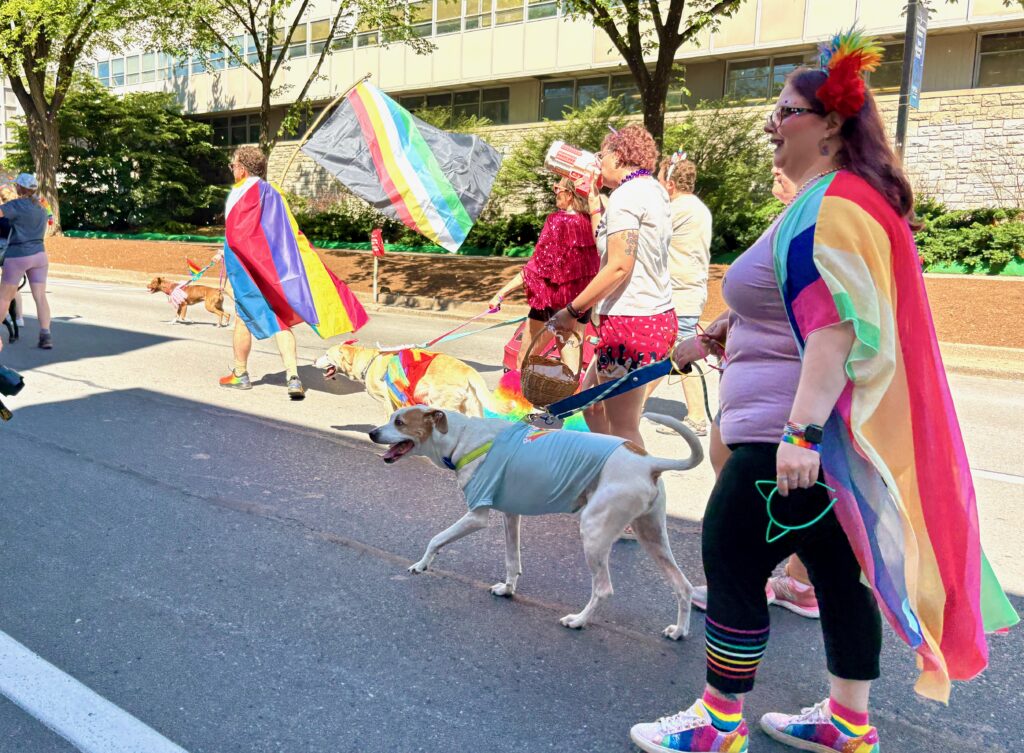
The message resonated throughout the day as rainbow flags filled downtown streets and parade participants marched through the borough before gathering at the festival grounds.
State College Mayor Ezra Nanes addressed the crowd before issuing a proclamation recognizing June as Pride Month in the borough.
Standing before a large audience gathered near the main stage, Nanes reflected on the growth of the event and the sense of acceptance it represents for many community members.
“There’s so many people registered for this march, and it is just such a joy,” Nanes said. “I feel so proud, actually, to see that our baby is all grown up…Isn’t today what you want to feel every day? This is how we want to feel – seen, accepted, empowered, protected.
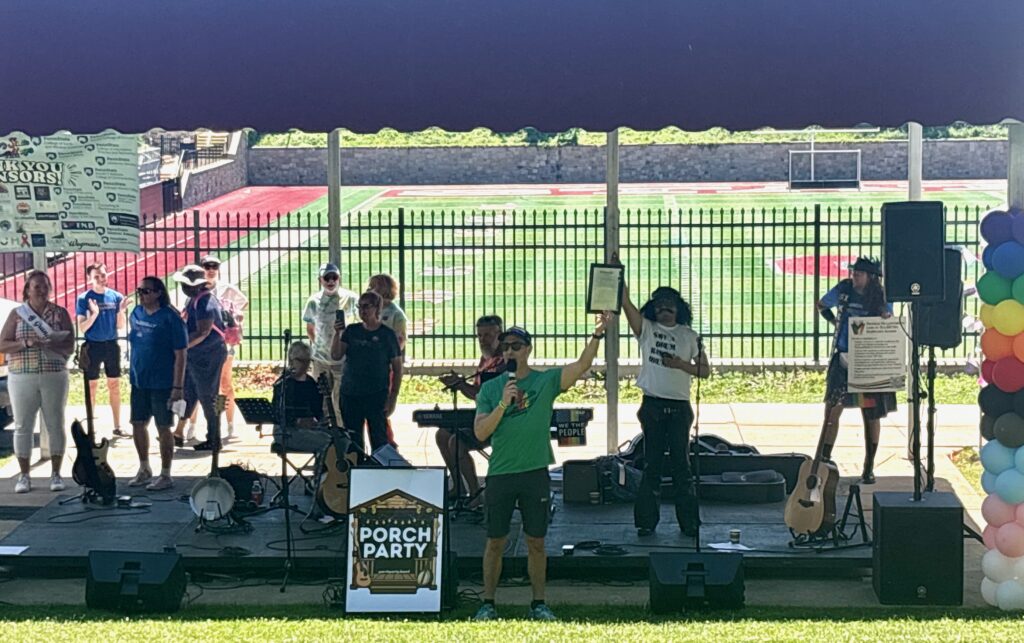
“The words that I say in this proclamation that are supported wholly by our State College Borough Council, by our borough administration and staff, mean something. They express our values. They express what this community is all about.”
Those values, he added, are reflected in borough policies and actions.
“They’re not just words,” he said. “They are backed up by laws and policies and decisions every single day to support the LGBT+ community here.”
Nanes also welcomed this year’s grand marshal, Downingtown Mayor Erica Deuso, calling her a “path breaker” whose public service has inspired others across Pennsylvania.
Deuso, Pennsylvania’s first openly transgender mayor and currently the only openly transgender mayor serving in the United States, delivered a keynote address that blended celebration with a call for civic engagement.
“Pride doesn’t happen by accident,” Deuso told the crowd. “Pride happens because people show up, they plan, they fundraise, they decorate, they table, they march, they sing, they dance, they protect each other, and they refuse to let anyone make us feel small…We’re gathering as people who’ve been told too many times to be quiet, be careful, be grateful, be patient, explain ourselves, justify ourselves and wait our turn. And yet, here we are.”
Deuso described Pride as serving multiple purposes.
“Pride is a celebration because we are still here,” Deuso said. “Pride is a protest because some people wish we weren’t, and Pride is a call to action because our rights don’t defend themselves.
“This administration didn’t invent cruelty towards LGBTQ people. That cruelty has been around for a very long time, but this administration has tried to turn that cruelty into policy, paperwork, budget, language investigations and fear, and into public permission. They’re targeting trans people in schools, they’re targeting gender-affirming care, identity documents, shelters. They’re targeting athletes, they’re targeting books and teachers, families, doctors, drag performers, and children who just want to grow up in peace.”
Throughout her remarks, Deuso stressed the importance of local communities in shaping the everyday experiences of LGBTQ+ people.
“When I became mayor, I didn’t stop being transgender,” Deuso said. “I didn’t stop being a wife, I didn’t stop being a worker, I didn’t stop being a good neighbor, and I didn’t stop being someone who knows what it feels like to have strangers debate your body, your name, your safety, and your dignity like it’s some abstract issue.
“Representation matters but representation alone isn’t enough. A transgender mayor matters, yes, but a transgender kid safe at school matters too. A non-binary worker with health care matters. A queer elder aging with dignity matters. A gay couple holding hands in public without checking the room first matters. A young person seeing a future for themselves matters. Towns like State College that say ‘you belong here’ matters.”
She later urged attendees to remain engaged in local government and advocacy efforts beyond Pride Month.
“Civil rights are national, but daily experience is local,” Deuso said. “It’s local when a school board decides whether LGBTQ students will be protected or targeted. It’s local when a borough council decides whether the Pride flag is a welcome symbol of the community or treated like a threat.”
Members of the LGBT + community, she added, should not be treated as a policy debate or wedge issue, but rather of people deserving, like everyone else, of safety, joy, housing, work, health care and community.
“You deserve a future,” Deuso said. “We celebrate loudly and beautifully. We celebrate every person who made it here, who came before us, and every person still finding their way, because we also remember that Pride has always been about that. Pride is a celebration, protest, remembrance and a promise, and Pride is work. Pride was never about asking permission. Pride is what happens when people who were told to disappear, gather in public and say, ‘You failed, we are still here, and we are not going anywhere.”
Corinne Goodwin, founder and executive director of the Eastern PA Trans Equity Project, encouraged attendees to celebrate while also remembering Pride’s origins as a movement for civil rights.
“Pride is about our joy,” Goodwin said. “It’s about when we get to celebrate our partners. It’s when we get to celebrate our elders.”
At the same time, she reminded attendees of the history that preceded modern Pride festivals.
“We need to remember Prides were protests,” Goodwin said. “The first Prides were riots.”
Referencing LGBT+ activists including Marsha P. Johnson, Sylvia Rivera and Stormé DeLarverie, Goodwin encouraged attendees to recognize those who fought for rights and visibility before them.
“We are here because they came before us,” she said.

Goodwin also urged festivalgoers to become more involved in advocacy efforts, highlighting ongoing legislative issues affecting LGBTQ+ Pennsylvanians.
“I want you to sing. I want you to dance. I want you to scream. I want you to celebrate today, and then tomorrow I want you to get back to work,” Goodwin said.
“There are 41 pieces of trans and queer-affirming legislation just waiting to be passed in Harrisburg, but they’re stuck. This includes legislation that would improve access to HIV care. This includes access to HRT care for trans youth and adults. This includes shield laws that would protect our health care providers. This includes reformation for the legal name change process.”
One of the festival’s newest attractions was an interactive public art installation created by the Art Alliance of Central Pennsylvania.
The project, titled “Each Piece Belongs: Why We Shine,” marked the first time organizers brought a large-scale community art activity directly into the Pride festival.
“This is our fourth year hosting this art piece during Pride, but previously we had just canvases that the community would paint hanging in the borough,” executive director of the Art Alliance of Central Pennsylvania Melanie Rosenberger said. “This year we decided to bring the art to the community and really open it up so that everybody has an opportunity to write what inspires them about Pride, how they want to be part of the community, and just messages of hope and love.”

Festival attendees of all ages contributed messages and artwork to the installation throughout the day. Rosenberger said she was encouraged by the response.
“It’s been really great to see so many people just really being inspired and making their mark here,” Rosenberger said.
The artwork featured candle imagery meant to symbolize community members serving as sources of light and support.
“We were trying to figure out what object we wanted to have here,” Rosenberger said. “I was thinking of just how we all can be a beacon for our community.”
Unlike previous exhibits, which asked participants to create individual canvases, the communal format lowered barriers to participation.
“Art is such an elemental activity,” Rosenberger said. “It really just speaks to everybody.”
Organizers hope to display portions of the finished installation at local businesses following the festival.
Peacekeepers Form ‘Love Wall’ as Protesters Cause Stir Nearby
While the celebration remained peaceful throughout the day, a small group of protesters gathered near portions of the festival carrying signs and shouting messages directed at attendees.
At one point, a protester yelled, “All you people are going to hell,” drawing attention from nearby festivalgoers.
To help prevent confrontations and maintain a positive atmosphere, Silent Witness Peacekeepers participated in State College Pride for the first time this year.
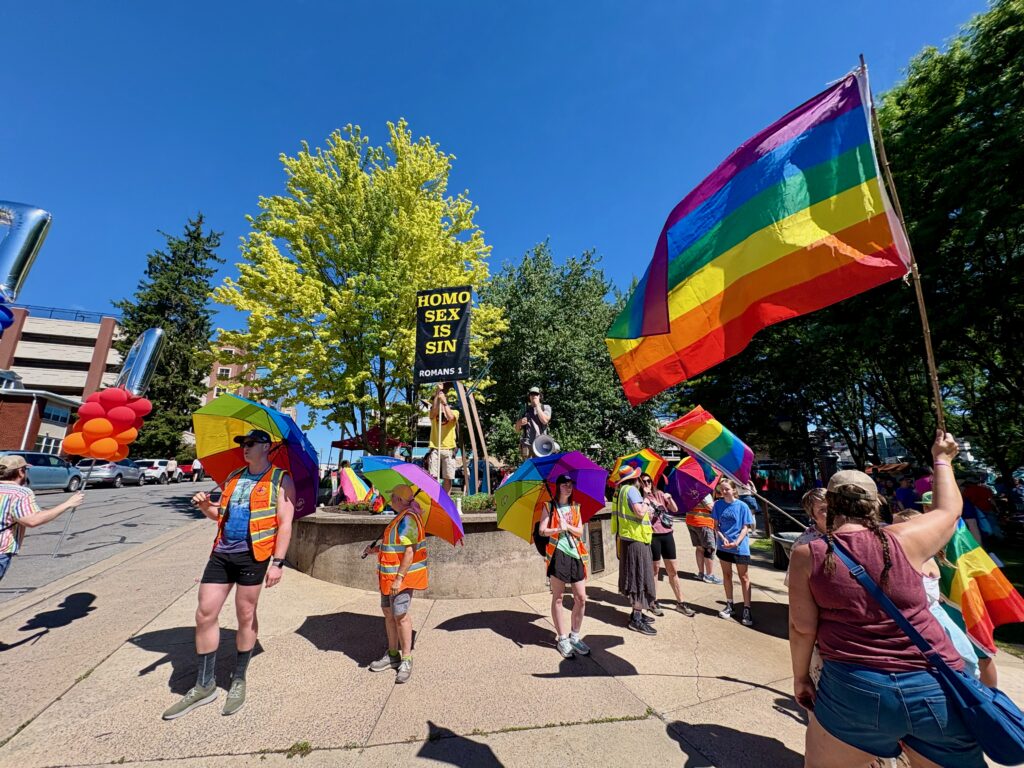
Volunteers formed what organizers called a “Love Wall,” creating a physical buffer between protesters and festival attendees. Equipped with rainbow umbrellas and trained in de-escalation techniques, peacekeepers worked to redirect attention back toward the celebration.
Connie Kossan, a local volunteer and first-time peacekeeper, said she was drawn to the effort after learning about the initiative.
“The Love Wall is really a group of peacekeepers, and our job is to make sure that the festivalgoers are enjoying themselves and that the protesters are given a little bit of a buffer zone between themselves and the festivalgoers,” Kossan said. “We’re focused on the festival, and we want to keep everybody safe and happy.”
She said volunteers were trained to avoid direct engagement with protesters and instead encourage attendees to continue enjoying the event.
“We’d rather have festivalgoers enjoying themselves, listening to the love part of the festival and not the hate part,” Kossan said. “If we can help encourage folks to steer toward the positive and the sunshine and the light and the family, that’s where we find joy.”
“It was an opportunity to do something to show the community that, yes, allies are here, we’re supportive and we’re not going anywhere,” she said. “All the hatred is not pushing us away. The hatred is actually bringing us in and drawing us closer.”