
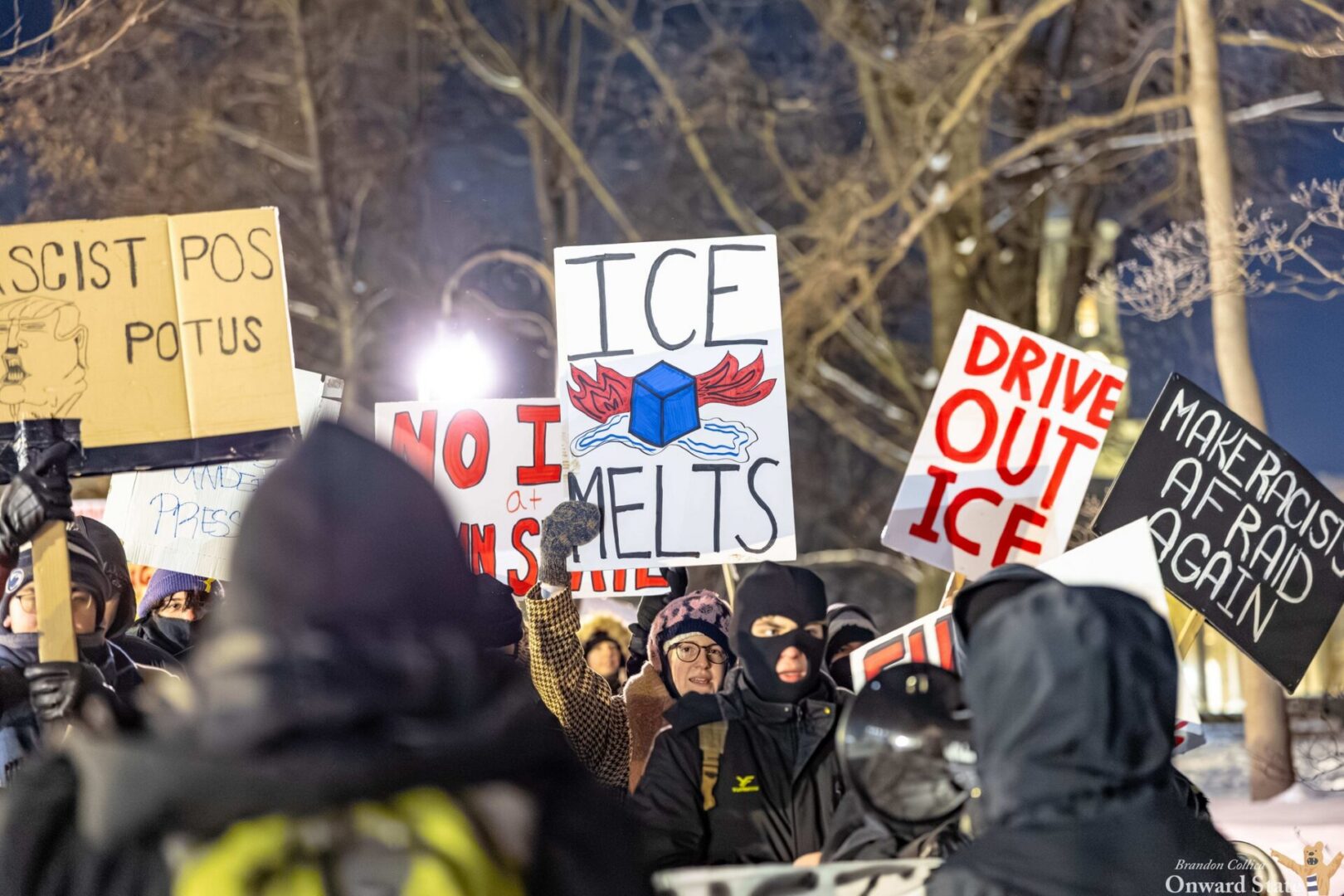
Sen. Dave McCormick’s response to the killings in Minneapolis is not just inadequate—it is indefensible.
Two innocent people were killed by federal agents in broad daylight. They were not suspects, not aggressors, not threats. Video footage, viewed by millions, shows no imminent danger and no justification for lethal force. Yet instead of demanding accountability, Sen. McCormick rushed to defend ICE and redirect scrutiny away from the agents involved.
That choice matters.
The senator cites dramatic increases in assaults and threats against ICE officers as if those numbers exist in a vacuum. They do not. Public outrage did not materialize out of nowhere—it is a reaction to years of unchecked cruelty and documented abuses. ICE has used a five-year-old child as bait. It has illegally detained a two-year-old and sent her across state lines. It has targeted families seeking medical care and fired chemical agents at peaceful protesters exercising their First Amendment rights.
This is not “upholding the rule of law.” It is the erosion of it.
Equally troubling is Sen. McCormick’s dismissal of protesters as “paid activists.” Pennsylvanians and Americans across the country are showing up because conscience demands it—not because anyone is paying them. Suggesting otherwise is lazy, insulting and designed to delegitimize dissent.
Anger is not the problem. State violence without accountability is.
History will remember who demanded justice—and who chose to excuse the inexcusable.
Kathleen Smith
Boalsburg
As anticipation builds around the opening of Happy Valley Casino, it is imperative that both residents and policymakers look behind the bright lights and promised economic benefits and take into consideration the long-term consequences of a casino designed to groom repeat customers.
Today’s casinos are no longer simply a place where one occasionally visits to try their luck at chance. Rather, modern casinos are carefully engineered to encourage frequent and prolonged gambling. Consider the loyalty programs and player cards. These “perks” are integral to this design, as they enable casinos to track patrons and identify the easy mark — people who spend the most, are the most likely to return, or who may be the most vulnerable. Once a mark has been made, those customers are then inundated with incentives that have been tailored to them, encouraging future visits with “rewards” such as free meals, match play, etc.
Gambling addiction often starts out small, almost flying under the radar until it is too late. Small wins, free play options, promotions geared towards the client – all of these tactics normalize repeated visits. By dangling such carrots, casinos tamp down the natural stopping point that might help people step away. Over time, the occasional fun night out can turn to compulsion.
For local residents, the risk of gambling addiction is magnified. Accessibility increases frequency, and frequency increases harm. Family conflicts, mental health issues, financial stress, and problem gambling do not only impact an individual alone – they affect households, places of employment, schools and more. Casinos gain revenue while the community bears the costs of addiction.
For residents considering a visit, caution is advised. Avoid loyalty programs that are designed to entrap you. Set firm limits and stick with them. Being cognizant of the dangers is the most effective safeguard against addiction and harm from gambling.
How will State College fare if habitual gambling continues to be encouraged? The choices we make – individually and collectively – will shape the community long after the novelty of Happy Valley Casino wears off.
T. Deljanovan
Sunbury
Cold as ICE
Do you remember grade school? I remember that’s when I learned my powers, such as to do naughty things when no one was watching or to break a window in an old factory just because it was there. I learned, too, however, my power to make deliberated choices about what I was doing, and to feel shame.
As a grownup now, I can only think of burly ICE orderlies, masked to defeat civilian eyes of accountability, and to evade shame. Masked also from themselves as individual consciences in their uniformity. Just following orders. You don’t have to think about whether it’s right or good; just do it. They are “allowed,” even ordered, to be rough and violent, to do the nasty, mean, unfair things that their teachers and preachers forbade. Delighting in an animalistic roughness without laws or deliberation. There must be a deeply invigorating strength in this “lawful” lawlessness. Like being the naughty brutish bully you imagined in grade school, but now, the president says, “Go for it!” A license to act out your most hateful and base impulses. Like unleashing the dogs of war, abandoning civility and restraint.
I myself feel legally just as military veteran Senator Mark Kelly does and as the Uniform Code of Military Justice demands of each citizen who wears our military uniform—you must not comply with illegitimate orders. So commands the UCMJ. And beyond and beneath that legal requirement lies our moral and civic responsibility to treat others as we would wish to be treated ourselves, and to live peaceably as a country. Though I do not know whether the UCMJ at the moment applies to ICE troops, it certainly should.
ICE agents are mercenaries without legitimate or moral restraint. They do not deserve our support. They are behaving as naughty bullies from grade school without restraint from teachers and preachers, but in tactical gear now. We must not honor them or tolerate their unprincipled brutality.
I am a military service veteran, honorably discharged, and a federal civil servant of many years.
Paul Dombrowski
Bellefonte
Universal Health Care: The Moral Cause of the Next Generation
In a letter to President Barack Obama in May 2009, the late U.S. Sen. Edward M. Kennedy made a bold prediction. “While I will not be there when it happens,” Kennedy wrote, “you will be the President who at long last signs into law the healthcare reform that is the great unfinished business of our society.”
While Kennedy would eventually pass away in August of that year, his unfinished dream and lifelong commitment to a national health insurance plan would continue long after he was gone. On March 23, 2010, Kennedy’s decades of work would culminate in the signing of the “Patient Protection and Affordable Care Act” (ACA), providing federal subsidies to help low- and middle-income Americans purchase private health insurance through an online marketplace. The results of this program were outstanding: 24 million Americans were insured under the ACA in 2025, with significant gains in both quality of care and increased accessibility for our nation’s most vulnerable citizens.
In 2026, however, we have seen Republican majorities in the United States House and Senate block the renewal of the ACA enhanced premium tax credits, causing health insurance premiums and out-of-pocket costs to skyrocket for millions of American families. This was a shocking jolt to the American health care system, once again proving that not only is comprehensive reform still needed, but that it remains one of the most pressing moral causes for the next generation of Americans.
That is exactly why the Pennsylvania General Assembly must pass the Medicare for All in PA Act of 2026. This legislation would establish a single-payer, improved “Medicare for all” system in Pennsylvania, providing comprehensive health insurance for every resident of the commonwealth with NO copays, NO deductibles, NO premiums and NO out-of-pocket costs. In simple terms, this means that the average Pennsylvanian will never again be forced to choose between necessary medical care and rent, groceries, heat or a monthly car payment.
Tell your members of the state House and Senate to protect access to affordable health care in this Commonwealth by supporting the Medicare for All in PA Act of 2026. Find your legislators today at palegis.us/find-my-legislator.
In Solidarity,
Gavin S. Griffin
President, Healthcare4AllPA
The Dangers of Gambling
So many of us feel bullied and harassed by dangers of gambling on social media, gambling advertised increasingly on TV commercials, even gambling machines in local convenience
stores, and now soon in a casino just minutes from downtown State College!
Gambling is as vile a temptation for the most vulnerable of us as alcohol and drugs, escalating violent behavior. None of these irrational obsessions solve our most dire crises as individuals even though they seem to misleadingly promise easy but artificial euphoric remedies.
The gambling industry’s virulent and well-organized campaign to exploit the most vulnerable among us heightens alcohol consumption, and inevitable drunk driving. Corporate greed rigorously promotes such sinister underpinnings in our culture, from perverse sports betting to alcohol-induced addictive behaviors, absent of all reason. Inevitably, such out-of-control behaviors lead to psychological and financial hardship, ruin, even suicide. The gambling industry ruthlessly preys on those of us who are the most susceptible as its primary targets—a power play that we as a community must not succumb to.
The book “Everybody Loses” by Danny Funt exposes that it is intentionally impossible to win against a predatory gambling industry that has strategies to limit gamblers’ successes. The surging rate of youth gamblers is staggering. Gamblers comprise 30% of Americans, and these bettors must begin to recognize that less than 1% win. There is an industry/casino strategy in place to make sure it is impossible for winners to continue to win. Even sports owners acknowledge that sports betting treats athletes like chattel, and the credibility and integrity of sports is at stake when games are found to be fixed and players accused.
Micaela Amateau Amato
Boalsburg
More Letters to the Editor
View all Letters to the Editor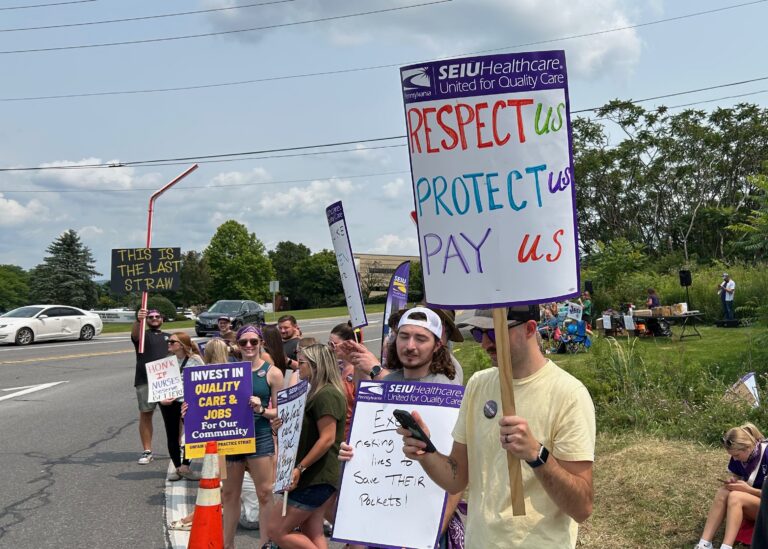
Letters: Standing With Mount Nittany Workers This Labor Day; AI Needs a Constitution
I’m a proud union member who works just down the street from the Mount Nittany hospital workers still fighting for a fair contract. With Labor Day coming up, I wanted […]

Letters: ‘Convenience Gambling’ at Pa. Mini-Casinos Becoming Obsolete; GT’s Empty Agricultural Promises, Failure to Support Healthcare
Despite significant increases in July tourist traffic to the State College area due to Arts Festival and the People’s Choice Festival, as well as further additional tourist traffic to the area due to hosting the State Games […]
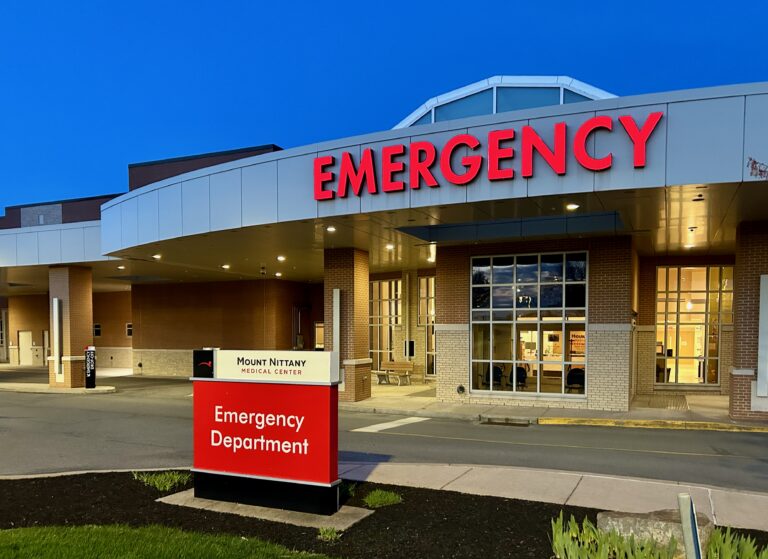
Letters: Mount Nittany Medical Staff Committed to Community Care; Casino’s Underwhelming Revenue
The Medical Executive Committee is saddened to hear that SEIU Healthcare Pennsylvania has reportedly voted to issue a strike notice in response to Mount Nittany Medical Center’s latest proposal. As […]


