

While the premiere of composer Thomas Beveridge’s Yizkor Requiem was more than two decades ago, the one-of-a-kind musical masterwork is still making head waves. The piece will finally have its Pennsylvania premiere April 10 during the State College Choral Society’s “Remembrance” concert at Pasquerilla Spiritual Center.
According to Beveridge, Yizkor Requiem “seeks to combine the memorial services of the Jewish and Catholic religions. It is intended to illustrate musically the common themes of the two rituals, to stand on the sacred bridge between them, and to show that in many ways they express the same hopes, fears, and ideas.”
T&G: I understand you do much more than compose — you sing, you play the oboe as well as take on the roles of teacher and arranger. How did you find your love for music?
Beveridge: Well, my father was a professional musician. He was an organist, so I grew up playing the piano with him. Actually now, in addition to what you mentioned, I’m mainly a choral conductor. That’s my main occupation at this point.
T&G: When you aren’t composing or arranging, what do you do day to day?
Beveridge: I have a large choral society called New Dominion Chorale, which is based in Northern Virginia. It’s actually the largest in the Washington, DC, area. That was the group that gave the premiere of my Yizkor Requiem. Lately, I’ve been doing mostly arrangements for choruses of existing melodies, which I enjoy doing. I also like to get out and ride my bike, and I do a lot of reading.
T&G: What initially inspired you to compose Yizkor Requiem?
Beveridge: It’s actually an interesting story. My father was, as I said, a professional musician who in midlife became an Episcopalian priest and taught at the Virginia Theological Seminary. He was very interested in the ecumenical concept, especially the relationship between Judaism and Christianity. When he retired from the seminary, he and my mother went to Israel for two years where he studied Hebrew at an ecumenical institute. When he died, I wanted to write a piece of music that was a tribute to his ideas. So the result was the Yizkor Requiem, which is an attempt to look at the Jewish burial service and the Catholic requiem mass. It’s actually the only piece of music that’s ever tried to do this. It has a canter who speaks in Hebrew and Arabic, and the chorus sings in Latin and English. It’s been very successful with over 25 performances throughout the world.
T&G: You mentioned it took you an “unusually long time” to compose Yizkor Requiem. What goes into composing a piece like this besides inspiration and time?
Beveridge: Usually I write things a lot faster, but I found out why a composer only writes one requiem, because it’s very, at least in this particular case, personal as I was trying to do something in honor of my father. You have to do a lot of research of the texts. Most people don’t know that the Christian liturgy, especially the requiem, has its origins in the synagogue. So it took some research to try to figure out what the appropriate texts were.
T&G: You’ve composed quite a few works — more than 600. Do you have a favorite?
Beveridge: [The Yizkor Requiem] is my masterpiece. It’s the one piece I want to be known for. I’ve written symphonies and operas and a lot of songs, but this is the piece that’s going to endure. I won’t ever write anything else like this — it’s a very special piece!
For tickets and information on State College Choral Society’s “Remembrance” concert April 10 at Pasquerilla Spiritual Center, visit scchoralsociety.org.
More Community & Entertainment
View all Community & Entertainment
January Is a Call to Action to Respond to Stalking
This column by Centre Safe Executive Director Jennifer Pencek originally appeared in The Centre County Gazette. When we talk about acts of interpersonal violence, oftentimes people will focus on sexual […]

Busy Weekend of Fall Festivals and More on Tap Around Centre County
The weekend of Sept. 29-Oct. 1 is packed with activities around Centre County, including fall festivals, Oktoberfests, fairs, concerts and more. Check out some of the weekend highlights below. For […]
Downtown State College Cheesesteak Shop Sets Opening Date
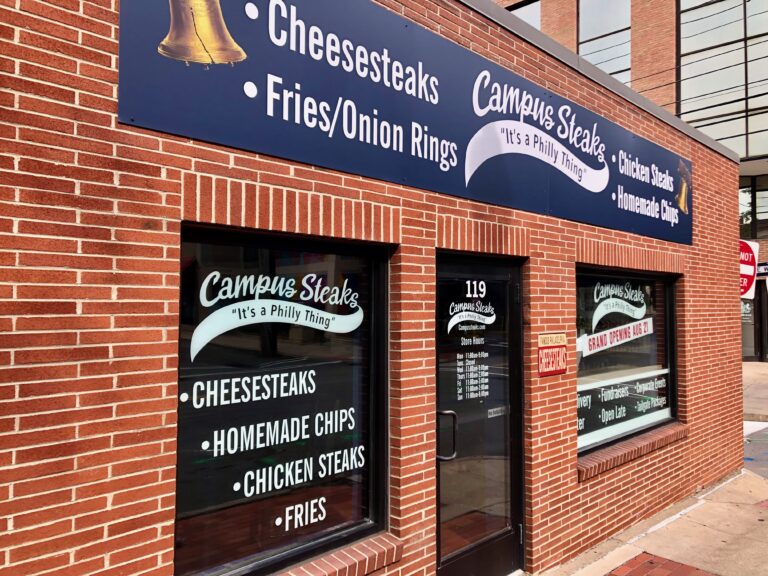
A new cheesesteak shop that promises a taste of Philly in downtown State College has set an opening date. Campus Steaks plans to hold a grand opening on Aug. 28 […]


