
Big, sprawling fairs are anachronisms, as Garrison Keillor has said. They’re vestiges of another time — popular despite the modern times.
‘So what do you go to the fair for?’ friends and acquaintances ask this time of year. Reasonable enough. Different people go to the Centre County Grange Encampment and Fair for different things: the live music, the livestock shows, the produce and canning contests, the camping, the food.
‘The food’ is usually my stock response, followed by — of course — the latest amended litany of must-eat suggestions: the peach dumplings with cinnamon ice cream, the pork sandwiches, the monkey bread. The Cuban sandwiches are pretty worthwhile, too.
And the deep-fried Oreos — they’re like a low-level street drug: Maybe a newcomer might experiment with one or two, though I wouldn’t advocate making them a habit.
But the truth is, I realized this past weekend, the food isn’t my prime motivator. And I imagine the same goes for plenty of others who make the same claim.
The Grange Fair — don’t laugh — is a completely sensory experience, packed with smells, sounds and sights that have barely changed since my childhood.
A certain comfort rests in those nuances. It’s the crackle of a voice over the loudspeakers, the literal bells and whistles of the carnival-style games, the loud rumble of a tractor competing in a pull.
It’s the sound of a fryer that’s bubbling hot, the mooing of a cow, the authoritative thud of a portapotty door swinging shut.
And the smells — my God, the smells. No exaggeration: They span the American agricultural experience, from the hot-cooked classic dishes of The Boarding House restaurant to the farm-air atmosphere in the livestock barns. Tent City’s light mustiness, the bright freshness of the fruit-and-vegetable displays, the steam rising from a row of hot sausages — nothing here lacks authenticity.
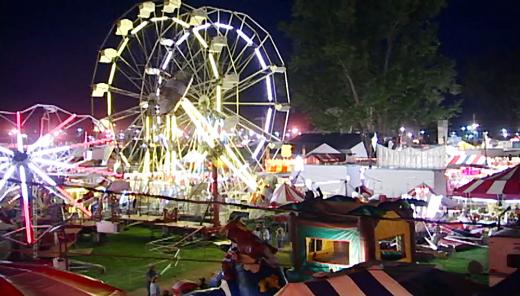
The visuals, too, breed a happy sense of familiarity: the soft face of a dairy cow; the steady and slow rotation of a ferris wheel; the warm and tiny lights that outline tents and vendor booths. Light waves of dust catch the wind at the tractor-pull grounds.
There’s a nuanced simplicity in the beauty of the fair — a spirited tradition of reunions and togetherness that’s not at all fabricated, but rooted in a shared history.
Perhaps it’s not despite the times — these modern times — that we’re driven to the Grange Fair. Perhaps, at least in part, it’s because of them. Perhaps we crave that simplicity, that authenticity, that slowed-down sense of tradition and collective identity.
Maybe we hunger for that more-gentle opportunity to sit, linger over pierogis, breathe in our surroundings, bump into friends.
Keillor is right: The fair is an anachronism. But where would we be without it?
Related content: Check out StateCollege.com’s Grange Fair page.
More Columns
View all Columns
Greek Life at Penn State: Plus Ça Change
It was back to business as usual among the Woo people last weekend, which meant very loud outdoor parties, very many shirtless young males and very many young females wearing […]

It’s Time to Watch Penn State Linebacker Tony Rojas… Again
Watch Tony Rojas. He’ll be back at linebacker for Penn State on Saturday against Marshall, the culmination of a journey that seemingly took him everywhere, but ultimately brought him back […]

Hook: Weather Wonders and School Stress
Six days a week, my wife and I like to get out for a walk around the neighborhood. We skip Sunday – a day of rest and all – but […]


