
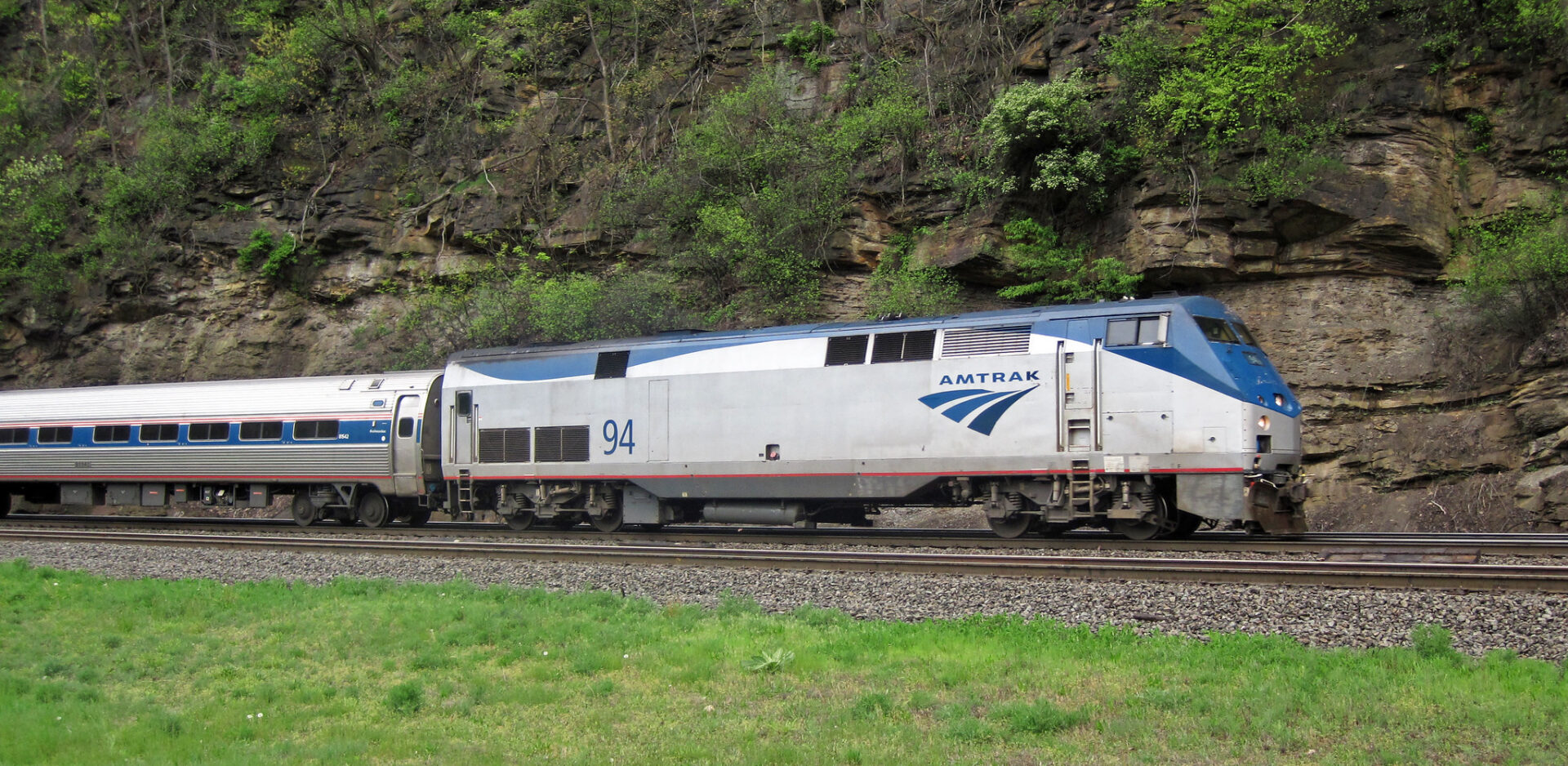
A draft study evaluating demand and options for access to passenger rail service in Centre County is complete and open for public feedback.
The Centre County Metropolitan Planning Organization is accepting comment on the Centre County Passenger Rail Access Study through Monday, Aug. 17. Public open house sessions will be held on Tuesday, Aug. 4, from 3 to 4:30 p.m. and 6 to 7:30 p.m. at the Centre Region Council of Governments building, 2643 Gateway Drive, State College.
The study revisits options presented in the 2014 Keystone West Feasibility Report and Service Development Plan with a more local local emphasis to assess demand for passenger rail service, identify the most sustainable options to improve access and evaluate the willingness and ability of required partners to provide that access, according to the CCMPO.
It also will provide a recommended implementation plan identifying partners, costs, required agreements and potential funding sources.
Included in the draft study are four alternatives.
Two involving expanded bus or shuttle service to increase access to existing passenger rail are less expensive and could be implemented in the short term. The other two, which would either create a rail shuttle to existing stations or direct passenger rail through the State College area, are longer term and much higher cost options.
EXPANDED INTERCITY BUS SERVICE
This alternative would “expand existing intercity bus service between Centre County and Harrisburg through additional daily trips, increased service frequency, enhanced passenger
amenities, and coordinated connections to Amtrak, Greyhound, local transit and major destinations throughout the corridor,” according to the study.
It would leverage existing high travel demand and offers flexibility in service frequency, providing direct transportation to regional and Amtrak rail with the possibility of through-ticketing could create seamless passenger connections.
The study notes that “previous services experienced financial challenges and may require ongoing public-sector support.” Travel demand also can fluctuate significantly and travel times are subject to traffic and road conditions. Schedule coordination among bus operators, Amtrak, local transit agencies and others would be particularly important.
Expanded bus service has high feasibility and lower costs, with an estimated $4 million for capital costs, including additional buses and other needs, and estimated operating costs of $100 to $150 per hour. It could also be implemented in one to three years.
From the summary: “While the concept benefits from lower capital costs and operational flexibility, long-term success will depend on sustainable funding, coordinated operations and effectively managing highly seasonal travel demand.”
DEDICATE SHUTTLE TO AMTRAK
This option would “establish a dedicated shuttle bus service from Centre County to nearby Amtrak stations, including Altoona and Harrisburg,” and “would provide dependable connections to Amtrak trains and broader destinations across Pennsylvania and the Northeast.”
Using intercity coaches, the shuttles would provide direct connections to nearby Amtrak stations and offer integrated ticketing without major rail infrastructure or station construction costs. It would have flexible service levels and build on existing demand.
Challenges are similar to the intercity bus expansion, including operating funding needs and fluctuating seasonal demand. Success would depend on close coordination with Amtrak schedules and ticketing systems, and would also have more capital costs for the fleet and facility, as well as limited revenue potential.
Capital and operating costs are projects as “low to moderate,” and the service could potentially be implemented in one to three years.
From the summary: “A dedicated shuttle bus service from Centre County to nearby Amtrak stations offers a practical, lower-cost strategy for improving passenger rail access.
With strong demand and the potential for through-ticketing and flexible service, success will depend on sustainable funding, effective coordination and managing highly seasonal travel demand.”
SHORT LINE RAIL SHUTTLE
This option would “operate a short-distance passenger rail shuttle connecting Bellefonte, State College and Tyrone using self-propelled rail vehicles [such as those powered by on-board diesel engines or similar equipment],” according to the study.
The shuttle would utilize and improve existing track too provide frequent service and timed connections between Centre County and Amtrak service in Tyrone, offering the opportunity to serve multiple locations while being unaffected by issues that can arise with highway travel. It could also complement future Amtrak expansion in Pennsylvania, encourage economic development around stations and attract passengers less inclined to use buses.
It would, however, require significant capital investments (track improvements, station construction, signaling upgrades, rolling stock acquisition and more), as well as likely ongoing public-sector operating subsidies. Service would require coordination with railroad owners and operators, and travel demand would be influenced by Amtrak service levels and frequencies.
Projected capital costs are high at $50 million to $150 million, as are operating costs of $6 million to $12 million per year. With costs and an estimated time to launch of three to eight years, the rail shuttle alternative is considered to be of moderate feasibility.
From the summary: “The concept offers the potential for a convenient one-seat rail experience and long-term economic development benefits. However, substantial capital investment, railroad coordination, infrastructure upgrades and ongoing operating subsidies would be necessary to make the service feasible.”
DIRECT PASSENGER RAIL SERVICE TO STATE COLLEGE
The most expensive and complicated alternative would “establish a new passenger rail connection directly into State College via the Amtrak Station in Altoona along the Nittany and Bald Eagle Railroad,” according to the study.
Direct rail access to State College and Penn State has strong interest from community members and regional commuters, and would offer a one-seat ride without transfers.
It would have high capital costs for missing right-of-way, track construction, signaling and a new station in State College with high-level platforms, parking and traffic considerations. Agreements with multiple railroads would be required, and instituting passenger service could push freight movement to nighttime operation, which would add costs to the freight operator.
Costs are very high, with an estimated $250 million to $500 million or more in capital investments and $15 to $20 million in annual operating subsidies. The study says direct service is “difficult to justify based on special events’ needs,” and identifies the option as a “long-term opportunity” that would take 10 or more years to implement.
From the summary: Direct passenger rail service to State College offers significant benefits in convenience, visibility, and ridership potential. However, major infrastructure
gaps, complex rail coordination, and high capital and operating costs make this a substantial long-term investment requiring significant funding and multi-agency collaboration.”
* * *
Draft study reports and findings are available on the COG website or in hard copy at the Centre Region Planning Agency (2643 Gateway Drive, Suite 4, State College) and the Centre County Planning and Community Development Office (CCPCDO), Suite 340 of the Willowbank Office Building, 420 Holmes Street, Bellefonte.
Comments can be submitted online, by email to gkausch@crcog.net or in person at the open house.
More Local News
View all Local News
With Strike Imminent, Mount Nittany Updates Patients and Takac Urges Return to the Bargaining Table
Approximately 950 Mount Nittany Medical Center employees are poised to begin a five-day strike on Monday, but a Centre County lawmaker is urging a return to negotiations in hopes a […]

Centre County Woman Accused of Setting Car on Fire, Damaging Old Gregg School
A Penns Valley woman was arrested for allegedly setting her car on fire and damaging the Old Gregg School community center after an altercation at a nearby bar on Thursday […]

Woman Charged With Assaulting ICE Officers During Her Arrest in State College
A woman indicted by a federal grand jury is on Thursday is accused of assaulting Immigration and Customs Enforcement officers while they arrested her earlier this month in State College. […]


