
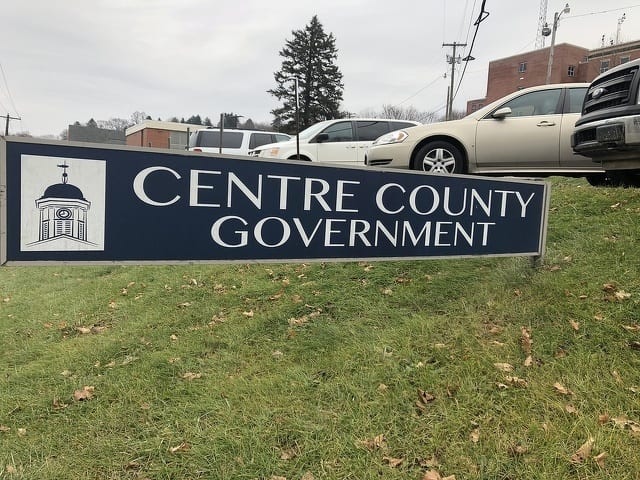
Centre County will receive $14.7 million from Pennsylvania’s share of federal funding meant to address the wide-ranging impacts of the COVID-19 pandemic.
The state Senate on Thursday approved a plan for allocating $2.6 billion of the $3.9 billion awarded to Pennsylvania as part of the Coronavirus Aid, Relief, and Economic Security (CARES) Act, which was passed on March 30.
Gov. Tom Wolf signed the legislation on Friday.
Centre County’s share is part of $625 million for the 60 counties that did not receive a direct subsidy from the federal government, with funding awarded based on population. Allegheny, Bucks, Chester, Delaware, Lancaster, Montgomery and Philadelphia counties all received direct aid from the CARES Act.
Counties can use the funding for a variety of purposes, such as stabilizing budgets, purchasing personal protective equipment, assisting local government entities and providing grants to small businesses.
The statewide distribution also includes $692 million for long-term living services providers, $260 million for providers of intellectual disability and autism services, $225 million for small business assistance, and $175 million for rent and mortgage assistance for low- and middle-income families.
It provides $150 million for school districts to address pandemic-related challenges, $116 million for child care services, $72.2 million for higher education student assistance programs and state universities, $50 million for fire company and EMS grants, $40 million for agricultural and food security programs.
The legislation also designates $28 million for community programs, including domestic violence programs, homelessness assistance and legal services., as well as $20 million for cultural and museum organizations and $9 million for early-education programs.
“Throughout Pennsylvania and throughout the nation, people are hurting like no other time in my lifetime,” said state Rep. Kerry Benninghoff, R-Bellefonte. “These federal funds were targeted carefully and purposefully to help those who need it most. I pray it will provide much-needed relief.”
The Senate also passed a $25.8 billion interim budget for 2020-21, which funds a few line items for the full year, but most government services for five months as the state faces uncertainty about the long-term financial effects of the pandemic. Wolf is also expected to sign the budget plan.
Among those areas receiving full-year, level funding are food security programs, school districts and state-owned and supported colleges and universities, including Penn State.
“Today we took action that will keep the lights on,’ said state Senate Majority Leader Jake Corman, R-Benner Township. ‘We had bipartisan support to bring some clarity during what is certainly an extremely uncertain time. We took action to fund critical state services and directed CARES money so we can help mitigate existing economic struggles. When the financial picture clears up, we will return and finish the job. This is what it means to govern.”
For Penn State, the appropriation will include $242.1 million for its general support appropriation, $54.96 million for Penn State Agricultural Research and Extension, and $26.74 million for Pennsylvania College of Technology.
Penn State President Eric Barron thanked legislators for maintaining level funding for the university among the economic challenges of the pandemic.
“Given the significant financial impact of the pandemic on Penn State’s operations and the economy as a whole, the importance of our appropriation, especially for the thousands of Pennsylvania students and their families who directly benefit from state support, cannot be understated,’ Barron said. ‘The state’s commitment to maintaining our funding levels for the next 12 months provides a measure of stability, and together with our ongoing actions to reduce spending and identify cost savings across the institution, will help us to continue to meet our students’ needs, support our faculty and staff, and positively impact the lives of Pennsylvanians.”
More Local News
View all Local News
Alleged Penn State Frat Drug Ring Leader’s Brother Charged After Being Found With Cocaine on Boat in Centre County, Authorities Say
The brother of the alleged leader of a cocaine trafficking ring operating out of two Penn State fraternities is facing misdemeanor drug charges of his own after an incident at […]
3 Downtown State College Streets Set to Become One-Way for Pilot Program
Three downtown State College streets will be converted to one-way starting next week in a pilot program aimed at increasing parking spaces and loading zones. Beginning Aug. 31, Hiester Street […]

Growing Wisely: How the Centre County Farmland Trust Helps Protect Open Spaces and Preserve Local Agriculture
The Centre County Farmland Trust explains how conservation easements, zoning and community involvement can shape smarter growth.


