
This is the 26th in a 33-day series about Penn State football program leading up to the Blue-White Game on April 20. Click here for past installments in the series.
Bill O’Brien is normally rather tight-lipped when discussing most intricacies of his offense.
Understandably so. It is what helped him climb the ladder from low level assistant with the New England Patriots to Tom Brady’s offensive coordinator and now one of the brightest offensive minds in college football.
Penn State’s head coach has no reservations about sharing his thoughts on much of the returning experience at skill positions or making an already comprehensive playbook even thicker, but play selection and run-pass ratio is usually an off limits topic. Inquire about it during a game week, and one normally gets the classic “No” response.
Part of that one-word answer is O’Brien not wanting to tip his hand. The other part is that sometimes he really might not know as play-calling is often contingent upon opponents, specific game and score situations, and many other factors.
While not much is known, play distribution will be especially critical in 2013 as O’Brien hands the keys to his offense over to an inexperienced quarterback rather than a three-time Super Bowl champion or a signal-caller with some previous starts under his belt for the first time in several years.
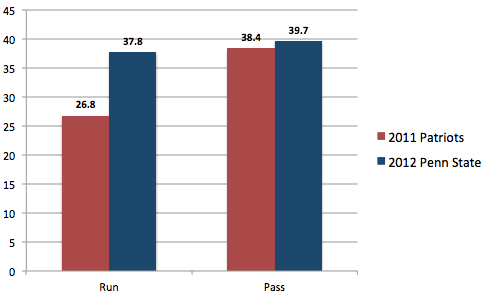
Below is a breakdown of O’Brien’s run pass ratio, by game, and by half when he was the New England Patriots’ offensive coordinator in 2011 and last year, directing the sidelines in Happy Valley. Some of the numbers and trends are interesting.
2011
|
|
Run 1st
|
Pass 1st
|
Run 2nd
|
Pass 2nd
|
Run Total
|
Pass Total
|
Result
|
|
Miami
|
11
|
23
|
11
|
25
|
22
|
48
|
38-24 W
|
|
San Diego
|
11
|
24
|
14
|
16
|
25
|
40
|
35-21 W
|
|
Buffalo
|
10
|
22
|
16
|
23
|
26
|
45
|
34-31 L
|
|
Oakland
|
13
|
17
|
17
|
13
|
30
|
30
|
31-19 W
|
|
New York Jets
|
13
|
16
|
21
|
17
|
34
|
33
|
30-21 W
|
|
Dallas
|
10
|
15
|
15
|
26
|
25
|
41
|
20-16 W
|
|
Pittsburgh
|
8
|
12
|
4
|
23
|
12
|
35
|
25-17 L
|
|
New York Giants
|
13
|
19
|
11
|
30
|
24
|
49
|
24-20 L
|
|
New York Jets
|
8
|
22
|
20
|
17
|
28
|
39
|
37-16 W
|
|
Kansas City
|
12
|
16
|
15
|
19
|
27
|
35
|
34-3 W
|
|
Philadelphia
|
18
|
17
|
18
|
17
|
36
|
34
|
38-20 W
|
|
Indianapolis
|
12
|
23
|
12
|
15
|
24
|
38
|
31-24 W
|
|
Washington
|
10
|
19
|
11
|
18
|
21
|
37
|
34-27 W
|
|
Denver
|
16
|
23
|
20
|
11
|
36
|
34
|
41-23 W
|
|
Miami
|
9
|
20
|
22
|
26
|
31
|
46
|
27-24 W
|
|
Buffalo
|
12
|
15
|
17
|
20
|
29
|
35
|
27-24 W
|
|
Denver
|
14
|
26
|
16
|
8
|
30
|
34
|
49-21 W
|
|
Baltimore
|
13
|
24
|
18
|
11
|
31
|
35
|
23-20 W
|
|
New York Giants
|
9
|
18
|
10
|
23
|
19
|
41
|
21-17 L
|
|
|
|
|
|
|
|
|
|
|
Totals
|
222
|
371
|
288
|
348
|
510
|
729
|
|
|
Average Per Game
|
11.7
|
19.5
|
15.2
|
18.3
|
26.8
|
38.4
|
|
2012
|
|
Run 1st
|
Pass 1st
|
Run 2nd
|
Pass 2nd
|
Run Total
|
Pass Total
|
Result
|
|
Ohio
|
13
|
26
|
9
|
22
|
22
|
48
|
L 24-14
|
|
UVA
|
26
|
22
|
14
|
23
|
40
|
45
|
L 17-16
|
|
Navy
|
16
|
17
|
11
|
5
|
27
|
22
|
W 34-7
|
|
Temple
|
15
|
24
|
27
|
12
|
42
|
36
|
W 24-13
|
|
Illinois
|
22
|
21
|
25
|
12
|
49
|
33
|
W 35-7
|
|
Northwestern
|
17
|
28
|
29
|
25
|
46
|
53
|
W 39-28
|
|
Iowa
|
21
|
29
|
31
|
9
|
52
|
38
|
W 38-14
|
|
Ohio State
|
11
|
15
|
13
|
35
|
24
|
50
|
L 35-23
|
|
Purdue
|
15
|
23
|
22
|
15
|
37
|
38
|
W 34-9
|
|
Nebraska
|
19
|
21
|
12
|
19
|
31
|
40
|
L 32-23
|
|
Indiana
|
20
|
18
|
21
|
17
|
41
|
35
|
W 45-22
|
|
Wisconsin
|
21
|
18
|
22
|
21
|
43
|
39
|
W 24-21 OT
|
|
|
|
|
|
|
|
|
|
|
Totals
|
216
|
262
|
238
|
215
|
454
|
477
|
|
|
Average per game
|
18
|
21.8
|
19.8
|
17.9
|
37.8
|
39.7
|
|
As the numbers indicate, O’Brien — for good reason — was rather pass happy with the Patriots. Only once did he run more often than pass in the first half of games, and the Patriots only finished with more running plays compared to passing plays in three of 19 contests.
The more relevant Penn State numbers show more balance. The final breakdown is almost identical, especially if the 21 sacks allowed are removed from the passing numbers, but this even ratio was not the case the entire year. The season opener against Ohio yields the most unbalanced results throughout the 2012 campaign. 26 passing attempts to only 13 rushes in the first half. For 30 minutes, it worked. As O’Brien abandoned the run even more in the second half once the Bobcats began picking up momentum, things quickly fell apart. They were shutout for the only half all season.
When finishing a game with more plays on the ground than through the air, the Nittany Lions were 6-0 and 2-4 when the opposite occurred.
None of this is earth-shattering. Conventional wisdom suggests that a balanced ratio is almost always a big key to success here, but it does set up an intriguing situation for 2013. O’Brien likes to throw the ball. Coaching Brady will do that to you. The return of the Big Ten’s leading receiver in Allen Robinson and at least three capable tight ends will have that effect, but with all the aerial weapons, there is also a trio of running backs expected to receive carries.
“I think you’ve got three very, very different skill sets,” said O’Brien of his running backs on the onset of spring practice. “It will be fun to watch those guys. I’ll have to do a good job of putting them in position to take advantage of what they do best.”
Zach Zwinak has size and durability. Bill Belton has quickness. Akeel Lynch is a hybrid mix of those other two players. The trio should be a big asset to whoever wins the quarterback derby and could maybe take some snaps out of the chosen one’s hands.
The spreadsheets and charts indicate that despite a few hiccups, O’Brien overall transitioned well from the NFL to the Big Ten in terms of play-calling. He now faces his next challenge after losing the dependable Matt McGloin, who was very good when it came to limiting turnovers, only tossing five interceptions through 12 games. The five giveaways tied a conference low for full-time starters at the position and will not be easy to repeat.
The counterpoint here is that the combination of O’Brien’s coaching prowess and being surrounded by several playmakers will accelerate development for McGloin’s replacement. It is a valid argument, but a consistent running game is often a young signal-caller’s best friend, and the Nittany Lions have the talent and depth to make that the case here.
Will O’Brien’s run-pass ratio change in 2013? Only he knows that, but running a bit more and not repeating last year’s early imbalance could go a long way in helping prevent another slow start.
Recent Stories:
Day 14: Eight Things You Didn’t Know About the Blue-White Game
Day 13: What Should Be Expected of Players Who Changed Positions?
Day 12: Breaking Down Penn State’s Roster By the Numbers
Day 11: Which Redshirt Freshmen Are Ready to Shine?
Day 10: Year Two Has Had Ups and Downs for Former Penn State Head Coaches



