
Some level of furloughs appears all but certain for the State College Area School District in 2011-2012, school-board members said Monday night.
Confronted by a budget deficit projected between $4.6 million and $8.3 million, members began to review different approaches that may help bridge the gap. They have tentatively agreed to consider a recalibrated strategy for pre-funding retiree benefits; some amount of participation fees for students’ extracurricular activities; and a tax increase.
Other strong possibilities briefly discussed — and slated for future discussion — include employee furloughs, programming reductions and pay freezes. After the meeting, board member Jim Leous said the level of anticipated furloughs will hinge in part on the outcome of ongoing union negotiations, and in part on the volume of employee retirements this school year.
Already, at least 30 district employees have announced plans to retire this year, up nearly 50 percent over the 2009-2010 retirement rate. Details of union negotiations have not been made public.
Meanwhile, most board members on Monday seemed to prefer a 1.4 percent tax-increase target, but said they want the administration to supply a detailed picture of how that would affect the district before they solidify their views.
The Pennsylvania Act I index sets 1.4 percent as the general tax-increase limit for the district in 2011-2012, though special exemptions already approved by the state give the board the authority to raise taxes as much as four percent.
A 1.4 percent tax increase would amount to about $35 in additional taxes for the average homeowner in the school district, business administrator Jeffrey Ammerman said.
‘This is a process none of us have been through before. We’re kind of learning as we go,’ board President Ann McGlaughlin said of the expected cuts. ‘ … These are not things we ever really anticipated we would have to be dealing with, but we’re trying to deal with them as honestly as we can, as fairly as we can and in as forward-thinking a manner’ as we can.
The district has held open 18 positions in the current school year as it trimmed expenses just more than $3 million for 2010-2011. But the reductions necessary for 2011-2012 will reach a more substantial level of cutbacks, board members said.
Most said Monday that they would prefer not to consider several other cost-control measures presented by the administration, including larger class-size guidelines and more liberal use of capital-reserve monies.
‘The decisions that we make today will not be taken lightly’ and will have far-reaching implications, acting Superintendent Mike Hardy said Monday night. He said the district’s budgeting process now focuses on ‘how our educational system can survive,’ while it once focused on how the system could thrive.
‘We need to look forward to the 21st century,’ Hardy said. ‘What will our students absolutely need in the future as we go forward?’
The factors squeezing the State College budget are hitting school districts statewide, as both state and federal support are expected to wane. Together, state and federal funds are projected to decline by some $3.5 million for the State College district in 2011-2012.
That reality paired with sluggish growth in the local tax base, state controls on local tax increases, and substantial expenses for health care and other unavoidable costs have put the district in a tight spot, school leaders have said.
If the board were to raise taxes four percent, Ammerman said, the district would be looking at a $4.6 million budget gap — before considering salary-cost controls. A tax increase of 1.4 percent would put the gap in the $7.3 million range; a budget with no tax increase would create a gap of $8.3 million.
The district is projected to spend close to $120 million in the next school year.
Board members will review soon exactly how much of that money would be allocated for extra-curricular activities, and how much of it might be recovered through participation fees. The board had considered such fees last year, but largely backed away from the idea.
This time around, McGlaughlin said, ‘the choice is different,’ thanks to the ‘staggering’ effect of the projected budget gap.
Board Vice President Jim Pawelczyk suggested the board could consider imposing fees for special events such as post-season athletic play, but leave activities accessible to all students at no direct charge. Leous said he’s generally opposed to the fee idea, citing the administrative burden it could create.
The administration is set to develop specific fee options for board consideration.
The board also saw no unanimity on the tax question. Members Richard Bartnik, Pawelczyk, McGlaughlin, Small and Stahl said they wanted to use the 1.4 percent level as a starting point for discussion and would prefer, ideally, to keep an increase capped in that range.
‘The taxpayers have done their share over the last five years,’ Bartnik said, saying the board has raised taxes 13.3 percent in that period. ‘ … Our problem, directly, is our salary and benefit costs.
He said that ‘if we don’t get control this year, we’re going to end up with furloughs next year — and we’re going to end up with furloughs the following year.’
Members Dave Hutchison, Gowen Roper and Jim Leous appeared to support a tax-increase number closer to four percent. (Penni Fishbaine said she was undecided.)
Hutchison and Roper said Gov. Tom Corbett, with his proposed cuts for public education, has effectively pursued a tax shift to the local level.
With the board unsure how much it may be allowed to grow revenue for 2012-2013, Hutchison said, ‘to me it’s irresponsible for us not to take full advantage of our taxing authority’ now.
‘We don’t know what we’re going to have available to us’ moving forward, Hutchison said, citing Corbett’s suggestion that local tax increases could be limited more strictly in years to come.
Interviewed later, Hutchison said he thinks the board is considering cost cuts ‘that are more severe than what is necessary.’
He said the special exceptions allowed in the Act I legislation — which would allow the board to raise taxes four percent for ’11-’12 — are meant to accommodate the real cost of running the district under current conditions.
Hutchison also said furloughs aren’t cost-effective, since the district would be bound to pay unemployment expenses for furloughed workers. He said he would prefer a greater emphasis on achieving long-term savings through attrition.
Similarly, Holli Jo Warner, president of the State College Area Education Association, encouraged the board to consider early-retirement incentives for long-serving teachers. The SCAEA is the district teachers’ union.
On April 11, the administration is scheduled to present proposed program reductions and eliminations to the school board, along with a furlough proposal and a revised elementary-redistricting plan. Other public events on redistricting, program changes and an ongoing superintendent search are expected in April, as well.
Ammerman said the district is likely to hold special public gatherings to review proposed budget cuts and gather community feedback. Details of those will be forthcoming, district leaders said.
On May 9, the board is scheduled to vote on proposed program eliminations and a redistricting plan. Any proposed program reductions will need to be reviewed by the state Department of Education.
Furloughs could be announced as soon as May 23. A proposed final budget for 2011-2012 will be up for board adoption in late May, with a final vote set for June 27.
Some district leaders are scheduled to appear on WRSC radio — 1390 AM — at 9 a.m. Tuesday to review the district’s financial situation on ‘Lion Country Comments,’ with Kevin Nelson and Pat Boland.
In other matters Monday night, the board had a moment of silence for the late Beth Donghia, a beloved teacher and mother in the school district. Hardy said Donghia left lasting impressions and will be sorely missed. The entire district, he said, is deeply saddened by the news of her death Saturday.
Donghia was considered by many to be ‘the neighborhood mom,’ Hardy said.
Earlier coverage
More Local News
View all Local News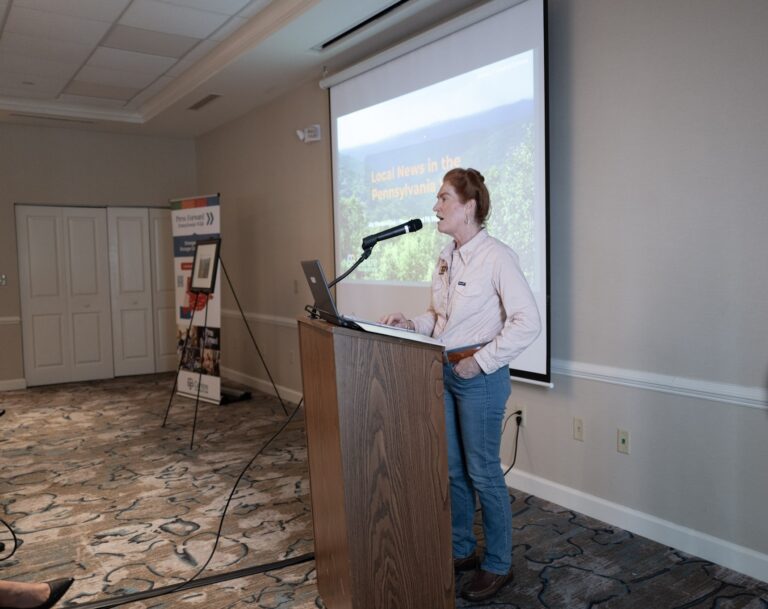
Press Forward Survey Highlights Value of Local Journalism
Press Forward PA Wilds unveiled the results of a yearlong research project that gathered feedback from more than 2,000 residents across nine counties.
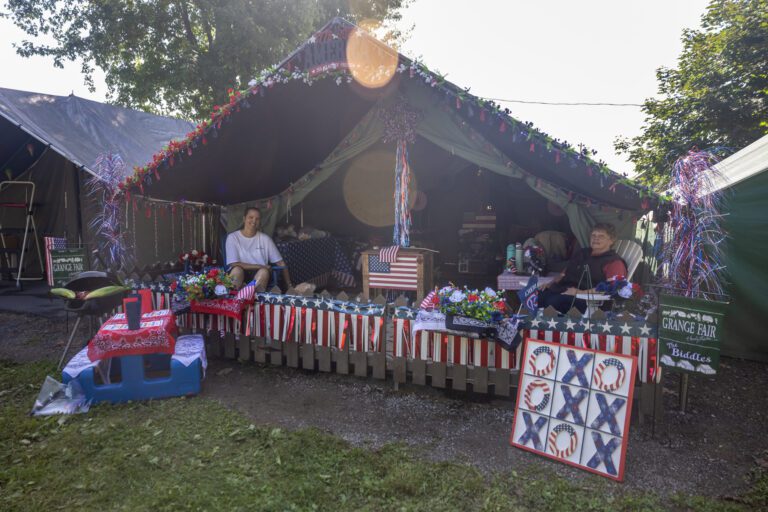
Only Encampment Fair in the U.S. Thrives on Family Traditions
Although the competition for campsites is intense, when it comes down to it, it’s the relationships and customs that fuel loyalty to the Grange Fair.
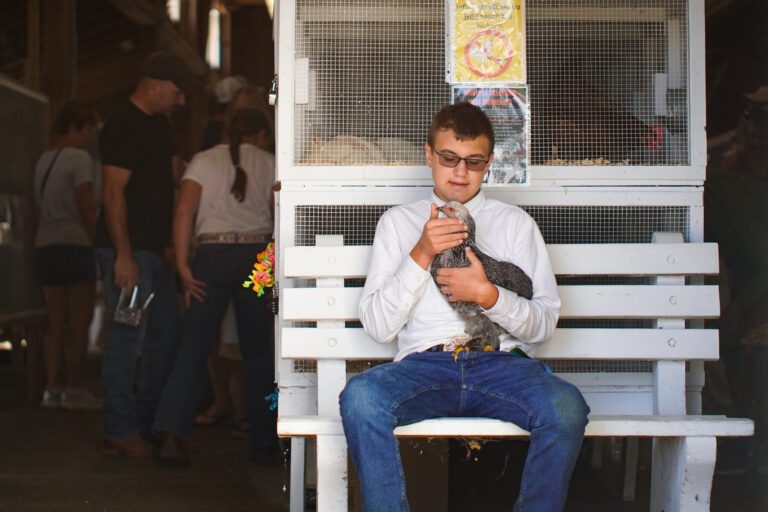
Youth Build Life Skills Through Livestock Showmanship
Little brown cowboy boots clomped around in the dirt as young competitors hurried around the barn preparing for Centre County Grange Fair’s 2026 Junior Poultry Show.


