
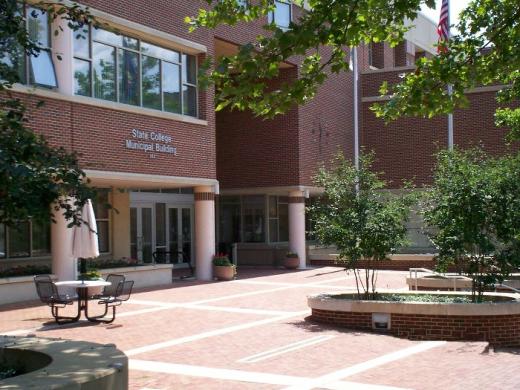
No matter what university administrators say — and even if they proclaim otherwise — Penn State will continue to grow its enrollment at University Park.
That’s the belief of Herman Slaybaugh, the soon-to-retire State College borough zoning officer, who has worked for the municipality since 1976.
When he joined the borough staff that year, first as a police officer, John W. Oswald was the Penn State president. The University Park campus enrolled 32,306 students.
Now, three Penn State administrations later, the campus has steadily grown to enroll 44,817 students, university records show.
‘To me, it’s a given: You’re never going to be able to persuade them (Penn State) not to grow,’ said Slaybaugh, who became the zoning officer in 1986. ‘They may make limited determinations not to grow. But no matter what administration is in there — Graham Spanier, Jordan, Jack Oswald or whomever — when you look at the trends, the university has never stopped growing. …
‘There’s no reason to think it’ll stop, no matter what any administrator says,’ Slaybaugh went on. ‘I don’t think the economic forces can let it stop.’
Slaybaugh spoke for more than 90 minutes with StateCollege.com, reflecting on his public-service career and the trends that shape the borough’s development — and redevelopment.
He suggested it’s important that borough residents understand, and accept, that Penn State will continue to expand its student population.
But that doesn’t mean that permanent residents can’t ‘try to balance out the adverse consequences on your neighborhood,’ he said.
That balance can be guided by borough policies in zoning and housing, Slaybaugh said. As zoning officer, he has been instrumental in writing and enforcing those policies with input from all sides — businesses, neighbors, officials elected and appointed.
From a planning perspective, it makes sense to continue to encourage residential density in and near the downtown core, he said. There, concentrated student housing prevents suburban sprawl and helps keep the downtown economically vibrant, even as new storefronts pop up in the nearby townships, Slaybaugh said.
Still, he said it also makes sense to write zoning that helps preserve single-family neighborhoods and their subdued character. He said the borough would be wise to invest — on a steady, step-by-step basis — in restoring rental houses in those neighborhoods to owner-occupied status.
The move, in theory, also would help the borough to revitalize its earned-income-tax base, which has turned relatively sluggish as more homes have been converted for students’ rental use.
The underlying struggle there — maintaining a balance between student needs and those of permanent residents — hasn’t changed much in decades, Slaybaugh said. Right now, he said, the political pendulum has swung more toward neighborhood protection and away from development interests, as neighborhood advocates have taken Borough Council seats once held by business people.
Another shift Slaybaugh noted: Local governments seem to have moved from pursuing relatively modest things — like storefront fix-up projects and downtown clean-up efforts — to tackling ‘more grandiose things.’
The long-planned Fraser Centre project comes to mind, though Slaybaugh did not mention it in this context.
‘If we can succeed’ at grandiose things, he said, ‘that would be wonderful. But the more grandiose, the more obstacles you have to succeeding because you’ve got to pull so many pieces together.’
Slaybaugh’s philosophy: If you have $1 million to spend, spread it out to a variety smaller initiatives. Each of those smaller efforts may not make a big impact by itself. But taken together, they can make a substantial difference for a community, he said.
Those community-friendly efforts are where Slaybaugh has tried to focus much of his work, he said. Primarily self-taught in zoning practices and law, the Penn State alumnus said the borough should not over-regulate, but develop rules that residents can understand.
He has worked to make his corner of government efficient and helpful, not an impediment, he said. He said he takes pride in making sure residents are informed of their rights as they follow zoning-related processes — including zoning-variance requests, rezoning attempts and disputes with neighbors.
Slaybaugh has become an expert in walking that delicate line between property owners’ rights and community sentiment. One of his biggest tests came earlier this decade, when the College Heights neighborhood association tried to block a Catholic student facility planned for Park Avenue.
Slaybaugh had ruled that the facility should be allowed under the borough zoning there. A high state court ultimately agreed with him, and the local diocese broke ground on the new facility earlier this year.
It marked a professional victory — a validation, perhaps — for Slaybaugh, who’s wrapping up work this week before heading into retirement in early 2011. A Vietnam War veteran and Bronze Star recipient, he and his wife are finishing a new home in Union Township, where they’ve moved from Lemont.
Anne Messner, a member of the borough planning staff, will succeed Slaybaugh as the State College zoning officer.
‘In my kingdom where I’m the zone master,’ Slaybaugh said, ‘I’ve tried to make government streamlined. … I want it to be able to move for you.’
Earlier coverage
More Latest Penn State News
View all Latest Penn State News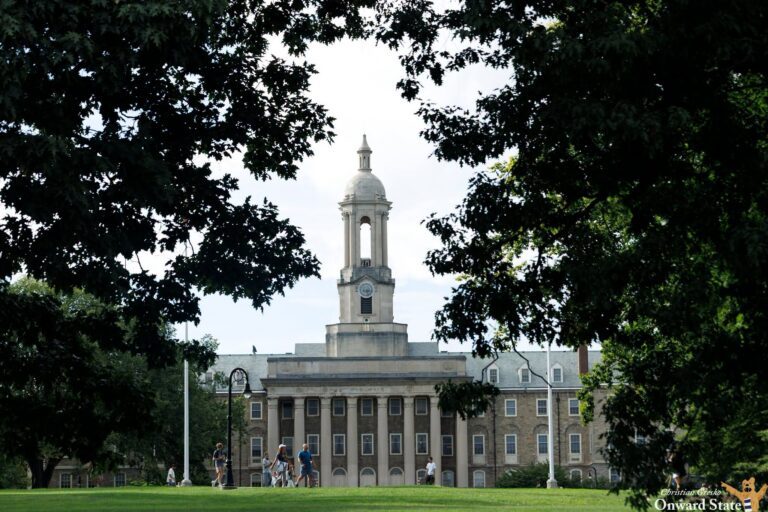
Penn State Launches New Student Success Office, Names Interim Leader
Penn State has established the new Office of Student Success and appointed an interim vice provost who will oversee university-wide efforts focused on helping students progress from enrollment through graduation […]
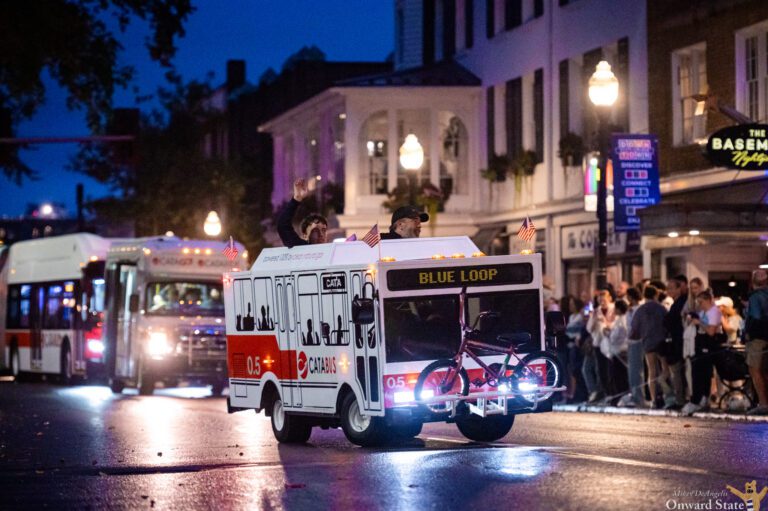
What to Know About Traffic, Parking and CATA Changes for Penn State’s Homecoming Parade
Penn State’s annual Homecoming Parade will bring road closures, parking restrictions and changes to CATA bus services across University Park and downtown State College on Friday, Sept. 25. The parade […]

Homecoming 2026: Penn State, WE ARE the World
It is Homecoming at Penn State. And while the weekend spins on the axis of a football game, it is so much more than that. It is a time for […]


