
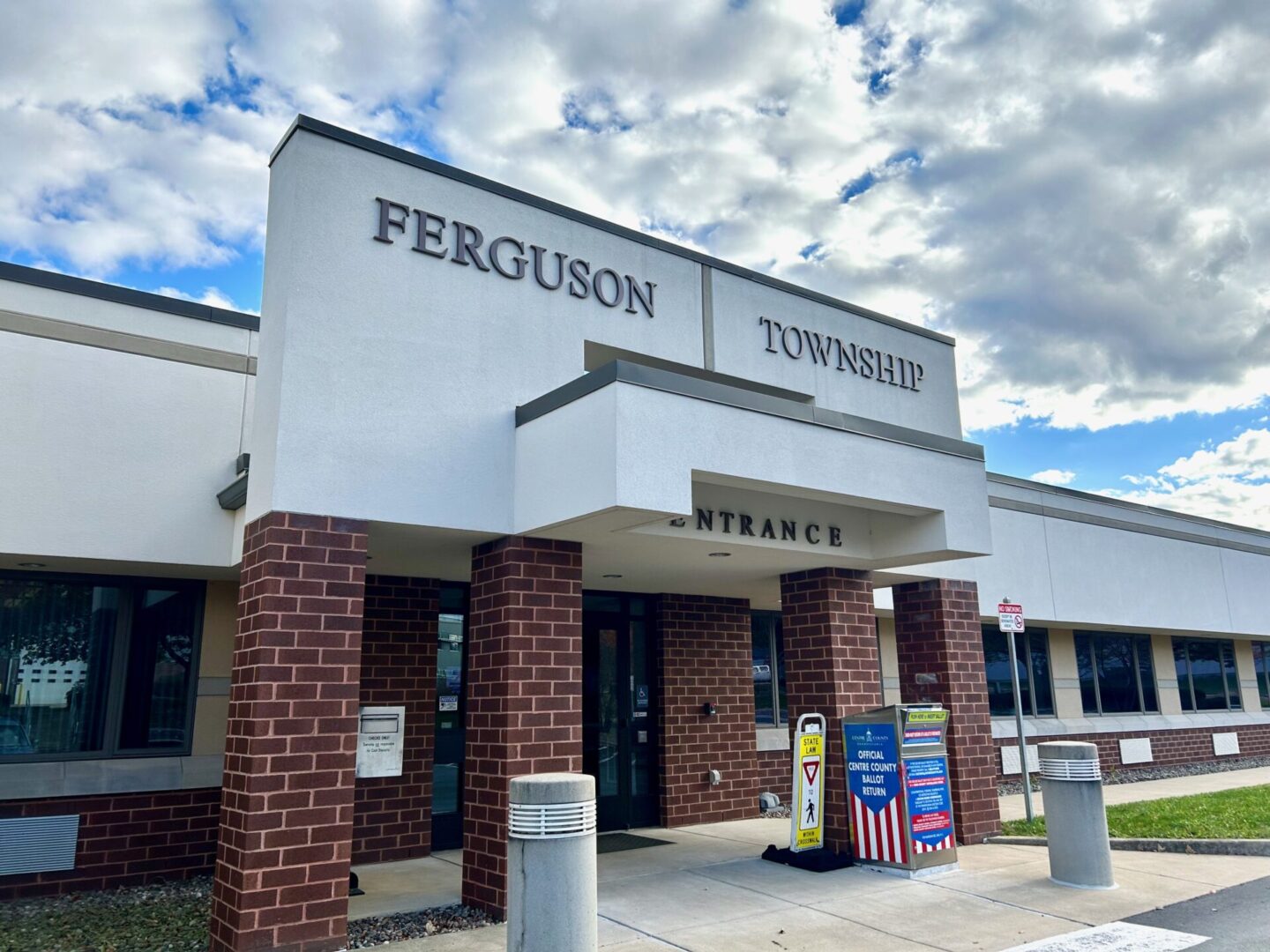
Ferguson Township’s Board of Supervisors on Tuesday took steps toward restricting or potentially even prohibiting construction of large-scale data centers within the township’s borders, should any be proposed in the future.
The supervisors approved two motions to address data center zoning following comments from 16 residents who mostly voiced concerns about the facilities during an 80-minute discussion. One sends the matter to the Planning Commission to develop conditional use zoning language for data centers, while the other authorizes pursuing a possible shared land use agreement with another municipality that could relieve the township of being required to permit them altogether.
No plans for data centers have been submitted to the township or anywhere else in Centre County, but their proliferation around Pennsylvania and elsewhere has spurred officials to take proactive measures.
Planning director Kimberly Smith said the township staff does not take a position on data centers, but that if they are not specifically addressed, the municipality does not have the ability to place specific restrictions on them beyond the standard zoning requirements.
“While it seems like putting data center in your code invites it, it actually allows the township to put restrictions, and that could be anything from aesthetics to placement to all those items,” Smith said.
The motion unanimously approved by the board on Tuesday directs staff and the Planning Commission to develop a proposed zoning text amendment that defines data centers as a conditional use subject to specific standards in a zoning district and special requirements placed by the township.
Stemming from an original motion made by Supervisor Trevor White, it also directs staff, pending consultation with the township solicitor, to explore entering into a formal shared land use agreement with another municipality, likely College Township, which in February became the first Centre Region municipality to adopt conditional use zoning for data centers.
Pennsylvania municipalities are required to provide for any lawful land use within their boundaries. However, those that participate in a regional comprehensive plan — like the Centre Region municipalities — can plan for land uses within the entire planning area.
That means that if an agreement is made, College Township could take on providing the required land use for data centers for Ferguson Township, or other Centre Region municipalities as well.
Though College Township specifically was removed from the final motion, White said he named it because it is the only municipality in the area that has adopted zoning for data centers. Supervisor Omari Patterson added that College Township is home to the University Area Joint Authority, which is the only entity in the region that produces a significant amount of nonpotable water that could be used by a potential data center, rather than drawing on the drinking water supply.
College Township has a similar agreement with Patton Township for mining uses.
“I am waiting to hear back from the solicitor’s input because I genuinely believe that the shared use agreement is the full measure for us to say no, and that the conditional use requirements would allow them to come in because we cannot say no if they meet those conditions,” White said.
Like nearly every resident who spoke during public comment, Natalie Rae, a Penn State professor who studies data center siting in Pennsylvania, said she appreciates Ferguson Township taking proactive measures with community input.
“I just want to applaud the sort of public engagement because that seems to be really important in the community oversight portion of it and being able to provide all that really detailed information on this, like municipal processes, that can be really challenging to understand even in this meeting, the sort of clarification of the jurisprudence, having that publicly available and having information available for this continued conversation,” Rae said.
Most residents voiced concerns about data centers’ impact on the environment, water supplies, energy costs and noise and light pollution.
“The area we live in is so rich in resources that other states don’t have,” State College resident Rhonda Johannesen said. “All of our water that’s needed for these kinds of developments, we’ve already kind of pushed away big bottling companies from taking our water. It’s going to be hard to resist this big money that’s going to be coming at us, and also just the targeted nature to get these resources that they can’t get elsewhere. I just ask you to resist and protect our quality of life for yourselves and all of the citizens that live here. And as you go through your processes, be extra vigilant, because I think we have some danger.”
Tim Stedman said his family moved to Ferguson Township five years ago from Northern Virginia, which has become a hotbed of data center development.
“You cannot go two miles in any direction without coming across two or three data centers,” Stedman said. “It is an absolute disaster… Data centers consume massive amounts of energy. They consume massive amounts of water for cooling. They pose a high risk to water tables, stream temperatures, local ecology and water quality. If these data centers impact the watersheds with those trout streams, guess what, folks?
“Data centers cause noise pollution. There are countless reports now of nearby residents who can no longer live there because of the humming they have to hear on a constant basis overnight. Data centers cause light pollution. The neighboring residences within these areas see glows from the data centers. In more rural areas, these glows can impact wildlife migratory patterns. They can impact the behavior of nocturnal animals.”
Tony Dastra, the Green Party candidate for governor and a resident of Lancaster, applauded Ferguson Township for addressing data centers, saying that in his city the facilities were determined to be classified as warehouses and pushed through with little public input.
“If there is no use put in, then they will try whatever they can to get it through,” he said.
But Dastra said zoning amendments and shared land use agreements don’t go far enough.
“What really needs to occur is a moratorium on these facilities,” he said.
Dave Gibbons, who lives and owns a commercial building in Ferguson Township, said he does not support large-scale data centers but urged the township to define the facilities. He noted the his building and several tech businesses within the township already house and rely on what could be considered data centers.
“I am not here to advocate for a gigawatt-scale, Elon Musk-style data center with 50 gas jet engine turbines operating outside,” Gibbons said. “A blanket ‘no’ on data centers will be really detrimental to Ferguson Township… If you drive down the Science Park Road corridor and look for the generators, you will find businesses that depend on the data centers they have in their facilities. And those businesses happen to also be some of the largest employers in Centre County and Ferguson Township. And, they happen to also be the kind of cutting edge tech businesses that people want to work for.
“The reality is, we need to be really clear what we’re talking about here. And I think we should be very, very clear that we’re talking about hyperscale, gigawatt-scale kind of data centers.”
A date has not yet been set for the Planning Commission to discuss the zoning text amendment. Board of Supervisors Chair Jeremie Thompson encouraged the public to check the township website for Planning Commission agendas and attend upcoming meetings when the issue is scheduled.
More Local News
View all Local News
Alpha Fire Company Receives $10K Donation From Bloom Energy During ESPN Radio Tour Stop
ESPN Radio’s College Football Campus Tour made its first stop at Penn State, bringing a $10,000 donation from Bloom Energy to Alpha Fire Company ahead of Saturday’s Homecoming matchup between […]
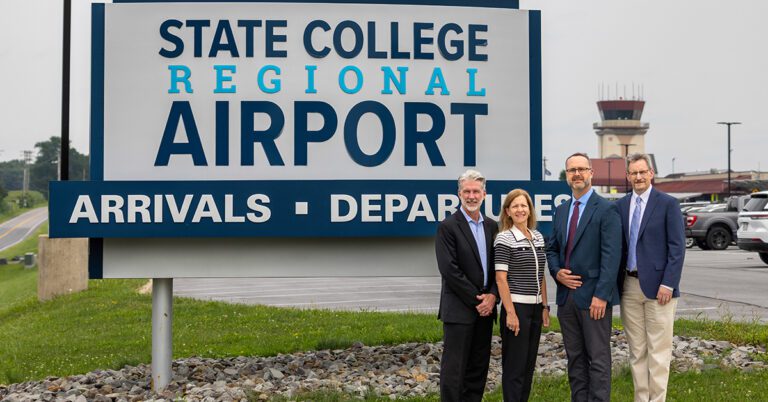
Charlotte Flights Bring a New Route to Growth at State College Regional Airport
Direct flights to Charlotte beginning in October promise easier travel and broader economic opportunities for Centre County.

Wiz Khalifa to Perform at Champs Downtown
Rapper Wiz Khalifa is set to perform at Champs Downtown in State College, the sports bar and club announced on Instagram. The show at 7 p.m. on Oct. 1 is […]


